Important Details
IJCRT - International Peer Reviewed, Open Access Journal, Multidisciplinary, Monthly, Nominal(Low) Fees for Professional Research Services International Journal of Creative Research Thoughts - IJCRT Peer Review Journal, Refereed Journal, Peer Reviewed Journal , Referred Journal and Indexed Journal, Open access, Online and Print Journal,international Journal Open Access, Accepted by Indian and foreign university ,IJCRT Followed Norms, guidelines, requirement, listing criteria and methodology of score/point also applied from: Scopus , Web of Science , UGC Approved , UGC CARE, UGC-CARE .
UGC Approved Journal No: 49023 (18)
UGC approval Link
https://ijcrt.org/ugc%20approval.jpg
All Policy and Approval
Please Like Our Facebook Page | CrossRef DOI and Hard copy of Certificate Provide if required. | www.IJCRT.org | editor@IJCRT.org | IJCRT WhatsApp +91 94294 58311
Publication Details:
- Paper Submission : 31-Oct-2026. Call For Paper (Volume 14 | Issue 9 | Month- September 2026)
- Acceptance/Rejection Notification: Within 02-04 Days.
- Paper Publish: Within 02-04 Days after submitting all documents.
-
Submit Your Paper Any time There No deadline.
-
Publication fees : 1570 INR for Indian author & 59$ for foreign International author.
Please Like Our Facebook Page | CrossRef DOI and Hard copy of Certificate Provide if required.
Licence and Indexing
Indexing In Google Scholar, SSRN, ResearcherID-Publons, Semantic Scholar | AI-Powered Research Tool, Microsoft Academic, Academia.edu, arXiv.org, Research Gate, CiteSeerX, ResearcherID Thomson Reuters, Mendeley : reference manager, DocStoc, ISSUU, Scribd, and many more | High Impact Factor: 7.97 | Digital object identifier (DOI) and Hard Copy of certificate Provided.



























Licence
DOI
ISSN Approved impact factor: 7.97 
Creative Common 
Valid as per new UGC Gazette regulations 

INTERNATIONAL JOURNAL OF CREATIVE RESEARCH THOUGHTS - IJCRT (IJCRT.ORG)
International Peer Reviewed & Refereed Journals, Open Access Journal
IJCRT Peer-Reviewed (Refereed) Journal as Per New UGC Rules.
ISSN Approved Journal No: 2320-2882 | Impact factor: 7.97 | ESTD Year: 2013
Call For Paper - Volume 14 | Issue 9 | Month- September 2026
Scholarly open access journals, Peer-reviewed, and Refereed Journals, Impact factor 7.97 (Calculate by google scholar and Semantic Scholar | AI-Powered Research Tool) , Multidisciplinary, Monthly, Indexing in all major database & Metadata, Citation Generator, Digital Object Identifier(CrossRef DOI)
IJCRT WhatsApp Contact
IJCRT Search Xplore - Search all paper by Paper Name , Author Name, and Title
Volume 13 | Issue 12 |
Volume 13 | Issue 12 | Month
Downlaod After Publication 1) Table of content index in PDF
2) Table of content index in HTML 2)Table of content index in HTML
3) Front Page 3) Front Page
4) Back Page 4) Back Page
5) Editor Board Member 5)Editor Board Member
6) OLD Style Issue 6)OLD Style Issue
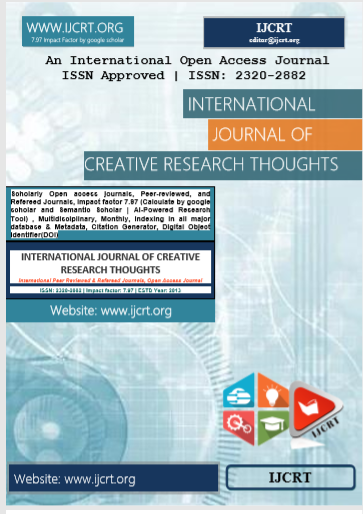 |
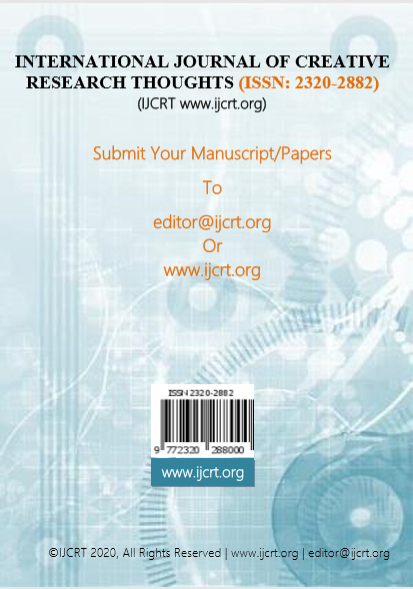 |
|---|---|
| IJCRT Journal front page | IJCRT Journal Back Page |
Paper Title: Diversity of Honey bees (Order- Hymenoptera) in and Around G.S. College, Khamgaon Campus.
Author Name(s): 1Sachin.S. Khandare, G.B.Kale, Aniket M. Wankhade
Published Paper ID: - IJCRT2512493
Register Paper ID - 298794
Publisher Journal Name: IJPUBLICATION, IJCRT
DOI Member ID: 10.6084/m9.doi.one.IJCRT2512493 and DOI :
Author Country : Indian Author, India, 444303 , Khamgaon, 444303 , | Research Area: Life Sciences All Published Paper URL: http://ijcrt.org/viewfull.php?&p_id=IJCRT2512493 Published Paper PDF: download.php?file=IJCRT2512493 Published Paper PDF: http://www.ijcrt.org/papers/IJCRT2512493.pdf
Your Paper Publication Details:
Title: DIVERSITY OF HONEY BEES (ORDER- HYMENOPTERA) IN AND AROUND G.S. COLLEGE, KHAMGAON CAMPUS.
DOI (Digital Object Identifier) :
Pubished in Volume: 13 | Issue: 12 | Year: December 2025
Publisher Name : IJCRT | www.ijcrt.org | ISSN : 2320-2882
Subject Area: Life Sciences All
Author type: Indian Author
Pubished in Volume: 13
Issue: 12
Pages: e306-e309
Year: December 2025
Downloads: 169
E-ISSN Number: 2320-2882
Abstract
The survey of Hymenopteran insects was carried out during April 2024 to June 2024 in an around the campus area of G.S.College, Khamgaon Dist. Buldana. The college was established during 1947 and one of the biggest and oldest higher education institution in Western Vidarbha which is spread over 97 acres. The campus has rich diversity of flora and fauna .We employed five collection methods for the study. (viz. pitfall trap, including bee traps with sugar water or pheromones, smoke to calm the bees, photographic techniques for species identification, yellow pan trap, manual collection, light trap and yellow sticky trap etc) . About five distinct species were identified Apis mellifera (commercially significant). Apis indica, Apis dorsata (known for large, aggressive colonies). Apis florea (adapted to arid climates) and Apis indica. Species are documented and identified up to species eve using literature, research articles and online resources. Our finding may help to enhance the understanding of these bee distribution and behaviors, supporting local pollinator conservation efforts in the study area.
Licence: creative commons attribution 4.0
License
Creative Commons Attribution 4.0 and The Open Definition

Keywords
Hymenoptera, G.S. College Campus, pollinators, ecological roles.
License
Creative Commons Attribution 4.0 and The Open Definition
Paper Title: Childhood in Crisis" -- The Silent Struggle of Children in Modern Society
Author Name(s): MOSTAFA SK
Published Paper ID: - IJCRT2512492
Register Paper ID - 298874
Publisher Journal Name: IJPUBLICATION, IJCRT
DOI Member ID: 10.6084/m9.doi.one.IJCRT2512492 and DOI :
Author Country : Indian Author, India, 732207 , MALDA, 732207 , | Research Area: Arts1 All Published Paper URL: http://ijcrt.org/viewfull.php?&p_id=IJCRT2512492 Published Paper PDF: download.php?file=IJCRT2512492 Published Paper PDF: http://www.ijcrt.org/papers/IJCRT2512492.pdf
Your Paper Publication Details:
Title: CHILDHOOD IN CRISIS" -- THE SILENT STRUGGLE OF CHILDREN IN MODERN SOCIETY
DOI (Digital Object Identifier) :
Pubished in Volume: 13 | Issue: 12 | Year: December 2025
Publisher Name : IJCRT | www.ijcrt.org | ISSN : 2320-2882
Subject Area: Arts1 All
Author type: Indian Author
Pubished in Volume: 13
Issue: 12
Pages: e303-e305
Year: December 2025
Downloads: 170
E-ISSN Number: 2320-2882
Abstract
Childhood is universally recognized as the most important phase of human development, shaping an individual's physical health, emotional stability, moral values, and intellectual capacity. Ideally, it should be a period filled with care, security, learning, and emotional support. However, in contemporary society, a large number of children experience a silent crisis marked by pressure, neglect, inequality, and emotional insecurity. Factors such as excessive academic expectations, child labor, poverty, digital addiction, family instability, and lack of emotional guidance have transformed childhood into a stressful and vulnerable stage of life. This paper explores the hidden struggles faced by children in modern society and examines how these challenges affect not only individual development but also the long-term social and economic health of nations. Addressing this crisis is essential for creating a humane, balanced, and progressive society.
Licence: creative commons attribution 4.0
License
Creative Commons Attribution 4.0 and The Open Definition
Keywords
Childhood Crisis, Child Development, Education Pressure, Child Welfare, Emotional Health, Social Responsibility
License
Creative Commons Attribution 4.0 and The Open Definition
Paper Title: SUSTAINABLE DEVELOPMENT GOALS (SDG's) WITH SPECIAL REFERENCE TO POVERTY ALLEVIATION: RELEVANCE OF INDIAN KNOWLEDGE SYSTEMS (IKS)
Author Name(s): THOUTAM RAMU
Published Paper ID: - IJCRT2512491
Register Paper ID - 298322
Publisher Journal Name: IJPUBLICATION, IJCRT
DOI Member ID: 10.6084/m9.doi.one.IJCRT2512491 and DOI :
Author Country : Indian Author, India, 110068 , NEW DELHI, 110068 , | Research Area: Social Science All Published Paper URL: http://ijcrt.org/viewfull.php?&p_id=IJCRT2512491 Published Paper PDF: download.php?file=IJCRT2512491 Published Paper PDF: http://www.ijcrt.org/papers/IJCRT2512491.pdf
Your Paper Publication Details:
Title: SUSTAINABLE DEVELOPMENT GOALS (SDG'S) WITH SPECIAL REFERENCE TO POVERTY ALLEVIATION: RELEVANCE OF INDIAN KNOWLEDGE SYSTEMS (IKS)
DOI (Digital Object Identifier) :
Pubished in Volume: 13 | Issue: 12 | Year: December 2025
Publisher Name : IJCRT | www.ijcrt.org | ISSN : 2320-2882
Subject Area: Social Science All
Author type: Indian Author
Pubished in Volume: 13
Issue: 12
Pages: e298-e302
Year: December 2025
Downloads: 168
E-ISSN Number: 2320-2882
Abstract
United Nations (UNO) laid down an agenda for 2030 which advocates for achieving (17) sustainable development goals (SDG's) by the year 2030 by all the countries. Among these (17) goals, first goal of SDG is "to end the poverty in all it's forms everywhere in the world by 2030. All SDG's are inter related and inter dependent on each other. The achievement of all other SDG's (16) depends on the achievement of SDG (01) i.e., the removal of poverty. India has also been a signatory to UN's agenda for 2030. Hence India has been committed to reduce it's poverty to zero by 2030. Poverty has been the greatest challenge and global problem that the Governments across the nations are facing in the contemporary world. According to poverty estimates of planning commission in (2011-12), there are still about 22% of people in the country are living below poverty line (BPL). In absolute terms large number of people i.e., 27 crores are BPL in India. In spite of implementation of various poverty alleviation programmes i.e., both self and wage employment programmes by both Central and State Governments in the last 70 years the problem is still rampant. In this scenario Indian knowledge system (IKS) appears to be a ray of hope and offers solutions to the contemporary problems of the society including poverty. Indian knowledge system is a system of knowledge and wisdom that have been transmitted from one generation to other in India. IKS includes the main components of Gnan (knowledge), Vignan (Science) and Jeevan (philosophy). The reservoir of India knowledge and wisdom emnates from the literature of Vedas (4),Upanishads, Upavedas etc and later vedic texts like Bhagavath Gita, Ardhashastra. Poverty is not just an economic problem of income or wealth. But it is a multi-dimensional phenomenon comprising of various like education, health, nutrition, sanitation, housing, safe drinking water etc. Indian knowledge system indeed is a way of life. It is inter disciplinary in nature and its diverse components like Science, Mathematics, Medicine, Astronomy, governance etc., offers integrated holistic approaches to alleviate the poverty both in India and at Global level. This article focuses on the systems and approaches of IKS to reduce the poverty and improve the standards of living and overall quality of life of people in India and world over.
Licence: creative commons attribution 4.0
License
Creative Commons Attribution 4.0 and The Open Definition
Keywords
Indian Knowledge System (IKS), Sustainable Development Goals (SDG), Poverty, Poverty Alleviation
License
Creative Commons Attribution 4.0 and The Open Definition
Paper Title: Development And Evaluation Of Fermented Bottle Gourd Beverages Using Various Sugar Sources: Biochemical, Functional And Sensory Analysis
Author Name(s): Dr. Naomita Dhume, Ms. Mariyah Patel, Ms. Misba Mustak Patel, Ms. Palvi Satish Kamat, Mrs. Maria Seelan Nadar
Published Paper ID: - IJCRT2512490
Register Paper ID - 298717
Publisher Journal Name: IJPUBLICATION, IJCRT
DOI Member ID: 10.6084/m9.doi.one.IJCRT2512490 and DOI :
Author Country : Indian Author, India, 400 019 , Mumbai, 400 019 , | Research Area: Health Science All Published Paper URL: http://ijcrt.org/viewfull.php?&p_id=IJCRT2512490 Published Paper PDF: download.php?file=IJCRT2512490 Published Paper PDF: http://www.ijcrt.org/papers/IJCRT2512490.pdf
Your Paper Publication Details:
Title: DEVELOPMENT AND EVALUATION OF FERMENTED BOTTLE GOURD BEVERAGES USING VARIOUS SUGAR SOURCES: BIOCHEMICAL, FUNCTIONAL AND SENSORY ANALYSIS
DOI (Digital Object Identifier) :
Pubished in Volume: 13 | Issue: 12 | Year: December 2025
Publisher Name : IJCRT | www.ijcrt.org | ISSN : 2320-2882
Subject Area: Health Science All
Author type: Indian Author
Pubished in Volume: 13
Issue: 12
Pages: e281-e297
Year: December 2025
Downloads: 198
E-ISSN Number: 2320-2882
Abstract
Lagenaria siceraria (bottle gourd), a Cucurbitaceae vine cultivated across tropical regions, is rich in moisture, fiber, vitamins, phytosterols, flavonoids, terpenoids, cucurbitacins, and bioactive polysaccharides. Its traditional uses--across fruit, leaves, seeds, and flowers--include managing diabetes, hypertension, liver disorders, insomnia, urinary issues, constipation, pain, and inflammation. Modern studies demonstrate antioxidant, antihyperlipidemic, antihyperglycemic, cardioprotective, hepatoprotective, immunomodulatory, diuretic, analgesic, anti-inflammatory, anthelmintic, adaptogenic, anticancer, and neuroprotective effects. Its broad pharmacological profile supports its role as a functional nutraceutical and medicinal food, particularly in metabolic and chronic disease prevention. Fermented bottle gourd beverages were prepared from 4 types of sugars (Table Sugar, Rock Sugar, Sugarcane Jaggery and Palm Jaggery). The study aimed to evaluate the influence of these sugar sources on the biochemical, functional, and sensory properties of fermented bottle gourd beverages. Fermentation significantly reduced pH, enhanced stability, and improved the release of phenolic compounds. Among the formulations, the palm jaggery-based beverage exhibited the highest antioxidant activity, maximum total phenolic content, elevated reducing sugars and the greatest ethanol yield, demonstrating superior functional enhancement during fermentation. Sugarcane jaggery also produced nutritionally favorable beverages, whereas refined sugars showed comparatively lower functional attributes. Sensory evaluation revealed strong consumer acceptability for all sugar-based formulations, with palm jaggery scoring highest for its distinctive aroma, color, and balanced taste profile. Overall, the findings highlight palm jaggery as the most effective sugar source for producing a nutritionally enriched, functionally potent, and sensorially appealing fermented bottle gourd beverage. The study underscores the potential of integrating traditional sweeteners with fermentation to develop affordable, value-added nutraceutical beverages with promising applications in the functional food and health industry.
Licence: creative commons attribution 4.0
License
Creative Commons Attribution 4.0 and The Open Definition
Keywords
Bottle gourd, beverages, cucurbitacins, sensory evaluation, ethanol, antioxidant activity
License
Creative Commons Attribution 4.0 and The Open Definition
Paper Title: EXPONENTIATED NON-NEGATIVE POISSON DISTRIBUTION: APPLICATION & MODEL
Author Name(s): Monica S, Kavitha s
Published Paper ID: - IJCRT2512489
Register Paper ID - 298844
Publisher Journal Name: IJPUBLICATION, IJCRT
DOI Member ID: 10.6084/m9.doi.one.IJCRT2512489 and DOI :
Author Country : Indian Author, India, 636011 , Salem, 636011 , | Research Area: Science All Published Paper URL: http://ijcrt.org/viewfull.php?&p_id=IJCRT2512489 Published Paper PDF: download.php?file=IJCRT2512489 Published Paper PDF: http://www.ijcrt.org/papers/IJCRT2512489.pdf
Your Paper Publication Details:
Title: EXPONENTIATED NON-NEGATIVE POISSON DISTRIBUTION: APPLICATION & MODEL
DOI (Digital Object Identifier) :
Pubished in Volume: 13 | Issue: 12 | Year: December 2025
Publisher Name : IJCRT | www.ijcrt.org | ISSN : 2320-2882
Subject Area: Science All
Author type: Indian Author
Pubished in Volume: 13
Issue: 12
Pages: e270-e280
Year: December 2025
Downloads: 144
E-ISSN Number: 2320-2882
Abstract
The Exponentiated non-negative Rayleigh Poisson distribution is introduced in this research work by combining A new generalization of Rayleigh distribution; characteristics and applications with The Exponentiated G Poisson model. This study's primary goal is to use the power transformation technique to increase the Exponentiated G. Poisson distribution's flexibility. The new proposed model's probability density function, survival function, and hazard function are shown graphically. We examine this new distribution's characteristics, paying particular attention to its moments, skewness, kurtosis, mode, and quantile function. The probability-weighted moments, order statistics, R'enyi, entropies, and the residual life function have all been covered. We computed the log-likelihood, Bayesian, Akaike, and corrected Akaike information criteria and Hennan-Quinn information criteria of the following distributions: the newly proposed Exponentiated Rayleigh Poisson distribution, the Compound Rayleigh distribution, the Exponentiated Chen distribution, the Exponentiated Exponential distribution, the Exponentiated Inverted Weibull distribution, and the Generalized Rayleigh distribution. We discovered that the newly proposed model has smaller values than the others. For model validation, we have examined the TTT plot, Q-Q plot, Kolmogorov Smirnov test, and P-P plot of the suggested distribution. We contrasted the proposed model's estimated distributed function CDF and empirical distribution CDF with those of five other models. For illustrative purposes, an actual dataset is examined. By using various methods and resources, the new family's significance and adaptability are demonstrated. The paper is concluded with a final conclusion.
Licence: creative commons attribution 4.0
License
Creative Commons Attribution 4.0 and The Open Definition
Keywords
New Generalization of Rayleigh Distribution, Exponentiated G Poisson Model, Probability Weighted Moments (PWM), Order Statistics, Maximum Likely-hood Estimation
License
Creative Commons Attribution 4.0 and The Open Definition
Paper Title: Synthesis and Characterization Studies on Cu(II), Ni(II), and Co(II) Complexes with Bis(2-hydroxyimino-1-phenylpropylidene)-1,2-diaminobenzene
Author Name(s): Dr. Dilip Kumar, Dr. Randhir Kumar
Published Paper ID: - IJCRT2512488
Register Paper ID - 298720
Publisher Journal Name: IJPUBLICATION, IJCRT
DOI Member ID: 10.6084/m9.doi.one.IJCRT2512488 and DOI :
Author Country : Indian Author, India, 800005 , Patna, 800005 , | Research Area: Chemistry All Published Paper URL: http://ijcrt.org/viewfull.php?&p_id=IJCRT2512488 Published Paper PDF: download.php?file=IJCRT2512488 Published Paper PDF: http://www.ijcrt.org/papers/IJCRT2512488.pdf
Your Paper Publication Details:
Title: SYNTHESIS AND CHARACTERIZATION STUDIES ON CU(II), NI(II), AND CO(II) COMPLEXES WITH BIS(2-HYDROXYIMINO-1-PHENYLPROPYLIDENE)-1,2-DIAMINOBENZENE
DOI (Digital Object Identifier) :
Pubished in Volume: 13 | Issue: 12 | Year: December 2025
Publisher Name : IJCRT | www.ijcrt.org | ISSN : 2320-2882
Subject Area: Chemistry All
Author type: Indian Author
Pubished in Volume: 13
Issue: 12
Pages: e263-e269
Year: December 2025
Downloads: 157
E-ISSN Number: 2320-2882
Abstract
A novel bis-oxime Schiff base ligand, Bis(2-hydroxyimino-1-phenylpropylidene)-1,2-diaminobenzene, was synthesized through the condensation of 1,2-diaminobenzene with 2-hydroxyimino-1-phenylpropan-1-one under controlled ethanolic conditions. The ligand was subsequently used to prepare Cu(II), Ni(II), and Co(II) complexes via direct metal-ligand reaction in alcoholic medium. The synthesized complexes were thoroughly characterized using elemental analysis, molar conductance, magnetic susceptibility, FT-IR, UV-Visible spectroscopy, and, wherever applicable, ESR measurements. The spectral data confirmed the successful coordination of the ligand through the oxime nitrogen and phenolic oxygen atoms, supporting a tetradentate N?O? donor mode. FT-IR spectra revealed characteristic shifts in ?(C=N), ?(N-O), and ?(O-H) vibrations upon complexation, while electronic spectra indicated the formation of octahedral structures for the Co(II) and Ni(II) complexes and a distorted square planar or square pyramidal geometry for the Cu(II) analogue. Magnetic moment values were consistent with their assigned geometries and oxidation states. The molar conductivity values suggested the non-electrolytic nature of all complexes. Thermal studies indicated that the complexes exhibit multi-step decomposition patterns, confirming the absence of coordinated or lattice water molecules. The overall analytical, spectral, and thermal results support the formation of stable, well-defined metal complexes with the designed bis-oxime Schiff base ligand. The study provides significant insights into the coordination behavior of oxime-based tetradentate ligands and their ability to stabilize transition metal ions in characteristic geometrical environments. A number of metal complexes of the types M?L, M?L?X? [M = Co(II), Ni(II); X = Cl?, Br?, I?] and Cu?LX? (X = Cl?, Br?), where H?L = bis(2-hydroxyimino-1-phenylpropylidene)-1,2-diaminobenzene have been synthesized and characterized.
Licence: creative commons attribution 4.0
License
Creative Commons Attribution 4.0 and The Open Definition
Keywords
Copper(II), Nickel(II) and Cobalt(II) complexes, Bis(2-hydroxyimino-1-phenylpropylidene)-1,2-diaminobenzene Spectroscopic characterization; FT-IR; UV-Visible spectroscopy; Magnetic susceptibility; Molar conductance; Geometry determination.
License
Creative Commons Attribution 4.0 and The Open Definition
Paper Title: Rajanikanta Bordoloi as a Novelist of Assam
Author Name(s): Mr. Tikendra Pegu
Published Paper ID: - IJCRT2512487
Register Paper ID - 298772
Publisher Journal Name: IJPUBLICATION, IJCRT
DOI Member ID: 10.6084/m9.doi.one.IJCRT2512487 and DOI :
Author Country : Indian Author, India, 787059 , Dhemaji, 787059 , | Research Area: Arts All Published Paper URL: http://ijcrt.org/viewfull.php?&p_id=IJCRT2512487 Published Paper PDF: download.php?file=IJCRT2512487 Published Paper PDF: http://www.ijcrt.org/papers/IJCRT2512487.pdf
Your Paper Publication Details:
Title: RAJANIKANTA BORDOLOI AS A NOVELIST OF ASSAM
DOI (Digital Object Identifier) :
Pubished in Volume: 13 | Issue: 12 | Year: December 2025
Publisher Name : IJCRT | www.ijcrt.org | ISSN : 2320-2882
Subject Area: Arts All
Author type: Indian Author
Pubished in Volume: 13
Issue: 12
Pages: e259-e262
Year: December 2025
Downloads: 248
E-ISSN Number: 2320-2882
Abstract
Rajanikanta Bordoloi (1867-1940) holds a distinct place in the literary landscape of Assam as a noveliest whose works mirror of the cultural, social, and historical sensibilities of his time. This study seeks to examine Bordoloi's contribution to Assamese literature with a focus on his work as a novelist. Through a critical analysis of his major novels such as "Miri Jiyori" and "Manomoti", the study highlights how Bordoloi skillfully blended historical narratives with elements of Assamese folklore, culture, and social reform. The paper discusses his narrative style, thematic concerns, and his role in shaping a distinctly Assamese literary identity during the colonial period. Bordoloi's commitment to Assamese nationalism, his portrayal of indigenous communities, and his subtle critique of social hierarchies underscore his position not just as a novelist, but as a cultural reformer. This paper aims to reaffirm Bordoloi's stature as a foundational figure in Assamese prose fiction and assess his enduring legacy in the literary history of Assam.
Licence: creative commons attribution 4.0
License
Creative Commons Attribution 4.0 and The Open Definition
Keywords
Rajanikanta Bordoloi, Folklore, Indigenous, Fiction, Literary, Literary
License
Creative Commons Attribution 4.0 and The Open Definition
Paper Title: Cataract Detection Using Machine Learning
Author Name(s): Abhiram C, Abhishek, Krishna, M Hareesh
Published Paper ID: - IJCRT2512486
Register Paper ID - 298576
Publisher Journal Name: IJPUBLICATION, IJCRT
DOI Member ID: 10.6084/m9.doi.one.IJCRT2512486 and DOI :
Author Country : Indian Author, India, 560045 , Bengaluru, 560045 , | Research Area: Science and Technology Published Paper URL: http://ijcrt.org/viewfull.php?&p_id=IJCRT2512486 Published Paper PDF: download.php?file=IJCRT2512486 Published Paper PDF: http://www.ijcrt.org/papers/IJCRT2512486.pdf
Your Paper Publication Details:
Title: CATARACT DETECTION USING MACHINE LEARNING
DOI (Digital Object Identifier) :
Pubished in Volume: 13 | Issue: 12 | Year: December 2025
Publisher Name : IJCRT | www.ijcrt.org | ISSN : 2320-2882
Subject Area: Science and Technology
Author type: Indian Author
Pubished in Volume: 13
Issue: 12
Pages: e251-e258
Year: December 2025
Downloads: 151
E-ISSN Number: 2320-2882
Abstract
Cataracts are a common eye condition that can lead to vision loss if not detected early. Traditional diagnosis methods rely on manual examination by eye specialists, which can be time-consuming and subjective. This study explores the use of RESNET-152, a deep learning-based Convolutional Neural Network (CNN), to detect cataracts from eye images automatically. The model is trained on a dataset of fundus images and can classify eyes as normal or cataract affected. By using deep learning, the system provides a fast, accurate, and reliable method for cataract detection, which can assist doctors in early diagnosis and treatment. Traditional cataract diagnosis relies on manual examination by ophthalmologists, which can be time-consuming and subjective. In this study, we propose an automated cataract detection system using the RESNET-152 convolutional neural network (CNN) for feature extraction and classification. The model is trained on a dataset of fundus images, where it learns to distinguish between normal and cataract-affected eyes with high accuracy. To address these challenges, this study proposes an automated cataract detection system using RESNET-152, a deep learning-based Convolutional Neural Network (CNN). The model is trained on a dataset of fundus images, learning to extract important visual features that differentiate normal and cataract affected eyes. Transfer learning is employed to enhance model efficiency, leveraging pre-trained weights from large-scale image datasets. The deep learning-based approach leverages transfer learning to enhance feature representation, ensuring robust detection even in challenging cases.
Licence: creative commons attribution 4.0
License
Creative Commons Attribution 4.0 and The Open Definition
Keywords
Cataract Detection, RESNET-152, Deep Learning, Convolutional Neural Network, Transfer Learning, Fundus.
License
Creative Commons Attribution 4.0 and The Open Definition
Paper Title: The Future of Geospatial Intelligence in Autonomous Mobility Systems
Author Name(s): Mohini Bharat Todkari
Published Paper ID: - IJCRT2512485
Register Paper ID - 297628
Publisher Journal Name: IJPUBLICATION, IJCRT
DOI Member ID: 10.6084/m9.doi.one.IJCRT2512485 and DOI :
Author Country : Indian Author, India, - , -, - , | Research Area: Science and Technology Published Paper URL: http://ijcrt.org/viewfull.php?&p_id=IJCRT2512485 Published Paper PDF: download.php?file=IJCRT2512485 Published Paper PDF: http://www.ijcrt.org/papers/IJCRT2512485.pdf
Your Paper Publication Details:
Title: THE FUTURE OF GEOSPATIAL INTELLIGENCE IN AUTONOMOUS MOBILITY SYSTEMS
DOI (Digital Object Identifier) :
Pubished in Volume: 13 | Issue: 12 | Year: December 2025
Publisher Name : IJCRT | www.ijcrt.org | ISSN : 2320-2882
Subject Area: Science and Technology
Author type: Indian Author
Pubished in Volume: 13
Issue: 12
Pages: e237-e250
Year: December 2025
Downloads: 176
E-ISSN Number: 2320-2882
Abstract
The integration of Geospatial Intelligence (GEOINT) with Autonomous Mobility Systems (AMS) is revolutionizing the way machines perceive, navigate, and interact with physical environments. This review explores recent advancements in applying artificial intelligence (AI) models - such as convolutional neural networks (CNNs), graph neural networks (GNNs), and transformers - to geospatial data for enabling autonomy in vehicles, drones, and intelligent transport systems. We present a theoretical framework, experimental results, comparative model evaluations, and key findings from over a decade of research. Challenges including real-time data fusion, generalization, explainability, and privacy preservation are discussed. The review concludes by outlining future directions such as federated learning, edge AI, 4D spatial modeling, and sustainable mobility planning. As cities become smarter and autonomous platforms more widespread, the convergence of GEOINT and AI will be critical to achieving reliable, context-aware, and environmentally conscious mobility solutions.
Licence: creative commons attribution 4.0
License
Creative Commons Attribution 4.0 and The Open Definition
Keywords
Geospatial Intelligence (GEOINT); Autonomous Mobility Systems (AMS); Deep Learning; Smart Cities; Edge AI; Federated Learning; 4D Spatial Modeling; Trajectory Prediction; Sensor Fusion; Explainable AI.
License
Creative Commons Attribution 4.0 and The Open Definition
Paper Title: THE LEGAL NEXUS BETWEEN WTO COMMITMENTS AND FARMERS RIGHTS IN INDIA: A CRITICAL STUDY
Author Name(s): H.S Shivakumara, T.R Maruthi
Published Paper ID: - IJCRT2512484
Register Paper ID - 298807
Publisher Journal Name: IJPUBLICATION, IJCRT
DOI Member ID: 10.6084/m9.doi.one.IJCRT2512484 and DOI :
Author Country : Indian Author, India, 570001 , Mysore, 570001 , | Research Area: Medical Science All Published Paper URL: http://ijcrt.org/viewfull.php?&p_id=IJCRT2512484 Published Paper PDF: download.php?file=IJCRT2512484 Published Paper PDF: http://www.ijcrt.org/papers/IJCRT2512484.pdf
Your Paper Publication Details:
Title: THE LEGAL NEXUS BETWEEN WTO COMMITMENTS AND FARMERS RIGHTS IN INDIA: A CRITICAL STUDY
DOI (Digital Object Identifier) :
Pubished in Volume: 13 | Issue: 12 | Year: December 2025
Publisher Name : IJCRT | www.ijcrt.org | ISSN : 2320-2882
Subject Area: Medical Science All
Author type: Indian Author
Pubished in Volume: 13
Issue: 12
Pages: e231-e236
Year: December 2025
Downloads: 165
E-ISSN Number: 2320-2882
Abstract
The advent of the World Trade organization (WTO) introduced many policy- based international trading system aimed at liberalizing markets, including the farmers rights in agricultural sector. For India- like country agrarian economy- the obligations under the WTO's agreement on Agriculture (AOA) and the agreement on Trade-related Aspects of Intellectual property Rights (TRIPS) have led to significant legal and policy changes. The Study examines how WTO provisions have influenced Indian agricultural law and policy, with a special focus on the farmers' rights. It critically evaluates whether these changes have supported or undetermined the socio-economic and traditional rights of Indian farmers in the view of legal frame work.
Licence: creative commons attribution 4.0
License
Creative Commons Attribution 4.0 and The Open Definition
Keywords
legal, policy, agriculture, socio-economic, traditional rights, farmers rights
License
Creative Commons Attribution 4.0 and The Open Definition
Call For Paper September 2026
Call For Papers
September 2026
Volume 14 | Issue 9
Last Date :
31-Oct-2026
Submit Manuscript Online Impact Factor: 7.97 Review Results : Within 02-03 Days Paper Publication : Within 02-03 Days
September 2026
Volume 14 | Issue 9
Last Date :
31-Oct-2026
Submit Manuscript Online Impact Factor: 7.97 Review Results : Within 02-03 Days Paper Publication : Within 02-03 Days
Published Issue Details
For Authors
Forms / Downloads
Other IMP Links
Indexing Partner
Research Area
LICENSE





ISSN and 7.97 Impact Factor Details
ISSN: 2320-2882 Impact Factor: 7.97 and ISSN APPROVED Journal Starting Year (ESTD) : 2013


ISSN and 7.97 Impact Factor Details
ISSN: 2320-2882 Impact Factor: 7.97 and ISSN APPROVED Journal Starting Year (ESTD) : 2013
DOI Details
CONFERENCE
CONFERENCE MANAGMENT & PUBLICATION CONFERENCE PROPOSAL
RECENT CONFERENCE

CONFERENCE PROPOSAL CONFERENCE PROCEEDINGS
CONFERENCE PROPOSAL CONFERENCE PROCEEDINGS
For Reviewer /Referral (RMS) Earn 500 per paper
Important Links
NEWS & Conference
Digital Library
IJCRT RMS | Earn 500 Per Paper.

Open Access


LICENSE
Indexing Partner
Scholarly open access journals, Peer-reviewed, and Refereed Journals, Impact factor 7.97 (Calculate by google scholar and Semantic Scholar | AI-Powered Research Tool) , Multidisciplinary, Monthly, Indexing in all major database & Metadata, Citation Generator, Digital Object Identifier(DOI)