Important Details
IJCRT - International Peer Reviewed, Open Access Journal, Multidisciplinary, Monthly, Nominal(Low) Fees for Professional Research Services International Journal of Creative Research Thoughts - IJCRT Peer Review Journal, Refereed Journal, Peer Reviewed Journal , Referred Journal and Indexed Journal, Open access, Online and Print Journal,international Journal Open Access, Accepted by Indian and foreign university ,IJCRT Followed Norms, guidelines, requirement, listing criteria and methodology of score/point also applied from: Scopus , Web of Science , UGC Approved , UGC CARE, UGC-CARE .
UGC Approved Journal No: 49023 (18)
UGC approval Link
https://ijcrt.org/ugc%20approval.jpg
All Policy and Approval
Please Like Our Facebook Page | CrossRef DOI and Hard copy of Certificate Provide if required. | www.IJCRT.org | editor@IJCRT.org | IJCRT WhatsApp +91 94294 58311
Publication Details:
- Paper Submission : 31-Oct-2026. Call For Paper (Volume 14 | Issue 9 | Month- September 2026)
- Acceptance/Rejection Notification: Within 02-04 Days.
- Paper Publish: Within 02-04 Days after submitting all documents.
-
Submit Your Paper Any time There No deadline.
-
Publication fees : 1570 INR for Indian author & 59$ for foreign International author.
Please Like Our Facebook Page | CrossRef DOI and Hard copy of Certificate Provide if required.
Licence and Indexing
Indexing In Google Scholar, SSRN, ResearcherID-Publons, Semantic Scholar | AI-Powered Research Tool, Microsoft Academic, Academia.edu, arXiv.org, Research Gate, CiteSeerX, ResearcherID Thomson Reuters, Mendeley : reference manager, DocStoc, ISSUU, Scribd, and many more | High Impact Factor: 7.97 | Digital object identifier (DOI) and Hard Copy of certificate Provided.




























Licence
DOI
ISSN Approved impact factor: 7.97 
Creative Common 
Valid as per new UGC Gazette regulations 

INTERNATIONAL JOURNAL OF CREATIVE RESEARCH THOUGHTS - IJCRT (IJCRT.ORG)
International Peer Reviewed & Refereed Journals, Open Access Journal
IJCRT Peer-Reviewed (Refereed) Journal as Per New UGC Rules.
ISSN Approved Journal No: 2320-2882 | Impact factor: 7.97 | ESTD Year: 2013
Call For Paper - Volume 14 | Issue 9 | Month- September 2026
Scholarly open access journals, Peer-reviewed, and Refereed Journals, Impact factor 7.97 (Calculate by google scholar and Semantic Scholar | AI-Powered Research Tool) , Multidisciplinary, Monthly, Indexing in all major database & Metadata, Citation Generator, Digital Object Identifier(CrossRef DOI)
IJCRT WhatsApp Contact
IJCRT Search Xplore - Search all paper by Paper Name , Author Name, and Title
Volume 14 | Issue 4 |
Volume 14 | Issue 4 | Month
Downlaod After Publication 1) Table of content index in PDF
2) Table of content index in HTML 2)Table of content index in HTML
3) Front Page 3) Front Page
4) Back Page 4) Back Page
5) Editor Board Member 5)Editor Board Member
6) OLD Style Issue 6)OLD Style Issue
 |
 |
|---|---|
| IJCRT Journal front page | IJCRT Journal Back Page |
Paper Title: Educational Technology Integration in Engineering and Higher Education: A Post-COVID Survey of Academicians
Author Name(s): Bivash Mandal, G. Vanaja Reddy, Shaik Rehan
Published Paper ID: - IJCRT2604929
Register Paper ID - 305858
Publisher Journal Name: IJPUBLICATION, IJCRT
DOI Member ID: 10.6084/m9.doi.one.IJCRT2604929 and DOI :
Author Country : Indian Author, India, 501401 , Hyderabad, 501401 , | Research Area: Social Science All Published Paper URL: http://ijcrt.org/viewfull.php?&p_id=IJCRT2604929 Published Paper PDF: download.php?file=IJCRT2604929 Published Paper PDF: http://www.ijcrt.org/papers/IJCRT2604929.pdf
Your Paper Publication Details:
Title: EDUCATIONAL TECHNOLOGY INTEGRATION IN ENGINEERING AND HIGHER EDUCATION: A POST-COVID SURVEY OF ACADEMICIANS
DOI (Digital Object Identifier) :
Pubished in Volume: 14 | Issue: 4 | Year: April 2026
Publisher Name : IJCRT | www.ijcrt.org | ISSN : 2320-2882
Subject Area: Social Science All
Author type: Indian Author
Pubished in Volume: 14
Issue: 4
Pages: h952-h964
Year: April 2026
Downloads: 77
E-ISSN Number: 2320-2882
Abstract
This paper aims to investigate the role of educational technology in enhancing the teaching learning process, addressing a critical need to understand how higher education academicians navigate its integration in the post-COVID era. A growing body of research suggests that technology enhances engagement and personalization, yet little is known about how academicians navigate post-COVID integration. This study addresses this need by providing the key insights on the impact of educational technology in enhancing the teaching- learning process from the perspective of 120 higher education academicians by administering a survey questionnaire. Findings reveal that a vast majority do integrate digital tools such as slide presentations, Learning Management System (LMS) platforms, and video conferencing into their teaching and report that these tools improve student engagement, enhance understanding, and allow quicker feedback. However, challenges like limited training, unreliable infrastructure, time constraints, and learner distractions were also reported. These findings affirm educational technology's potential to strengthen teaching practices but emphasize the necessity for targeted training and infrastructure support to sustain student engagement.
Licence: creative commons attribution 4.0
License
Creative Commons Attribution 4.0 and The Open Definition

Keywords
Educational Technology; Teaching-Learning; Academician Survey; Student Engagement; Technology Integration
License
Creative Commons Attribution 4.0 and The Open Definition
Paper Title: PROTOTYPE FOR THE EARLY STROKE RISK PREDICTION POWEREDED BY AI
Author Name(s): M Yashwanth, T Abhinay Sai, R Mohan, Danish Khaleel Ahmed
Published Paper ID: - IJCRT2604928
Register Paper ID - 306219
Publisher Journal Name: IJPUBLICATION, IJCRT
DOI Member ID: 10.6084/m9.doi.one.IJCRT2604928 and DOI :
Author Country : Indian Author, India, 509325 , Hyderabad, 509325 , | Research Area: Science and Technology Published Paper URL: http://ijcrt.org/viewfull.php?&p_id=IJCRT2604928 Published Paper PDF: download.php?file=IJCRT2604928 Published Paper PDF: http://www.ijcrt.org/papers/IJCRT2604928.pdf
Your Paper Publication Details:
Title: PROTOTYPE FOR THE EARLY STROKE RISK PREDICTION POWEREDED BY AI
DOI (Digital Object Identifier) :
Pubished in Volume: 14 | Issue: 4 | Year: April 2026
Publisher Name : IJCRT | www.ijcrt.org | ISSN : 2320-2882
Subject Area: Science and Technology
Author type: Indian Author
Pubished in Volume: 14
Issue: 4
Pages: h945-h951
Year: April 2026
Downloads: 78
E-ISSN Number: 2320-2882
Abstract
Stroke is still a serious health issue and affects a large number of people every year. In many situations, it does not just lead to death but also leaves patients with long-term problems such as reduced mobility, memory issues, or emotional stress. These effects make daily life difficult and also increase the load on healthcare systems. Because of this, predicting stroke risk at an early stage becomes important, as it gives some time for preventive steps to be taken. In this work, a system is developed to estimate the risk of stroke using artificial intelligence techniques. The main idea is to provide some level of early support to doctors by using patient data, rather than depending only on symptoms that appear later. While working on this, one practical issue was the lack of proper datasets. Most datasets that were available were either incomplete or did not match the required parameters. So instead of relying on limited data, a synthetic dataset was created based on medically accepted ranges. While doing this, an attempt was made to keep the data realistic, but it is clear that it may not fully capture real-world variations. The dataset includes common risk factors such as age, gender, hypertension, heart disease, glucose level, BMI, and smoking habits. Before using the data, some preprocessing steps were necessary. Missing values had to be handled, categorical data was converted into numerical form, and scaling was applied where needed. During this step, it became clear that some models, especially Logistic Regression, were sensitive to how the data was scaled. Without proper normalization, the results were not stable. Three models were tested: Logistic Regression, Decision Tree, and Random Forest. These were selected mainly because they are widely used and easier to understand in healthcare-related problems. While testing, the Decision Tree model gave good results on training data but did not perform as consistently on test data, which indicated overfitting. Random Forest, on the other hand, gave more stable results across both training and testing. This is likely because it combines multiple decision trees, which helps reduce overfitting. Among all the models, Random Forest performed better overall, giving an accuracy close to 92%. It also showed better balance between precision and recall compared to the other models. Based on these observations, it was selected for the final system. The system itself is divided into stages such as input, preprocessing, prediction, and output. It provides a simple indication of risk, which can help in early-level decision-making. In future, this system can be connected to hospital records or wearable devices for continuous monitoring. However, one limitation of this work is that the model is trained only on synthetic data, so its performance with real patient data may vary. Overall, this work shows that machine learning can be useful as a supporting tool for early stroke risk prediction. At the same time, more testing with real clinical data is required before it can be used in practical situations.
Licence: creative commons attribution 4.0
License
Creative Commons Attribution 4.0 and The Open Definition
Keywords
Stroke prediction, Machine learning, Artificial intelligence, Random Forest, Early diagnosis, Healthcare, Classification, Risk assessment.
License
Creative Commons Attribution 4.0 and The Open Definition
Paper Title: Three Dimensional Structure Scanning Technology for Digital Reconstruction of objects
Author Name(s): Pushkar Karad, Gauri Pol, Aryan Bamburde, Amit deshmukh
Published Paper ID: - IJCRT2604927
Register Paper ID - 306069
Publisher Journal Name: IJPUBLICATION, IJCRT
DOI Member ID: 10.6084/m9.doi.one.IJCRT2604927 and DOI :
Author Country : Indian Author, India, 400706 , Navi mumbai, 400706 , | Research Area: Science and Technology Published Paper URL: http://ijcrt.org/viewfull.php?&p_id=IJCRT2604927 Published Paper PDF: download.php?file=IJCRT2604927 Published Paper PDF: http://www.ijcrt.org/papers/IJCRT2604927.pdf
Your Paper Publication Details:
Title: THREE DIMENSIONAL STRUCTURE SCANNING TECHNOLOGY FOR DIGITAL RECONSTRUCTION OF OBJECTS
DOI (Digital Object Identifier) :
Pubished in Volume: 14 | Issue: 4 | Year: April 2026
Publisher Name : IJCRT | www.ijcrt.org | ISSN : 2320-2882
Subject Area: Science and Technology
Author type: Indian Author
Pubished in Volume: 14
Issue: 4
Pages: h942-h944
Year: April 2026
Downloads: 69
E-ISSN Number: 2320-2882
Abstract
Traditional methods of measuring and recreating objects are often slow and less accurate, especially when dealing with complex geometries. Manual drawing or modeling can lead to loss of fine details and errors in reconstruction. To overcome these limitations, modern 3D scanning techniques use sensors, lasers, and cameras to capture detailed information quickly and efficiently.
Licence: creative commons attribution 4.0
License
Creative Commons Attribution 4.0 and The Open Definition
Keywords
3 D drawing, laser sensor, Arduino uno, camera module
License
Creative Commons Attribution 4.0 and The Open Definition
Paper Title: QUANTUM-SAFE CLOUD STORAGE FOR SECURE HEALTHCARE RECORDS
Author Name(s): SathishKumar P, Chandrakala S, Aldan Jeri M, Avinesh R, Ganapathi M
Published Paper ID: - IJCRT2604926
Register Paper ID - 306465
Publisher Journal Name: IJPUBLICATION, IJCRT
DOI Member ID: 10.6084/m9.doi.one.IJCRT2604926 and DOI :
Author Country : Indian Author, India, 637018 , Namakkal, 637018 , | Research Area: Science and Technology Published Paper URL: http://ijcrt.org/viewfull.php?&p_id=IJCRT2604926 Published Paper PDF: download.php?file=IJCRT2604926 Published Paper PDF: http://www.ijcrt.org/papers/IJCRT2604926.pdf
Your Paper Publication Details:
Title: QUANTUM-SAFE CLOUD STORAGE FOR SECURE HEALTHCARE RECORDS
DOI (Digital Object Identifier) :
Pubished in Volume: 14 | Issue: 4 | Year: April 2026
Publisher Name : IJCRT | www.ijcrt.org | ISSN : 2320-2882
Subject Area: Science and Technology
Author type: Indian Author
Pubished in Volume: 14
Issue: 4
Pages: h935-h941
Year: April 2026
Downloads: 61
E-ISSN Number: 2320-2882
Abstract
The rapid adoption of cloud computing in healthcare has improved data accessibility and scalability but introduced significant security challenges. Traditional encryption techniques, such as RSA and ECC, are vulnerable to potential attacks from quantum computers. This paper proposes a quantum-safe cloud storage framework for securing electronic health records (EHRs) using post-quantum cryptographic algorithms. The system integrates lattice-based encryption for secure data storage and quantum-resistant key exchange mechanisms to protect sensitive medical data. Additionally, role-based access control and data integrity verification techniques are implemented to ensure authorized access and prevent tampering. The proposed model enhances confidentiality, integrity, and long-term security of healthcare data against both classical and quantum threats. Experimental analysis demonstrates improved resilience with acceptable computational overhead, making it suitable for real-world healthcare applications.
Licence: creative commons attribution 4.0
License
Creative Commons Attribution 4.0 and The Open Definition
Keywords
Quantum-safe security, Post-quantum cryptography, Cloud storage, Healthcare data security, Electronic Health Records (EHR), Data privacy, Lattice-based cryptography, Digital signatures, Secure key management, Role-Based Access Control (RBAC), Data integrity, Encryption, Cloud security.
License
Creative Commons Attribution 4.0 and The Open Definition
Paper Title: Business Analytics in Gig Economy (Uber, Swiggy)
Author Name(s): Hrishikesh Hunnargikar, Vipul Bhosale, Abhishek Kape, Abhishek Reelkar, Prof. Aishwarya Komti
Published Paper ID: - IJCRT2604925
Register Paper ID - 306369
Publisher Journal Name: IJPUBLICATION, IJCRT
DOI Member ID: 10.6084/m9.doi.one.IJCRT2604925 and DOI :
Author Country : Indian Author, India, 411041 , Pune, 411041 , | Research Area: Commerce and Management, MBA All Branch Published Paper URL: http://ijcrt.org/viewfull.php?&p_id=IJCRT2604925 Published Paper PDF: download.php?file=IJCRT2604925 Published Paper PDF: http://www.ijcrt.org/papers/IJCRT2604925.pdf
Your Paper Publication Details:
Title: BUSINESS ANALYTICS IN GIG ECONOMY (UBER, SWIGGY)
DOI (Digital Object Identifier) :
Pubished in Volume: 14 | Issue: 4 | Year: April 2026
Publisher Name : IJCRT | www.ijcrt.org | ISSN : 2320-2882
Subject Area: Commerce and Management, MBA All Branch
Author type: Indian Author
Pubished in Volume: 14
Issue: 4
Pages: h927-h934
Year: April 2026
Downloads: 91
E-ISSN Number: 2320-2882
Abstract
: Looking closely at Uber and Swiggy shows how numbers shape work in India's growing gig scene. Because more people are joining, smart tracking helps balance who needs rides or food with those offering it. Instead of just linking one rider to one driver, grouping requests cuts down waiting, sometimes slashing empty stretches between trips from an hour and a half to far less. With maps that spot busy zones, drivers head where demand spikes, avoiding slow spots. On delivery apps, layered prediction models guess order surges before they happen, getting meals out faster - often in half an hour or less. Workers earn more when systems run smoothly, feeding into wider economic gains already adding up to over 1% of national output. Yet pay can still swing wildly week to week, leaving some struggling to plan ahead. Personal details get collected nonstop, raising worries about who sees what. Rules haven't kept pace, so safety nets often fall short when problems hit. Even as tech pushes progress, fairness lags without updated policies catching up
Licence: creative commons attribution 4.0
License
Creative Commons Attribution 4.0 and The Open Definition
Keywords
Business Analytics, Gig Economy, Uber, Swiggy, Workforce Demographics, Demand Forecasting, Platform Efficiency, Urban India
License
Creative Commons Attribution 4.0 and The Open Definition
Paper Title: Voice behind the care: the study of staff satisfaction in hospital
Author Name(s): Vaishnavi Rajesh Khodaskar
Published Paper ID: - IJCRT2604924
Register Paper ID - 306328
Publisher Journal Name: IJPUBLICATION, IJCRT
DOI Member ID: 10.6084/m9.doi.one.IJCRT2604924 and DOI :
Author Country : Indian Author, India, 411014 , Pune, 411014 , | Research Area: Management All Published Paper URL: http://ijcrt.org/viewfull.php?&p_id=IJCRT2604924 Published Paper PDF: download.php?file=IJCRT2604924 Published Paper PDF: http://www.ijcrt.org/papers/IJCRT2604924.pdf
Your Paper Publication Details:
Title: VOICE BEHIND THE CARE: THE STUDY OF STAFF SATISFACTION IN HOSPITAL
DOI (Digital Object Identifier) :
Pubished in Volume: 14 | Issue: 4 | Year: April 2026
Publisher Name : IJCRT | www.ijcrt.org | ISSN : 2320-2882
Subject Area: Management All
Author type: Indian Author
Pubished in Volume: 14
Issue: 4
Pages: h916-h926
Year: April 2026
Downloads: 73
E-ISSN Number: 2320-2882
Abstract
Context: The efficacy, determination, and wellbeing of the healthcare personnel have a significant impact on the provision of healthcare. Both clinical and non-clinical hospital workers are essential to maintaining patient safety, high-quality services, and efficient operations. Nevertheless, despite growing workload demands and organizational difficulties, there are still few systematic evaluations of employee satisfaction, especially in mid-sized private hospitals. Goals: To evaluate the level of staff satisfaction at Gold Rush Hospital, to identify key factors influencing employee experience such as workload, teamwork, communication etc; and to provide data-driven recommendations for improving workforce engagement and hospital performance. Methodology: 35 hospital staff from both clinical and non-clinical departments participated in a cross-sectional descriptive research that was carried out utilizing purposive sampling. A five- point Likert scale-based structured questionnaire was used to gather data. Descriptive statistics, regression analysis, and correlation analysis were used in the statistical study to look at the connections between workplace characteristics and satisfaction. Finding: Overall, the mean score for employee satisfaction was moderate (M = 2.71, SD = 1.24). While safety (M = 2.68) and workload management indicated concerns, teamwork (M = 2.91) and communication (M = 2.91) shown comparatively greater satisfaction levels. Workload and satisfaction had a substantial negative link (r = -0.62), although there were favorable correlations with cooperation (r = 0.65), supervisory support (r = 0.58), and communication (r = 0.60). According to regression analysis, these factors accounted for 68% of the difference in employee satisfaction. Key issues identified included excessive woekload, inadequate recognition syatem. Conclusion: The study shows that a variety of organizational, administrative, and operational factors affect hospital worker satisfaction. To improve staff well-being and service quality, workload imbalance must be addressed, leadership practices must be strengthened, and recognition mechanisms must be improved. It is advised to use organized interventions and ongoing monitoring in order to develop a motivated and long-lasting healthcare personnel.
Licence: creative commons attribution 4.0
License
Creative Commons Attribution 4.0 and The Open Definition
Keywords
Keywords: Staff Satisfaction, Healthcare Workforce, Employee Engagement, Workload, Teamwork, Hospital management, Organizational Performance.
License
Creative Commons Attribution 4.0 and The Open Definition
Paper Title: AI-based Deepfake Detection Framework for Multimedia Authentication
Author Name(s): Rudraksha Goswami, Parthi Soni
Published Paper ID: - IJCRT2604923
Register Paper ID - 306457
Publisher Journal Name: IJPUBLICATION, IJCRT
DOI Member ID: 10.6084/m9.doi.one.IJCRT2604923 and DOI :
Author Country : Indian Author, India, 380050 , Ahmedabad, 380050 , | Research Area: Science and Technology Published Paper URL: http://ijcrt.org/viewfull.php?&p_id=IJCRT2604923 Published Paper PDF: download.php?file=IJCRT2604923 Published Paper PDF: http://www.ijcrt.org/papers/IJCRT2604923.pdf
Your Paper Publication Details:
Title: AI-BASED DEEPFAKE DETECTION FRAMEWORK FOR MULTIMEDIA AUTHENTICATION
DOI (Digital Object Identifier) :
Pubished in Volume: 14 | Issue: 4 | Year: April 2026
Publisher Name : IJCRT | www.ijcrt.org | ISSN : 2320-2882
Subject Area: Science and Technology
Author type: Indian Author
Pubished in Volume: 14
Issue: 4
Pages: h909-h915
Year: April 2026
Downloads: 78
E-ISSN Number: 2320-2882
Abstract
The fast growth of Artificial Intelligence has made it possible to create highly realistic synthetic media known as deepfakes. These manipulated files may appear in the form of altered videos, cloned voices, or fully generated multimedia content. Although such technology can be useful in filmmaking, gaming, education, and accessibility tools, it also creates major risks when used for fraud, misinformation, identity theft, or public manipulation. Existing manual verification techniques are often slow and ineffective against advanced AI-generated content. This research paper introduces DeepShieldX, an intelligent framework designed to detect deepfakes in video, audio, and combined multimedia sources. The proposed model uses facial inconsistency analysis, motion pattern learning, voiceprint verification, spectrogram classification, and multimodal fusion techniques for accurate prediction. The framework is practical, scalable, and suitable for real-world deployment using open-source technologies. Experimental findings indicate that combining both audio and video signals provides stronger performance than using a single source alone.
Licence: creative commons attribution 4.0
License
Creative Commons Attribution 4.0 and The Open Definition
Keywords
Deepfake Detection, Multimedia Security, Video Forgery, Audio Forgery, Artificial Intelligence, CNN, LSTM, Transformer.
License
Creative Commons Attribution 4.0 and The Open Definition
Paper Title: Super Store Data Analysis Using AWS
Author Name(s): Vansh Sharma, Utkarsh Verma, Sagar, Prateek Chaudhary
Published Paper ID: - IJCRT2604922
Register Paper ID - 305536
Publisher Journal Name: IJPUBLICATION, IJCRT
DOI Member ID: 10.6084/m9.doi.one.IJCRT2604922 and DOI :
Author Country : Indian Author, India, 251001 , Muzaffarnagar , 251001 , | Research Area: Science and Technology Published Paper URL: http://ijcrt.org/viewfull.php?&p_id=IJCRT2604922 Published Paper PDF: download.php?file=IJCRT2604922 Published Paper PDF: http://www.ijcrt.org/papers/IJCRT2604922.pdf
Your Paper Publication Details:
Title: SUPER STORE DATA ANALYSIS USING AWS
DOI (Digital Object Identifier) :
Pubished in Volume: 14 | Issue: 4 | Year: April 2026
Publisher Name : IJCRT | www.ijcrt.org | ISSN : 2320-2882
Subject Area: Science and Technology
Author type: Indian Author
Pubished in Volume: 14
Issue: 4
Pages: h904-h908
Year: April 2026
Downloads: 96
E-ISSN Number: 2320-2882
Abstract
In today's data-centric business environment, effective data analysis plays a crucial role in enhancing decision-making and operational efficiency. This project presents a comprehensive study of Super Store Data Analysis using Amazon Web Services (AWS), which provides a scalable and cost-effective cloud computing platform. The system leverages Amazon S3 for secure and reliable data storage, AWS Glue for Extract, Transform, Load (ETL) operations, Amazon Redshift for high-performance data warehousing, and AWS QuickSight for advanced data visualization. The objective of this project is to analyze retail datasets to identify trends in sales, customer behavior, product performance, and regional demand patterns. The proposed solution ensures efficient data processing, reduced latency, and real-time analytics capabilities. Experimental observations demonstrate improved query performance, enhanced scalability, and reliable insights generation. This approach significantly improves business intelligence processes and supports strategic planning. The integration of cloud technologies provides flexibility, security, and performance advantages over traditional data processing systems, making it suitable for modern retail analytics applications.
Licence: creative commons attribution 4.0
License
Creative Commons Attribution 4.0 and The Open Definition
Keywords
Business Intelligence, AWS, Super Store Data Analysis, Retail Analytics, ETL, Amazon S3, AWS QuickSight, Strategic Planning.
License
Creative Commons Attribution 4.0 and The Open Definition
Paper Title: RiskAdjusted Portfolio Optimization Using NSE BlueChip Stocks
Author Name(s): AMENUL ISLAM H, Dr. M. Jayaseely
Published Paper ID: - IJCRT2604921
Register Paper ID - 304989
Publisher Journal Name: IJPUBLICATION, IJCRT
DOI Member ID: 10.6084/m9.doi.one.IJCRT2604921 and DOI : https://doi.org/10.56975/ijcrt.v14i4.304989
Author Country : Indian Author, India, 600130 , Chennai, 600130 , | Research Area: Commerce and Management, MBA All Branch Published Paper URL: http://ijcrt.org/viewfull.php?&p_id=IJCRT2604921 Published Paper PDF: download.php?file=IJCRT2604921 Published Paper PDF: http://www.ijcrt.org/papers/IJCRT2604921.pdf
Your Paper Publication Details:
Title: RISKADJUSTED PORTFOLIO OPTIMIZATION USING NSE BLUECHIP STOCKS
DOI (Digital Object Identifier) : https://doi.org/10.56975/ijcrt.v14i4.304989
Pubished in Volume: 14 | Issue: 4 | Year: April 2026
Publisher Name : IJCRT | www.ijcrt.org | ISSN : 2320-2882
Subject Area: Commerce and Management, MBA All Branch
Author type: Indian Author
Pubished in Volume: 14
Issue: 4
Pages: h898-h903
Year: April 2026
Downloads: 116
E-ISSN Number: 2320-2882
Abstract
In today's volatile financial markets, investors are increasingly concerned not only about maximizing returns but also about managing the risks associated with their portfolios. This study examines strategic portfolio construction and riskadjusted performance evaluation using selected bluechip stocks listed on the National Stock Exchange (NSE) of India. Ten largecap stocks from banking, information technology, FMCG, telecom and infrastructure sectors were selected to build a diversified equity portfolio. Daily closing price data from 2014 to 2026 were collected from Yahoo Finance and analysed using Python for return calculation, risk measurement and portfolio simulation. The study adopts Modern Portfolio Theory (MPT) as its theoretical base and applies Monte Carlo simulation to generate a large number of portfolio combinations with different weight allocations. For each simulated portfolio, expected return, volatility, Sharpe Ratio, Sortino Ratio, Beta and Maximum Drawdown were computed to assess performance from a riskadjusted perspective. The results show that a welldiversified portfolio combining banking and IT stocks achieves an attractive balance between return and risk, with an annual expected return of around 18.9 per cent, volatility of 15.7 per cent and a Sharpe Ratio of 0.885. The optimal portfolio identified has a Beta slightly below one, indicating marginally lower volatility than the overall market, while still delivering competitive returns. The findings highlight the importance of diversification, systematic asset allocation and the use of quantitative tools in constructing efficient portfolios. The study also demonstrates how integration of Python for analytics and Power BI for visualization can make portfolio analysis more practical and decisionoriented for investors, analysts and students.
Licence: creative commons attribution 4.0
License
Creative Commons Attribution 4.0 and The Open Definition
Keywords
Portfolio construction, riskadjusted performance, Modern Portfolio Theory, Monte Carlo simulation, Sharpe Ratio, NSE bluechip stock
License
Creative Commons Attribution 4.0 and The Open Definition
Paper Title: Impact of Corporate Social Responsibility on Organisational Commitment: The Mediating Role of Green Training and Development in the Service Sector
Author Name(s): HEENA SAINI, Dr suresh Kumar Bhaker
Published Paper ID: - IJCRT2604920
Register Paper ID - 306355
Publisher Journal Name: IJPUBLICATION, IJCRT
DOI Member ID: 10.6084/m9.doi.one.IJCRT2604920 and DOI :
Author Country : Indian Author, India, 125001 , Hisar, 125001 , | Research Area: Management All Published Paper URL: http://ijcrt.org/viewfull.php?&p_id=IJCRT2604920 Published Paper PDF: download.php?file=IJCRT2604920 Published Paper PDF: http://www.ijcrt.org/papers/IJCRT2604920.pdf
Your Paper Publication Details:
Title: IMPACT OF CORPORATE SOCIAL RESPONSIBILITY ON ORGANISATIONAL COMMITMENT: THE MEDIATING ROLE OF GREEN TRAINING AND DEVELOPMENT IN THE SERVICE SECTOR
DOI (Digital Object Identifier) :
Pubished in Volume: 14 | Issue: 4 | Year: April 2026
Publisher Name : IJCRT | www.ijcrt.org | ISSN : 2320-2882
Subject Area: Management All
Author type: Indian Author
Pubished in Volume: 14
Issue: 4
Pages: h889-h897
Year: April 2026
Downloads: 90
E-ISSN Number: 2320-2882
Abstract
This paper will explore the connection between Corporate Social Responsibility (CSR) and organisational commitment, and specifically the mediating effect of Green Training and Development (GTD), which is an important dimension of Green Human Resource Management (GHRM). Based on the Social Exchange Theory and the Ability-Motivation-Opportunity (AMO) model, the research hypothesises that CSR activities lead to an increased perception of organisational support among employees, which subsequently increases their commitment, based on environmentally oriented training practices. A structured questionnaire was used to collect data from 487 service employees. The hypotheses were tested with the help of Structural Equation Modelling (SEM) with Smart PLS. The results indicate a strong positive relationship between CSR and organisational commitment, and that Green Training and Development mediates this relationship. The research paper is important to the literature in that it combines the CSR and GHRM viewpoints and provides practical implications for organisations looking to help improve employee commitment by using sustainable HR practices.
Licence: creative commons attribution 4.0
License
Creative Commons Attribution 4.0 and The Open Definition
Keywords
CSR, Green HRM, Organisational commitment, Training and development
License
Creative Commons Attribution 4.0 and The Open Definition
Call For Paper September 2026
Call For Papers
September 2026
Volume 14 | Issue 9
Last Date :
31-Oct-2026
Submit Manuscript Online Impact Factor: 7.97 Review Results : Within 02-03 Days Paper Publication : Within 02-03 Days
September 2026
Volume 14 | Issue 9
Last Date :
31-Oct-2026
Submit Manuscript Online Impact Factor: 7.97 Review Results : Within 02-03 Days Paper Publication : Within 02-03 Days
Published Issue Details
For Authors
Forms / Downloads
Other IMP Links
Indexing Partner
Research Area
LICENSE





ISSN and 7.97 Impact Factor Details
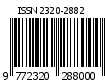
ISSN: 2320-2882 Impact Factor: 7.97 and ISSN APPROVED Journal Starting Year (ESTD) : 2013


ISSN and 7.97 Impact Factor Details
ISSN: 2320-2882 Impact Factor: 7.97 and ISSN APPROVED Journal Starting Year (ESTD) : 2013
DOI Details
CONFERENCE
CONFERENCE MANAGMENT & PUBLICATION CONFERENCE PROPOSAL
RECENT CONFERENCE

CONFERENCE PROPOSAL CONFERENCE PROCEEDINGS
CONFERENCE PROPOSAL CONFERENCE PROCEEDINGS
For Reviewer /Referral (RMS) Earn 500 per paper
Important Links
NEWS & Conference
Digital Library
IJCRT RMS | Earn 500 Per Paper.

Open Access


LICENSE
Indexing Partner
Scholarly open access journals, Peer-reviewed, and Refereed Journals, Impact factor 7.97 (Calculate by google scholar and Semantic Scholar | AI-Powered Research Tool) , Multidisciplinary, Monthly, Indexing in all major database & Metadata, Citation Generator, Digital Object Identifier(DOI)