Important Details
IJCRT - International Peer Reviewed, Open Access Journal, Multidisciplinary, Monthly, Nominal(Low) Fees for Professional Research Services International Journal of Creative Research Thoughts - IJCRT Peer Review Journal, Refereed Journal, Peer Reviewed Journal , Referred Journal and Indexed Journal, Open access, Online and Print Journal,international Journal Open Access, Accepted by Indian and foreign university ,IJCRT Followed Norms, guidelines, requirement, listing criteria and methodology of score/point also applied from: Scopus , Web of Science , UGC Approved , UGC CARE, UGC-CARE .
UGC Approved Journal No: 49023 (18)
UGC approval Link
https://ijcrt.org/ugc%20approval.jpg
All Policy and Approval
Please Like Our Facebook Page | CrossRef DOI and Hard copy of Certificate Provide if required. | www.IJCRT.org | editor@IJCRT.org | IJCRT WhatsApp +91 94294 58311
Publication Details:
- Paper Submission : 31-Oct-2026. Call For Paper (Volume 14 | Issue 9 | Month- September 2026)
- Acceptance/Rejection Notification: Within 02-04 Days.
- Paper Publish: Within 02-04 Days after submitting all documents.
-
Submit Your Paper Any time There No deadline.
-
Publication fees : 1570 INR for Indian author & 59$ for foreign International author.
Please Like Our Facebook Page | CrossRef DOI and Hard copy of Certificate Provide if required.
Licence and Indexing
Indexing In Google Scholar, SSRN, ResearcherID-Publons, Semantic Scholar | AI-Powered Research Tool, Microsoft Academic, Academia.edu, arXiv.org, Research Gate, CiteSeerX, ResearcherID Thomson Reuters, Mendeley : reference manager, DocStoc, ISSUU, Scribd, and many more | High Impact Factor: 7.97 | Digital object identifier (DOI) and Hard Copy of certificate Provided.



























Licence
DOI
ISSN Approved impact factor: 7.97 
Creative Common 
Valid as per new UGC Gazette regulations 

INTERNATIONAL JOURNAL OF CREATIVE RESEARCH THOUGHTS - IJCRT (IJCRT.ORG)
International Peer Reviewed & Refereed Journals, Open Access Journal
IJCRT Peer-Reviewed (Refereed) Journal as Per New UGC Rules.
ISSN Approved Journal No: 2320-2882 | Impact factor: 7.97 | ESTD Year: 2013
Call For Paper - Volume 14 | Issue 9 | Month- September 2026
Scholarly open access journals, Peer-reviewed, and Refereed Journals, Impact factor 7.97 (Calculate by google scholar and Semantic Scholar | AI-Powered Research Tool) , Multidisciplinary, Monthly, Indexing in all major database & Metadata, Citation Generator, Digital Object Identifier(CrossRef DOI)
IJCRT WhatsApp Contact
IJCRT Search Xplore - Search all paper by Paper Name , Author Name, and Title
Volume 14 | Issue 4 |
Volume 14 | Issue 4 | Month
Downlaod After Publication 1) Table of content index in PDF
2) Table of content index in HTML 2)Table of content index in HTML
3) Front Page 3) Front Page
4) Back Page 4) Back Page
5) Editor Board Member 5)Editor Board Member
6) OLD Style Issue 6)OLD Style Issue
 |
 |
|---|---|
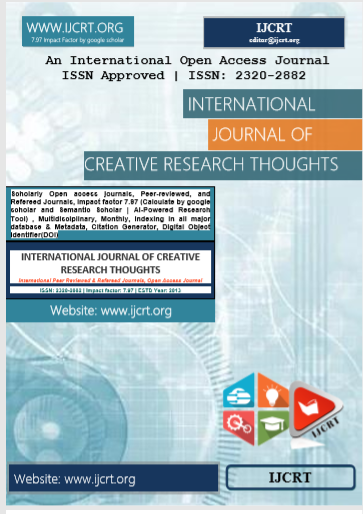
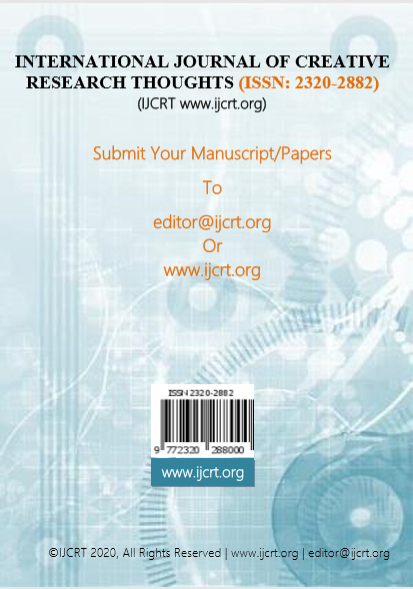
| IJCRT Journal front page | IJCRT Journal Back Page |
Paper Title: SOCIAL MEDIA USAGE AND ITS INFLUENCE ON ACADEMIC PERFORMANCE OF UNDERGRADUATE STUDENTS
Author Name(s): Ms.S.Ambika
Published Paper ID: - IJCRT2604898
Register Paper ID - 306393
Publisher Journal Name: IJPUBLICATION, IJCRT
DOI Member ID: 10.6084/m9.doi.one.IJCRT2604898 and DOI :
Author Country : Indian Author, India, 641109 , Coimbatore, 641109 , | Research Area: Management All Published Paper URL: http://ijcrt.org/viewfull.php?&p_id=IJCRT2604898 Published Paper PDF: download.php?file=IJCRT2604898 Published Paper PDF: http://www.ijcrt.org/papers/IJCRT2604898.pdf
Your Paper Publication Details:
Title: SOCIAL MEDIA USAGE AND ITS INFLUENCE ON ACADEMIC PERFORMANCE OF UNDERGRADUATE STUDENTS
DOI (Digital Object Identifier) :
Pubished in Volume: 14 | Issue: 4 | Year: April 2026
Publisher Name : IJCRT | www.ijcrt.org | ISSN : 2320-2882
Subject Area: Management All
Author type: Indian Author
Pubished in Volume: 14
Issue: 4
Pages: h720-h724
Year: April 2026
Downloads: 83
E-ISSN Number: 2320-2882
Abstract
Abstract: This study examines the influence of social media usage on the academic performance of undergraduate students. With the rapid growth of digital platforms such as Instagram, WhatsApp, YouTube, and Facebook, students increasingly spend significant time on social media for both academic and non-academic purposes. The study aims to analyze how the frequency, duration, and purpose of social media usage affect students' concentration, study habits, and overall academic outcomes. Primary data was collected through a structured questionnaire from undergraduate students. Statistical tools such as percentage analysis and correlation were used for data interpretation. The findings indicate that while social media serves as a useful academic support tool for information sharing and learning, excessive usage leads to distraction, reduced study time, and lower academic performance. The study concludes that controlled and purposeful use of social media can positively contribute to academic success, whereas unregulated usage may have adverse effects.
Licence: creative commons attribution 4.0
License
Creative Commons Attribution 4.0 and The Open Definition

Keywords
Key Terms: Social Media, Academic Performance, Students, Digital Usage, Education
License
Creative Commons Attribution 4.0 and The Open Definition
Paper Title: Transparent Voting System
Author Name(s): Kunde Jyothsna, E.Srivarshini, A.Pardhasaradhi, K.Tharun
Published Paper ID: - IJCRT2604897
Register Paper ID - 305313
Publisher Journal Name: IJPUBLICATION, IJCRT
DOI Member ID: 10.6084/m9.doi.one.IJCRT2604897 and DOI :
Author Country : Indian Author, India, 500068 , Hyderabad, 500068 , | Research Area: Science and Technology Published Paper URL: http://ijcrt.org/viewfull.php?&p_id=IJCRT2604897 Published Paper PDF: download.php?file=IJCRT2604897 Published Paper PDF: http://www.ijcrt.org/papers/IJCRT2604897.pdf
Your Paper Publication Details:
Title: TRANSPARENT VOTING SYSTEM
DOI (Digital Object Identifier) :
Pubished in Volume: 14 | Issue: 4 | Year: April 2026
Publisher Name : IJCRT | www.ijcrt.org | ISSN : 2320-2882
Subject Area: Science and Technology
Author type: Indian Author
Pubished in Volume: 14
Issue: 4
Pages: h707-h719
Year: April 2026
Downloads: 97
E-ISSN Number: 2320-2882
Abstract
A transparent and secure voting system is essential for keeping modern democratic processes trustworthy. This paper suggests a decentralized framework based on blockchain to ensure security, transparency, and reliability. The system uses smart contracts deployed on technology. It uses Ethereum and the Keccak-256 cryptographic hashing algorithm to ensure security, transparency, and reliability. The system uses smart contracts deployed on the Ethereum network to record and manage votes in a distributed and unchangeable ledger. This approach removes the risks tied to centralized control. Each vote is encrypted and hashed with Keccak-256. This ensures data integrity and stops unauthorized changes or duplication. Voter authentication uses cryptographic techniques to protect both voter privacy and system accountability. The decentralized nature of the blockchain allows real-time verification and auditing of votes, which improves transparency and public trust. Additionally, the system is built to defend against common cybersecurity threats like data tampering, replay attacks, and unauthorized access. By combining blockchain with effective cryptographic methods, the proposed voting system offers a scalable, tamper-proof, and reliable solution for secure digital elections. This approach addresses the limitations of traditional and electronic voting methods.
Licence: creative commons attribution 4.0
License
Creative Commons Attribution 4.0 and The Open Definition
Keywords
Ethereum, Blockchain, Transparent Voting System, Keccak-256, Cybersecurity, Smart Contracts.
License
Creative Commons Attribution 4.0 and The Open Definition
Paper Title: The Impact Of Neuroinflammation on the advancement of Neurodegenerative Disorders
Author Name(s): J.Ramganesh, S.Anu jeya, V.Abirami
Published Paper ID: - IJCRT2604896
Register Paper ID - 306299
Publisher Journal Name: IJPUBLICATION, IJCRT
DOI Member ID: 10.6084/m9.doi.one.IJCRT2604896 and DOI : https://doi.org/10.56975/ijcrt.v14i4.306299
Author Country : Indian Author, India, 626111 , Rajapalaym , 626111 , | Research Area: Pharmacy All Published Paper URL: http://ijcrt.org/viewfull.php?&p_id=IJCRT2604896 Published Paper PDF: download.php?file=IJCRT2604896 Published Paper PDF: http://www.ijcrt.org/papers/IJCRT2604896.pdf
Your Paper Publication Details:
Title: THE IMPACT OF NEUROINFLAMMATION ON THE ADVANCEMENT OF NEURODEGENERATIVE DISORDERS
DOI (Digital Object Identifier) : https://doi.org/10.56975/ijcrt.v14i4.306299
Pubished in Volume: 14 | Issue: 4 | Year: April 2026
Publisher Name : IJCRT | www.ijcrt.org | ISSN : 2320-2882
Subject Area: Pharmacy All
Author type: Indian Author
Pubished in Volume: 14
Issue: 4
Pages: h697-h706
Year: April 2026
Downloads: 118
E-ISSN Number: 2320-2882
Abstract
Neuroinflammation is a significant pathological mechanism that plays a crucial role in the onset and advancement of neurodegenerative condition including Amyotrophic Lateral Sclerosis, Parkinson's disease, and Alzheimer's disease. Prolonged stimulation of microglia along with astrocytes, triggered due to external toxins, microbial infections, and genetic predisposition, leads to excessive secretion of proinflammatory cytokines, oxidative stress, along with the generation of neurotoxic mediators. These processes result in progressive neuronal damage and synaptic dysfunction. Commonly used anti-inflammatory agents such as NSAIDs and minocycline provide limited clinical benefit. Due to the restricted effectiveness of conventional therapies, researchers are exploring new and more effective treatment strategies. Advanced approaches under development include stem cell-based therapies, GLP-1 receptor agonists, and RNA-based therapeutics targeting inflammatory pathways through mechanisms involving microRNAs and aptamers. These strategies aim to promote neuroprotection, immunomodulation, reduction of oxidative stress, and suppression of proinflammatory signalling. This review highlights the underlying causes and cellular processes of neuroinflammation and examines emerging therapeutic strategies that may slow or modify disease progression rather than merely providing symptomatic relief.
Licence: creative commons attribution 4.0
License
Creative Commons Attribution 4.0 and The Open Definition
Keywords
Neuroinflammation, Neurodegenerative diseases, Microglial activation, GLP-1 receptor agonists, RNA-based therapeutics (microRNAs and aptamers)
License
Creative Commons Attribution 4.0 and The Open Definition
Paper Title: "Corporate Social Responsibility (CSR) Practices And Company's Profitability: A Comparative Study of Selected Indian Company's Profitability."
Author Name(s): Vadher Rakshit Ashwinbhai, Dr. K. D. Ahir
Published Paper ID: - IJCRT2604895
Register Paper ID - 306315
Publisher Journal Name: IJPUBLICATION, IJCRT
DOI Member ID: 10.6084/m9.doi.one.IJCRT2604895 and DOI :
Author Country : Indian Author, India, 360001 , Rajkot, 360001 , | Research Area: Commerce All Published Paper URL: http://ijcrt.org/viewfull.php?&p_id=IJCRT2604895 Published Paper PDF: download.php?file=IJCRT2604895 Published Paper PDF: http://www.ijcrt.org/papers/IJCRT2604895.pdf
Your Paper Publication Details:
Title: "CORPORATE SOCIAL RESPONSIBILITY (CSR) PRACTICES AND COMPANY'S PROFITABILITY: A COMPARATIVE STUDY OF SELECTED INDIAN COMPANY'S PROFITABILITY."
DOI (Digital Object Identifier) :
Pubished in Volume: 14 | Issue: 4 | Year: April 2026
Publisher Name : IJCRT | www.ijcrt.org | ISSN : 2320-2882
Subject Area: Commerce All
Author type: Indian Author
Pubished in Volume: 14
Issue: 4
Pages: h691-h696
Year: April 2026
Downloads: 95
E-ISSN Number: 2320-2882
Abstract
Corporate Social Responsibility (CSR) is no more an emerging trend. It is well established concept for Sustainable development. Importance of CSR activities are also described by Schedule-VII of the Companies Act, 2013. For such companies, which meeting certain financial criteria, this act mandates to invest at least 2% of average Net profit from immediately preceding three years in CSR activities described in Schedule-VII. This study Includes two different CSR following period. First is Pre-CSR mandatory period and second is Post-CSR mandatory period. The main objective of the study is to make comparison of Company's Profitability, in-between above mentioned two different CSR periods. For making this Comparison of Profitability in different time period, Total Six years of data has been collected from selected Indian companies. I.e. Profit from the year 2011-2012 to 2016-2017. Total six year includes three years of Pre-CSR mandatory period and three years of Post-CSR mandatory period. This study is totally based on secondary source of data. For analysis of data Paired-T test method has been used. Finding of this study mentions the different Profitability trend analysis in different companies.
Licence: creative commons attribution 4.0
License
Creative Commons Attribution 4.0 and The Open Definition
Keywords
Corporate Social Responsibility, Profitability, The Companies Act 2013, Pre-CSR Mandatory Period, Post-CSR Mandatory Period
License
Creative Commons Attribution 4.0 and The Open Definition
Paper Title: Influence of Social Media Marketing Strategies on Customer Engagement and Brand Loyalty
Author Name(s): Aditya Jayant
Published Paper ID: - IJCRT2604894
Register Paper ID - 306101
Publisher Journal Name: IJPUBLICATION, IJCRT
DOI Member ID: 10.6084/m9.doi.one.IJCRT2604894 and DOI :
Author Country : Indian Author, India, 201315 , Greater Noida, 201315 , | Research Area: Commerce and Management, MBA All Branch Published Paper URL: http://ijcrt.org/viewfull.php?&p_id=IJCRT2604894 Published Paper PDF: download.php?file=IJCRT2604894 Published Paper PDF: http://www.ijcrt.org/papers/IJCRT2604894.pdf
Your Paper Publication Details:
Title: INFLUENCE OF SOCIAL MEDIA MARKETING STRATEGIES ON CUSTOMER ENGAGEMENT AND BRAND LOYALTY
DOI (Digital Object Identifier) :
Pubished in Volume: 14 | Issue: 4 | Year: April 2026
Publisher Name : IJCRT | www.ijcrt.org | ISSN : 2320-2882
Subject Area: Commerce and Management, MBA All Branch
Author type: Indian Author
Pubished in Volume: 14
Issue: 4
Pages: h677-h690
Year: April 2026
Downloads: 100
E-ISSN Number: 2320-2882
Abstract
Marketers today operate in a radically different landscape than even five years ago. The proliferation of networked digital platforms has granted consumers not only a wider range of choices but also a louder voice in shaping how brands are perceived. Platforms like Instagram, TikTok, YouTube, and Facebook have moved from peripheral entertainment channels to core components of how organizations design their outreach prompting a broader reconceptualization of marketing as a relationship-centered, dialogue-based discipline rather than a one-sided promotional exercise. This paper probes the mechanisms through which social media marketing tactics translate into measurable consumer engagement and, ultimately, into durable brand loyalty, with emphasis on trends prominent between 2025 and 2026. What modern social media marketing involves goes far beyond posting product photographs. It includes engineering participatory experiences from co-created content initiatives and influencer-driven storytelling to algorithmically targeted micro-campaigns and real-time conversational engagement. The unifying objective is not merely to place a brand in front of potential customers but to draw those customers into an ongoing relationship with the brand. This relational orientation marks a decisive break from traditional advertising models, in which a brand's communication was largely unidirectional and consumer response difficult to measure in real time. This study defines consumer engagement as an active, voluntary phenomenon spanning three interconnected layers: cognitive investment (thinking about and evaluating the brand), affective response (developing feelings toward it), and behavioral expression (acting upon those feelings through likes, shares, reviews, or community participation). Critically, engagement in this framework is not a passive metric it reflects a consumer's deliberate choice to invest personal attention and emotional energy in a brand, and high engagement consistently precedes greater satisfaction, trust, and willingness to advocate. Brand loyalty is conceptualized here as a consumer's ongoing prioritization of one brand over functionally similar competitors demonstrated through habitual purchasing, enthusiastic peer recommendation, and a resistance to switching that persists even when alternatives offer competitive pricing. In the networked economy, loyalty is no longer cemented primarily through transactional satisfaction. Consumers develop it through accumulating positive interaction experiences, feeling individually recognized, and identifying with the communities that surround a brand. Social platforms have become the primary arena in which these loyalty-forming experiences occur. Two macro-level forces are reshaping social media marketing at the time of this writing. First, a widespread erosion of consumer trust in paid and promotional content has elevated the perceived value of peer-sourced, user-generated material. Consumers increasingly filter out polished advertising in favor of authentic voices those of fellow users who share unscripted, experience-based assessments of products and brands. Second, the rapid maturation of machine learning and behavioral analytics tools has empowered organizations to move from mass communication to individualized engagement, delivering content calibrated to each user's distinct history of preferences and interactions. To investigate these dynamics empirically, this study collects primary data from social media users through structured survey instruments and supplements these findings with secondary analysis of recent industry and academic literature. Statistical methods including regression and correlation analysis are used to map relationships among the study's core variables and test directional hypotheses about the engagement-loyalty chain. The research produces several key findings: that interactive and personalized content formats are the most powerful drivers of consumer engagement; that engagement functions as a mediating pathway between marketing strategy and brand loyalty; and that authenticity particularly as embodied in user-generated content plays an outsized role in establishing the brand trust that sustains loyalty. These findings carry direct implications for organizations seeking to design more effective, relationship-centered social media programs.
Licence: creative commons attribution 4.0
License
Creative Commons Attribution 4.0 and The Open Definition
Keywords
Social Media Marketing, Customer Engagement, Brand Loyalty, Influencer Marketing
License
Creative Commons Attribution 4.0 and The Open Definition
Paper Title: ROLE OF LAXMIVILAS RASA IN THE MANAGEMENT OF PRATISHYAYA: A SINGLE CASE STUDY
Author Name(s): Dr. Amit Nageshwer, Dr. Abhishek Pathak
Published Paper ID: - IJCRT2604893
Register Paper ID - 306174
Publisher Journal Name: IJPUBLICATION, IJCRT
DOI Member ID: 10.6084/m9.doi.one.IJCRT2604893 and DOI :
Author Country : Indian Author, India, 462047 , Bhopal, 462047 , | Research Area: Humanities All Published Paper URL: http://ijcrt.org/viewfull.php?&p_id=IJCRT2604893 Published Paper PDF: download.php?file=IJCRT2604893 Published Paper PDF: http://www.ijcrt.org/papers/IJCRT2604893.pdf
Your Paper Publication Details:
Title: ROLE OF LAXMIVILAS RASA IN THE MANAGEMENT OF PRATISHYAYA: A SINGLE CASE STUDY
DOI (Digital Object Identifier) :
Pubished in Volume: 14 | Issue: 4 | Year: April 2026
Publisher Name : IJCRT | www.ijcrt.org | ISSN : 2320-2882
Subject Area: Humanities All
Author type: Indian Author
Pubished in Volume: 14
Issue: 4
Pages: h671-h676
Year: April 2026
Downloads: 113
E-ISSN Number: 2320-2882
Abstract
Pratishyaya, a commonly encountered disorder in Ayurvedic clinical practice, is primarily characterized by nasal discharge, sneezing, nasal obstruction, and headache. It closely resembles rhinitis in modern medicine, which can be allergic or infective in origin. Ayurveda attributes the pathogenesis of Pratishyaya to the vitiation of Vata and Kapha Doshas, often precipitated by improper dietary habits and environmental exposure. Laxmivilas Rasa, a classical herbo-mineral formulation, is widely used in respiratory disorders due to its Kapha-Vata pacifying, anti-inflammatory, and Rasayana properties. This study aims to evaluate the efficacy of Laxmivilas Rasa in a diagnosed case of Pratishyaya. A 40year old male patient presenting with classical symptoms was treated with Laxmivilas Rasa (125 mg twice daily) for 14 days. Symptom severity was assessed using a grading scale before and after treatment. Significant improvement was observed, with an overall relief of approximately 75%. The findings suggest that Laxmivilas Rasa is effective and safe in the management of Pratishyaya. However, further large-scale clinical trials are necessary to establish its efficacy scientifically.
Licence: creative commons attribution 4.0
License
Creative Commons Attribution 4.0 and The Open Definition
Keywords
Pratishyaya, Laxmivilas Rasa, Rhinitis, Ayurveda, Nasal Disorders
License
Creative Commons Attribution 4.0 and The Open Definition
Paper Title: Cultivating Equanimity: Jainism's Relevance for Contemporary Mental Well-Being
Author Name(s): Sweta Dabhi, Prof. (Dr.) Alkaben J Macwan
Published Paper ID: - IJCRT2604892
Register Paper ID - 305870
Publisher Journal Name: IJPUBLICATION, IJCRT
DOI Member ID: 10.6084/m9.doi.one.IJCRT2604892 and DOI : https://doi.org/10.56975/ijcrt.v14i4.305870
Author Country : Indian Author, India, 388450 , Anand, 388450 , | Research Area: Social Science All Published Paper URL: http://ijcrt.org/viewfull.php?&p_id=IJCRT2604892 Published Paper PDF: download.php?file=IJCRT2604892 Published Paper PDF: http://www.ijcrt.org/papers/IJCRT2604892.pdf
Your Paper Publication Details:
Title: CULTIVATING EQUANIMITY: JAINISM'S RELEVANCE FOR CONTEMPORARY MENTAL WELL-BEING
DOI (Digital Object Identifier) : https://doi.org/10.56975/ijcrt.v14i4.305870
Pubished in Volume: 14 | Issue: 4 | Year: April 2026
Publisher Name : IJCRT | www.ijcrt.org | ISSN : 2320-2882
Subject Area: Social Science All
Author type: Indian Author
Pubished in Volume: 14
Issue: 4
Pages: h658-h670
Year: April 2026
Downloads: 109
E-ISSN Number: 2320-2882
Abstract
Mental well-being is a growing concern in modern society, with individuals seeking holistic approaches to achieve psychological balance. Jainism, an ancient Indian philosophy, offers profound insights into mental equanimity through its ethical and spiritual framework. This paper explores Jainism's contributions to mental well-being by examining its core principles, such as Ahimsa (non-violence), Aparigraha (non-possessiveness), and Anukampa (compassion), and their psychological benefits. The concept of Samata (equanimity) in Jain philosophy emphasizes inner stability, emotional regulation, and resilience. Jain practices like Samayika (meditation), Pratikraman (self-reflection), and Sallekhana (philosophical acceptance of life and death) play a crucial role in fostering mindfulness, reducing stress, and enhancing cognitive clarity. Ethical living, as prescribed by Jain vows (Mahavratas and Anuvratas), helps mitigate cognitive dissonance and cultivates emotional harmony. This paper also draws parallels between Jain meditative techniques and contemporary mindfulness-based therapies, highlighting the relevance of detachment (Vairagya) in managing anxiety and depression. Through case studies and anecdotal evidence, the discussion underscores how Jain principles contribute to mental resilience and emotional stability. However, challenges such as adapting Jain ideals to fast-paced modern lifestyles and potential misinterpretations of detachment are also examined. The paper concludes by proposing a Jain-inspired framework for mental health that integrates traditional wisdom with modern psychological practices, positioning Jainism as a timeless guide to achieving inner peace and well-being.
Licence: creative commons attribution 4.0
License
Creative Commons Attribution 4.0 and The Open Definition
Keywords
Keywords: Jainism, mental well-being, equanimity, Ahimsa, Aparigraha, Anukampa, mindfulness, meditation, cognitive clarity, detachment, resilience, psychological balance.
License
Creative Commons Attribution 4.0 and The Open Definition
Paper Title: Enhancing and Regularizing Hyperspectral Image Classification Using Hybrid Spatial Spectral Optimal Transport Graph Framework
Author Name(s): Harshith A, Teja M, Madani Shaik M D, Thiruneelakandan A
Published Paper ID: - IJCRT2604891
Register Paper ID - 306505
Publisher Journal Name: IJPUBLICATION, IJCRT
DOI Member ID: 10.6084/m9.doi.one.IJCRT2604891 and DOI :
Author Country : Indian Author, India, 600089 , chennai, 600089 , | Research Area: Science and Technology Published Paper URL: http://ijcrt.org/viewfull.php?&p_id=IJCRT2604891 Published Paper PDF: download.php?file=IJCRT2604891 Published Paper PDF: http://www.ijcrt.org/papers/IJCRT2604891.pdf
Your Paper Publication Details:
Title: ENHANCING AND REGULARIZING HYPERSPECTRAL IMAGE CLASSIFICATION USING HYBRID SPATIAL SPECTRAL OPTIMAL TRANSPORT GRAPH FRAMEWORK
DOI (Digital Object Identifier) :
Pubished in Volume: 14 | Issue: 4 | Year: April 2026
Publisher Name : IJCRT | www.ijcrt.org | ISSN : 2320-2882
Subject Area: Science and Technology
Author type: Indian Author
Pubished in Volume: 14
Issue: 4
Pages: h652-h657
Year: April 2026
Downloads: 79
E-ISSN Number: 2320-2882
Abstract
Hyperspectral image classification is a critical aspect of remote sensing that is applied in land cover mapping and an environmental response but is not without such issues as a high-dimensional dimension, spectral redundancy, and limited labelled observations. The current graph-based representations, i.e., S3CLLEWGCN, are useful in the sense that they capture spatialspectral- relations, but have the disadvantage of sequential optimization, fixed adjacency rules, and scalability. To solve them, this paper comes up with Hybrid Spatial Spectral Optimal Transport Graph Framework that combines supervised manifold embedding with adaptive graph learning. The model is built on entropic regularized Wasserstein distance in constructing the neighborhood at every dynamic level, as well as a bilateral-branch multi-scale Graph Convolutional Network with attention-based aggregation. The combination of cross-entropy with manifold preservation and graph smoothness makes the loss function unified, guaranteeing the robustness of feature learning. It has been proven superior in classification accuracy, increased in generalization and decreased reliance on manual parameter filtering.
Licence: creative commons attribution 4.0
License
Creative Commons Attribution 4.0 and The Open Definition
Keywords
Hyperspectral Image Classification, Graph Convolutional Network, Optimal Transport, Wasserstein Distance, Spatial-Spectral Learning, Manifold Embedding, Semi-Supervised Learning
License
Creative Commons Attribution 4.0 and The Open Definition
Paper Title: Medicinal Properties of Palladium Nanoparticles - A SwissADME screening
Author Name(s): Richa Singh, Kalpana Padmanaban
Published Paper ID: - IJCRT2604890
Register Paper ID - 306368
Publisher Journal Name: IJPUBLICATION, IJCRT
DOI Member ID: 10.6084/m9.doi.one.IJCRT2604890 and DOI :
Author Country : Indian Author, India, 410218 , Navi Mumbai, 410218 , | Research Area: Chemistry All Published Paper URL: http://ijcrt.org/viewfull.php?&p_id=IJCRT2604890 Published Paper PDF: download.php?file=IJCRT2604890 Published Paper PDF: http://www.ijcrt.org/papers/IJCRT2604890.pdf
Your Paper Publication Details:
Title: MEDICINAL PROPERTIES OF PALLADIUM NANOPARTICLES - A SWISSADME SCREENING
DOI (Digital Object Identifier) :
Pubished in Volume: 14 | Issue: 4 | Year: April 2026
Publisher Name : IJCRT | www.ijcrt.org | ISSN : 2320-2882
Subject Area: Chemistry All
Author type: Indian Author
Pubished in Volume: 14
Issue: 4
Pages: h647-h651
Year: April 2026
Downloads: 95
E-ISSN Number: 2320-2882
Abstract
Palladium nanoparticles (A), as a result of APTMS and THF-HPO with Pd salt, have been modelled using SwissADME server and physicochemical, pharmacokinetics, drug-likeness and medicinal properties were screened. The results show that A possess high gastrointestinal (GI) absorption with no blood brain barrier (BBB) permeation. It displays worthy bioavailability score and moderate synthetic accessibility.
Licence: creative commons attribution 4.0
License
Creative Commons Attribution 4.0 and The Open Definition
Keywords
APTMS, THF-HPO, Pd nanoparticles, Medicinal properties and SwissADME
License
Creative Commons Attribution 4.0 and The Open Definition
Paper Title: Bactericidal efficacy of different plant parts of Calotropis procera against pathogenic bacteria
Author Name(s): Sona, Mona, Dr. Anupama Goyal
Published Paper ID: - IJCRT2604889
Register Paper ID - 301146
Publisher Journal Name: IJPUBLICATION, IJCRT
DOI Member ID: 10.6084/m9.doi.one.IJCRT2604889 and DOI :
Author Country : Indian Author, India, 302018 , Jaipur, 302018 , | Research Area: Life Sciences All Published Paper URL: http://ijcrt.org/viewfull.php?&p_id=IJCRT2604889 Published Paper PDF: download.php?file=IJCRT2604889 Published Paper PDF: http://www.ijcrt.org/papers/IJCRT2604889.pdf
Your Paper Publication Details:
Title: BACTERICIDAL EFFICACY OF DIFFERENT PLANT PARTS OF CALOTROPIS PROCERA AGAINST PATHOGENIC BACTERIA
DOI (Digital Object Identifier) :
Pubished in Volume: 14 | Issue: 4 | Year: April 2026
Publisher Name : IJCRT | www.ijcrt.org | ISSN : 2320-2882
Subject Area: Life Sciences All
Author type: Indian Author
Pubished in Volume: 14
Issue: 4
Pages: h640-h646
Year: April 2026
Downloads: 132
E-ISSN Number: 2320-2882
Abstract
Calotropis procera is a medicinal plant known for its rich phytochemical composition and therapeutic potential. The present study evaluates the antibacterial activity of Calotropis procera extracts against three pathogenic bacteria: Escherichia coli, Staphylococcus aureus, and Bacillus subtilis. The plant extracts exhibited significant inhibitory effects against both Gram-negative and Gram-positive bacteria, indicating broad-spectrum antibacterial potential. The observed activity may be attributed to the presence of bioactive compounds such as alkaloids, flavonoids, tannins, and phenolics. These findings support the traditional use of Calotropis procera and suggest its potential as a natural source for developing effective antibacterial agents.
Licence: creative commons attribution 4.0
License
Creative Commons Attribution 4.0 and The Open Definition
Keywords
Calotropis procera, antibacterial activity, alkaloid, flavonoid
License
Creative Commons Attribution 4.0 and The Open Definition
Call For Paper September 2026
Call For Papers
September 2026
Volume 14 | Issue 9
Last Date :
31-Oct-2026
Submit Manuscript Online Impact Factor: 7.97 Review Results : Within 02-03 Days Paper Publication : Within 02-03 Days
September 2026
Volume 14 | Issue 9
Last Date :
31-Oct-2026
Submit Manuscript Online Impact Factor: 7.97 Review Results : Within 02-03 Days Paper Publication : Within 02-03 Days
Published Issue Details
For Authors
Forms / Downloads
Other IMP Links
Indexing Partner
Research Area
LICENSE





ISSN and 7.97 Impact Factor Details
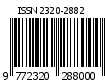
ISSN: 2320-2882 Impact Factor: 7.97 and ISSN APPROVED Journal Starting Year (ESTD) : 2013


ISSN and 7.97 Impact Factor Details
ISSN: 2320-2882 Impact Factor: 7.97 and ISSN APPROVED Journal Starting Year (ESTD) : 2013
DOI Details
CONFERENCE
CONFERENCE MANAGMENT & PUBLICATION CONFERENCE PROPOSAL
RECENT CONFERENCE

CONFERENCE PROPOSAL CONFERENCE PROCEEDINGS
CONFERENCE PROPOSAL CONFERENCE PROCEEDINGS
For Reviewer /Referral (RMS) Earn 500 per paper
Important Links
NEWS & Conference
Digital Library
IJCRT RMS | Earn 500 Per Paper.

Open Access


LICENSE
Indexing Partner
Scholarly open access journals, Peer-reviewed, and Refereed Journals, Impact factor 7.97 (Calculate by google scholar and Semantic Scholar | AI-Powered Research Tool) , Multidisciplinary, Monthly, Indexing in all major database & Metadata, Citation Generator, Digital Object Identifier(DOI)