Important Details
IJCRT - International Peer Reviewed, Open Access Journal, Multidisciplinary, Monthly, Nominal(Low) Fees for Professional Research Services International Journal of Creative Research Thoughts - IJCRT Peer Review Journal, Refereed Journal, Peer Reviewed Journal , Referred Journal and Indexed Journal, Open access, Online and Print Journal,international Journal Open Access, Accepted by Indian and foreign university ,IJCRT Followed Norms, guidelines, requirement, listing criteria and methodology of score/point also applied from: Scopus , Web of Science , UGC Approved , UGC CARE, UGC-CARE .
UGC Approved Journal No: 49023 (18)
UGC approval Link
https://ijcrt.org/ugc%20approval.jpg
All Policy and Approval
Please Like Our Facebook Page | CrossRef DOI and Hard copy of Certificate Provide if required. | www.IJCRT.org | editor@IJCRT.org | IJCRT WhatsApp +91 94294 58311
Publication Details:
- Paper Submission : 31-Oct-2026. Call For Paper (Volume 14 | Issue 9 | Month- September 2026)
- Acceptance/Rejection Notification: Within 02-04 Days.
- Paper Publish: Within 02-04 Days after submitting all documents.
-
Submit Your Paper Any time There No deadline.
-
Publication fees : 1570 INR for Indian author & 59$ for foreign International author.
Please Like Our Facebook Page | CrossRef DOI and Hard copy of Certificate Provide if required.
Licence and Indexing
Indexing In Google Scholar, SSRN, ResearcherID-Publons, Semantic Scholar | AI-Powered Research Tool, Microsoft Academic, Academia.edu, arXiv.org, Research Gate, CiteSeerX, ResearcherID Thomson Reuters, Mendeley : reference manager, DocStoc, ISSUU, Scribd, and many more | High Impact Factor: 7.97 | Digital object identifier (DOI) and Hard Copy of certificate Provided.




























Licence
DOI
ISSN Approved impact factor: 7.97 
Creative Common 
Valid as per new UGC Gazette regulations 

INTERNATIONAL JOURNAL OF CREATIVE RESEARCH THOUGHTS - IJCRT (IJCRT.ORG)
International Peer Reviewed & Refereed Journals, Open Access Journal
IJCRT Peer-Reviewed (Refereed) Journal as Per New UGC Rules.
ISSN Approved Journal No: 2320-2882 | Impact factor: 7.97 | ESTD Year: 2013
Call For Paper - Volume 14 | Issue 9 | Month- September 2026
Scholarly open access journals, Peer-reviewed, and Refereed Journals, Impact factor 7.97 (Calculate by google scholar and Semantic Scholar | AI-Powered Research Tool) , Multidisciplinary, Monthly, Indexing in all major database & Metadata, Citation Generator, Digital Object Identifier(CrossRef DOI)
IJCRT WhatsApp Contact
IJCRT Search Xplore - Search all paper by Paper Name , Author Name, and Title
Volume 14 | Issue 4 |
Volume 14 | Issue 4 | Month
Downlaod After Publication 1) Table of content index in PDF
2) Table of content index in HTML 2)Table of content index in HTML
3) Front Page 3) Front Page
4) Back Page 4) Back Page
5) Editor Board Member 5)Editor Board Member
6) OLD Style Issue 6)OLD Style Issue
 |
 |
|---|---|
| IJCRT Journal front page | IJCRT Journal Back Page |
Paper Title: HUMAN SUSPICIOUS ACTIVITY DETECTION USING YOLO MODEL.
Author Name(s): Shreya Patel, Nimesh Vaidya, VijayKumar B Gadhavi
Published Paper ID: - IJCRT2604758
Register Paper ID - 306304
Publisher Journal Name: IJPUBLICATION, IJCRT
DOI Member ID: 10.6084/m9.doi.one.IJCRT2604758 and DOI :
Author Country : Indian Author, India, 382418 , ahmedabad, 382418 , | Research Area: Science and Technology Published Paper URL: http://ijcrt.org/viewfull.php?&p_id=IJCRT2604758 Published Paper PDF: download.php?file=IJCRT2604758 Published Paper PDF: http://www.ijcrt.org/papers/IJCRT2604758.pdf
Your Paper Publication Details:
Title: HUMAN SUSPICIOUS ACTIVITY DETECTION USING YOLO MODEL.
DOI (Digital Object Identifier) :
Pubished in Volume: 14 | Issue: 4 | Year: April 2026
Publisher Name : IJCRT | www.ijcrt.org | ISSN : 2320-2882
Subject Area: Science and Technology
Author type: Indian Author
Pubished in Volume: 14
Issue: 4
Pages: g504-g507
Year: April 2026
Downloads: 97
E-ISSN Number: 2320-2882
Abstract
Human suspicious activity detection is an important application in intelligent surveillance systems. Traditional monitoring methods require continuous human observation and may fail to detect suspicious behavior accurately. This research proposes a deep learning-based approach using the YOLO model for detecting suspicious human activities such as fighting, running, theft, intrusion, and unusual movement patterns in CCTV footage. The system is implemented using Google Colab with Python, OpenCV, and the Ultralytics YOLO framework. Experimental results show that the proposed model can detect suspicious activities in real time with high accuracy and reduced processing time.
Licence: creative commons attribution 4.0
License
Creative Commons Attribution 4.0 and The Open Definition

Keywords
Suspicious Activity Detection ,YOLO ,Anomaly Detection ,Real-Time Surveillance ,Deep Learning , Google Colab , Computer Vision
License
Creative Commons Attribution 4.0 and The Open Definition
Paper Title: AI-Based Virtual Fitness Trainer with Real-Time Pose Estimation and Intelligent Diet Recommendation System
Author Name(s): Rohan Mhatre, Vishwa Naik, Diya Kharat, Siddhesh Narvekar, Dr. Medha Kulkarni
Published Paper ID: - IJCRT2604757
Register Paper ID - 306104
Publisher Journal Name: IJPUBLICATION, IJCRT
DOI Member ID: 10.6084/m9.doi.one.IJCRT2604757 and DOI :
Author Country : Indian Author, India, 400065 , Mumbai, 400065 , | Research Area: Science and Technology Published Paper URL: http://ijcrt.org/viewfull.php?&p_id=IJCRT2604757 Published Paper PDF: download.php?file=IJCRT2604757 Published Paper PDF: http://www.ijcrt.org/papers/IJCRT2604757.pdf
Your Paper Publication Details:
Title: AI-BASED VIRTUAL FITNESS TRAINER WITH REAL-TIME POSE ESTIMATION AND INTELLIGENT DIET RECOMMENDATION SYSTEM
DOI (Digital Object Identifier) :
Pubished in Volume: 14 | Issue: 4 | Year: April 2026
Publisher Name : IJCRT | www.ijcrt.org | ISSN : 2320-2882
Subject Area: Science and Technology
Author type: Indian Author
Pubished in Volume: 14
Issue: 4
Pages: g496-g503
Year: April 2026
Downloads: 98
E-ISSN Number: 2320-2882
Abstract
In today's fast-paced lifestyle, maintaining proper fitness and nutrition has become a challenge for many individuals. This paper presents an AI-powered Virtual Fitness Trainer designed to assist users with real-time exercise guidance and personalized diet recommendations. The system uses computer vision techniques with MediaPipe and OpenCV to monitor body movements and analyze posture during exercises such as push-ups, bicep curls, and yoga poses. It provides instant feedback to help users correct their form and improve workout effectiveness. In addition to exercise tracking, the system includes a diet recommendation module that analyzes nutritional intake based on user inputs like calories, protein, and fat. A machine learning model is used to evaluate diet quality and suggest improvements according to the user's fitness goals. The system also supports natural language input, allowing users to enter their daily food intake in a simple and intuitive way for automatic nutritional analysis. The application is developed using a Flask-based backend with an interactive web interface, making it accessible and easy to use. The results show that the system can effectively guide users in both exercise and diet management, offering a convenient and affordable solution for maintaining a healthy lifestyle. This work demonstrates how AI can be practically applied to enhance personal fitness and wellness.
Licence: creative commons attribution 4.0
License
Creative Commons Attribution 4.0 and The Open Definition
Keywords
Artificial Intelligence, Computer Vision, Pose Estimation, MediaPipe, Fitness Trainer, Exercise Detection, Real-Time Tracking, Diet Recommendation System, BMI Calculation, Machine Learning
License
Creative Commons Attribution 4.0 and The Open Definition
Paper Title: An Empirical Analysis of Consumer Perception and Brand Awareness in the EdTech Sector
Author Name(s): Subhashini
Published Paper ID: - IJCRT2604756
Register Paper ID - 305965
Publisher Journal Name: IJPUBLICATION, IJCRT
DOI Member ID: 10.6084/m9.doi.one.IJCRT2604756 and DOI :
Author Country : Indian Author, India, 605009 , Puducherry, 605009 , | Research Area: Management All Published Paper URL: http://ijcrt.org/viewfull.php?&p_id=IJCRT2604756 Published Paper PDF: download.php?file=IJCRT2604756 Published Paper PDF: http://www.ijcrt.org/papers/IJCRT2604756.pdf
Your Paper Publication Details:
Title: AN EMPIRICAL ANALYSIS OF CONSUMER PERCEPTION AND BRAND AWARENESS IN THE EDTECH SECTOR
DOI (Digital Object Identifier) :
Pubished in Volume: 14 | Issue: 4 | Year: April 2026
Publisher Name : IJCRT | www.ijcrt.org | ISSN : 2320-2882
Subject Area: Management All
Author type: Indian Author
Pubished in Volume: 14
Issue: 4
Pages: g491-g495
Year: April 2026
Downloads: 91
E-ISSN Number: 2320-2882
Abstract
This study analyzes consumer perception and brand awareness in the EdTech sector and their impact on user adoption. With the increasing use of digital learning platforms, understanding consumer behaviour has become important. The research is based on primary data collected through a structured questionnaire among college students, supported by secondary data from relevant studies. Key factors such as brand awareness, perceived quality, ease of use, and social influence were considered. The findings show that brand awareness significantly influences consumer perception and the adoption of EdTech platforms. The study concludes that improving brand visibility and maintaining positive perception are essential for success in the EdTech market.
Licence: creative commons attribution 4.0
License
Creative Commons Attribution 4.0 and The Open Definition
Keywords
Consumer Perception, Brand Awareness, EdTech, Consumer Behaviour
License
Creative Commons Attribution 4.0 and The Open Definition
Paper Title: A Study on Brand Association on RK Heavy Engineering Pvt. Limited
Author Name(s): GUHAN.S, Dr. SASIREKHA
Published Paper ID: - IJCRT2604755
Register Paper ID - 306064
Publisher Journal Name: IJPUBLICATION, IJCRT
DOI Member ID: 10.6084/m9.doi.one.IJCRT2604755 and DOI : https://doi.org/10.56975/ijcrt.v14i4.306064
Author Country : Indian Author, India, - , -, - , | Research Area: Management All Published Paper URL: http://ijcrt.org/viewfull.php?&p_id=IJCRT2604755 Published Paper PDF: download.php?file=IJCRT2604755 Published Paper PDF: http://www.ijcrt.org/papers/IJCRT2604755.pdf
Your Paper Publication Details:
Title: A STUDY ON BRAND ASSOCIATION ON RK HEAVY ENGINEERING PVT. LIMITED
DOI (Digital Object Identifier) : https://doi.org/10.56975/ijcrt.v14i4.306064
Pubished in Volume: 14 | Issue: 4 | Year: April 2026
Publisher Name : IJCRT | www.ijcrt.org | ISSN : 2320-2882
Subject Area: Management All
Author type: Indian Author
Pubished in Volume: 14
Issue: 4
Pages: g484-g490
Year: April 2026
Downloads: 115
E-ISSN Number: 2320-2882
Abstract
The heavy engineering sector is a critical pillar of India's industrial and infrastructure growth. In an increasingly competitive landscape, companies must build strong brand associations to differentiate themselves and foster long-term customer relationships. This study evaluates the brand association of RK Heavy Engineering Pvt. Limited and examines customer perception of its products and services. The main objective is to analyse how brand attributes such as quality, reliability, innovation, and service excellence shape customer preference and loyalty. Primary data were collected from 200 respondents comprising engineers, managers, contractors, and suppliers, using a structured questionnaire. Statistical tools including Percentage Analysis, Chi-Square tests, and One-Way ANOVA were employed for analysis. Key findings reveal that 87% of respondents recommend the company to others, 42% rate it as excellent, and brand association is significantly influenced by age, residence, educational qualification, occupation, and monthly income. The study concludes that RK Heavy Engineering Pvt. Limited has established meaningful brand associations rooted in product quality and reliability, with scope for further growth through increased digital presence, customer engagement, and innovation.
Licence: creative commons attribution 4.0
License
Creative Commons Attribution 4.0 and The Open Definition
Keywords
Brand Association, Customer Perception, Heavy Engineering, Brand Awareness, Brand Loyalty, RK Heavy Engineering, B2B Marketing.
License
Creative Commons Attribution 4.0 and The Open Definition
Paper Title: Apprentice Arm
Author Name(s): Kurapati Sasi Srija, Sidagam Anirudh, Sadhanala Himasri, P.V.S Harsha Vardhan, Vemula Bhaskar Ajay
Published Paper ID: - IJCRT2604754
Register Paper ID - 306188
Publisher Journal Name: IJPUBLICATION, IJCRT
DOI Member ID: 10.6084/m9.doi.one.IJCRT2604754 and DOI :
Author Country : Indian Author, India, 521137 , Vijayawada, 521137 , | Research Area: Science and Technology Published Paper URL: http://ijcrt.org/viewfull.php?&p_id=IJCRT2604754 Published Paper PDF: download.php?file=IJCRT2604754 Published Paper PDF: http://www.ijcrt.org/papers/IJCRT2604754.pdf
Your Paper Publication Details:
Title: APPRENTICE ARM
DOI (Digital Object Identifier) :
Pubished in Volume: 14 | Issue: 4 | Year: April 2026
Publisher Name : IJCRT | www.ijcrt.org | ISSN : 2320-2882
Subject Area: Science and Technology
Author type: Indian Author
Pubished in Volume: 14
Issue: 4
Pages: g475-g483
Year: April 2026
Downloads: 97
E-ISSN Number: 2320-2882
Abstract
Apprentice Arm is a 6-Degree-of-Freedom, hand-gesture controlled, real-time. (6-DOF) robotic arm system based on the use of computer vision, machine learning, and embedded systems to allow contactless, intuitive robotic manipulation. The system will live video on a regular USB webcam, and will extract 21 three sided video. dimensional hand landmarks with MediaPipe Hands deep-learning of Google. pipeline, and maps the spatial geometry of the hand of the user into six. independent servo motor angles Base rotation,Shoulder lift, Elbow bend, Wrist Pitch, Wrist Roll and Gripper open/close-in real time. The software layer is developed using a Python Flask back-end which integrates. Hand tracking using MediaPipe, Exponential Moving Average (EMA) signal. deadband filtering, smoothing and serial communication into one. cohesive application. The backend is annotated MJPEG video which is being streamed to a modern. web dashboard (HTML5/CSS3/JavaScript) that features a live camera feed, an interactive Three.js 3D digital twin of the robotic arm, six manual override. sliders, a complete task recorder and player engine and an ML-based Smart. Presets module which opts K-Means clustering (scikit-learn) to automatically. find and propose the most common arm positions based on recorded. task history. Hardware On the hardware side, an Arduino UNO microcontroller receives commands regarding the angles. over a 9600-baud UART serial connection and drives a 16 channel I2C PWM, the PCA9685. servo driver. The Base, Shoulder, and have three MG996R high-torque servos. Elbow joints: There are three SG90 micro-servos that drive the Wrist Pitch, Wrist. Roll, and Gripper. The servos use two 3.7 V lithium-ion as a power source. batteries (in series) (~7.4 V), reduced to a regulated (~5.5 V). with an LM2695 DC-to-DC buck converter and then to the V+ of PCA9685. servo power rail. The Apprentice Arm has a gesture to servo end-to-end latency of. around 60 ms, a hand-tracking frequency of 30 FPS, a refresh of the dashboard. frequency of 12.5 Hz, and 3D frame rate of over 60 FPS. The system is developed to be modular, reproducible and extensible, which is why it is suitable. in the case of academic research, educational demonstrations, and hobbyist robotics. HRI projects.
Licence: creative commons attribution 4.0
License
Creative Commons Attribution 4.0 and The Open Definition
Keywords
Keywords: Hand Gesture Recognition, 6-DOF Robotic Arm, Human-Robot Interaction (HRI), MediaPipe Hands, Computer Vision, Machine Learning, K-Means Clustering, Smart Presets, Exponential Moving Average (EMA), Deadband Filtering, Arduino UNO, PCA9685 Servo Driver, Real-Time Control System, Flask Web Application, Three.js Visualization.
License
Creative Commons Attribution 4.0 and The Open Definition
Paper Title: Psychosocial Predictors Of Social Anxiety Among Adolescents:The Role Of Imaginary Audience Beliefs And Problematic Social Media Use
Author Name(s): Simran Arora, Dr.Akancha Pandey
Published Paper ID: - IJCRT2604753
Register Paper ID - 306180
Publisher Journal Name: IJPUBLICATION, IJCRT
DOI Member ID: 10.6084/m9.doi.one.IJCRT2604753 and DOI :
Author Country : Indian Author, India, 110048 , New Delhi, 110048 , | Research Area: Social Science All Published Paper URL: http://ijcrt.org/viewfull.php?&p_id=IJCRT2604753 Published Paper PDF: download.php?file=IJCRT2604753 Published Paper PDF: http://www.ijcrt.org/papers/IJCRT2604753.pdf
Your Paper Publication Details:
Title: PSYCHOSOCIAL PREDICTORS OF SOCIAL ANXIETY AMONG ADOLESCENTS:THE ROLE OF IMAGINARY AUDIENCE BELIEFS AND PROBLEMATIC SOCIAL MEDIA USE
DOI (Digital Object Identifier) :
Pubished in Volume: 14 | Issue: 4 | Year: April 2026
Publisher Name : IJCRT | www.ijcrt.org | ISSN : 2320-2882
Subject Area: Social Science All
Author type: Indian Author
Pubished in Volume: 14
Issue: 4
Pages: g464-g474
Year: April 2026
Downloads: 109
E-ISSN Number: 2320-2882
Abstract
Adolescence is considered an important stage in an individual's life during which self-consciousness and identity are more prevalent. Adolescents are more sensitive to peer evaluation during this stage. Adolescence is often considered a stage where social anxiety is more common among individuals. Social anxiety is the fear or apprehension experienced by an individual in social situations. Adolescents are more engaged with social media in the modern age compared to previous eras. Two important psychosocial factors that may cause social anxiety among adolescents are imaginary audience beliefs and problematic social media use. This study aimed to investigate whether imaginary audience beliefs and problematic social media use predict social anxiety among adolescents. A sample size of 132 adolescents between 13 and 18 years of age was considered for the study using a convenience sampling design. Standardized instruments were used to measure imaginary audience beliefs, problematic social media use, and social anxiety among the sample group.The results revealed that both imaginary audience beliefs and problematic social media usage were positively related to social anxiety and were significant predictors of levels of social anxiety. These findings underscore the need to take into consideration cognitive and behavioral aspects of social media usage while developing interventions to aid adolescents' mental health. To conclude, this paper makes an addition to the existing body of knowledge on the determinants of social anxiety disorder and the association between imaginary audience and social media addiction. Therefore, it becomes necessary for adolescents to engage in healthy social media behavior and be conscious of their self-consciousness in order to overcome social anxiety.
Licence: creative commons attribution 4.0
License
Creative Commons Attribution 4.0 and The Open Definition
Keywords
Keywords - Social anxiety, imaginary audience beliefs, problematic social media usage, adolescents, psychosocial predictors
License
Creative Commons Attribution 4.0 and The Open Definition
Paper Title: Fixed Point Theorem with Rational Expansive Mappings in Complex Valued Partial Metric Space
Author Name(s): Shubheksha Panthi, A.S. Saluja, Manoj Ughade
Published Paper ID: - IJCRT2604752
Register Paper ID - 305578
Publisher Journal Name: IJPUBLICATION, IJCRT
DOI Member ID: 10.6084/m9.doi.one.IJCRT2604752 and DOI :
Author Country : Indian Author, India, 462042 , BHOPAL, 462042 , | Research Area: Mathematics All Published Paper URL: http://ijcrt.org/viewfull.php?&p_id=IJCRT2604752 Published Paper PDF: download.php?file=IJCRT2604752 Published Paper PDF: http://www.ijcrt.org/papers/IJCRT2604752.pdf
Your Paper Publication Details:
Title: FIXED POINT THEOREM WITH RATIONAL EXPANSIVE MAPPINGS IN COMPLEX VALUED PARTIAL METRIC SPACE
DOI (Digital Object Identifier) :
Pubished in Volume: 14 | Issue: 4 | Year: April 2026
Publisher Name : IJCRT | www.ijcrt.org | ISSN : 2320-2882
Subject Area: Mathematics All
Author type: Indian Author
Pubished in Volume: 14
Issue: 4
Pages: g453-g463
Year: April 2026
Downloads: 101
E-ISSN Number: 2320-2882
Abstract
This paper establishes a common fixed-point theorem in complex valued partial metric spaces using rational expansive mappings and newly defined implicit relations. Under the framework of occasionally weakly compatible mappings, the existence and uniqueness of a common fixed point for four self-mappings are proved. Our result is generalization of some of the results existing in the literature.
Licence: creative commons attribution 4.0
License
Creative Commons Attribution 4.0 and The Open Definition
Keywords
Common fixed point, Complex valued partial metric space, Rational expansive mapping, Occasionally Weakly Compatible (OWC) mappings, Implicit relation
License
Creative Commons Attribution 4.0 and The Open Definition
Paper Title: From Living Dead To Warrior Widow: The Evolution Of Female Agency In Meira Chand's Sacred Waters
Author Name(s): Anziya Latheef
Published Paper ID: - IJCRT2604751
Register Paper ID - 306295
Publisher Journal Name: IJPUBLICATION, IJCRT
DOI Member ID: 10.6084/m9.doi.one.IJCRT2604751 and DOI : https://doi.org/10.56975/ijcrt.v14i4.306295
Author Country : Indian Author, India, 691014 , Kollam, 691014 , | Research Area: Arts All Published Paper URL: http://ijcrt.org/viewfull.php?&p_id=IJCRT2604751 Published Paper PDF: download.php?file=IJCRT2604751 Published Paper PDF: http://www.ijcrt.org/papers/IJCRT2604751.pdf
Your Paper Publication Details:
Title: FROM LIVING DEAD TO WARRIOR WIDOW: THE EVOLUTION OF FEMALE AGENCY IN MEIRA CHAND'S SACRED WATERS
DOI (Digital Object Identifier) : https://doi.org/10.56975/ijcrt.v14i4.306295
Pubished in Volume: 14 | Issue: 4 | Year: April 2026
Publisher Name : IJCRT | www.ijcrt.org | ISSN : 2320-2882
Subject Area: Arts All
Author type: Indian Author
Pubished in Volume: 14
Issue: 4
Pages: g447-g452
Year: April 2026
Downloads: 116
E-ISSN Number: 2320-2882
Abstract
Sacred Waters by Meira Chand is a compelling and multi layered exploration of female agency within the overlapping frameworks of patriarchy and colonial rule in South and South East Asia. This paper analyses the evolution of that agency through the life of the novel's protagonist Sita. She was a victim of the oppressive traditions created by patriarchal institutions that treated female body as subordinate. She goes on to become a war veteran who served in The Rani of Jhansi Regiment, through the medium of literacy and her sheer passion. Drawing on the theory of subaltern by Gayatri Spivak, the paper discusses how the 'grammar of nothingness' was employed by the society to reduce the women to a worthless and voiceless object. The analysis then applies Judith Butler's theory of gender performativity to portray the social transformation of the naive girl into a self-reliant woman by disrupting the gender normed roles. Chandra Talpade Mohanty's critique of the monolithic 'Third World Woman' is deployed to resist the reduction of the novel's female characters to a singular condition of victimhood. It throws light on the differential axes of class, caste, and colonial privilege that fracture the category of women in the novel. Finally, the intergenerational transmission of agency from Sita to her adoptive daughter Amita through Marianne Hirsch's theory of postmemory. The paper argues that Sacred Waters presents female agency not as a single event but as an ongoing process of claiming the voice, body and narrative that is incomplete yet quietly insistent.
Licence: creative commons attribution 4.0
License
Creative Commons Attribution 4.0 and The Open Definition
Keywords
Female Agency, Sacred Waters, Meira Chand, Patriarchy, Rani of Jhansi Regiment, Subaltern, Gender Performativity, Third World Women, Postmemory, Intergenerational
License
Creative Commons Attribution 4.0 and The Open Definition
Paper Title: Existentialism in The Foreigner: Alienation, Freedom, and Moral Responsibility
Author Name(s): S.ARULVIZHI, MA.,M.Phil.,B.Ed.,, Dr.M. PREMAVATHY MA.,M.Phil.,Ph.D.
Published Paper ID: - IJCRT2604750
Register Paper ID - 306056
Publisher Journal Name: IJPUBLICATION, IJCRT
DOI Member ID: 10.6084/m9.doi.one.IJCRT2604750 and DOI :
Author Country : Indian Author, India, - , -, - , | Research Area: Science All Published Paper URL: http://ijcrt.org/viewfull.php?&p_id=IJCRT2604750 Published Paper PDF: download.php?file=IJCRT2604750 Published Paper PDF: http://www.ijcrt.org/papers/IJCRT2604750.pdf
Your Paper Publication Details:
Title: EXISTENTIALISM IN THE FOREIGNER: ALIENATION, FREEDOM, AND MORAL RESPONSIBILITY
DOI (Digital Object Identifier) :
Pubished in Volume: 14 | Issue: 4 | Year: April 2026
Publisher Name : IJCRT | www.ijcrt.org | ISSN : 2320-2882
Subject Area: Science All
Author type: Indian Author
Pubished in Volume: 14
Issue: 4
Pages: g443-g446
Year: April 2026
Downloads: 101
E-ISSN Number: 2320-2882
Abstract
This study looks at how the book "The Foreigner" by Arun Joshi, written in 1968, deals with big questions about life, like feeling alone, being free, and doing the right thing. The main character, Sindi Oberoi, is like a symbol of people today who are trying to figure out who they are in a world that doesn't seem to care. We're using ideas from philosophers like Jean-Paul Sartre and Albert Camus to understand how Joshi uses these concepts in an Indian setting. What we found is that Joshi doesn't just show how sad and hopeless life can be, but also how people can wake up and start making good choices by taking responsibility and getting involved. By closely reading the book and using critical thinking, we're saying that "The Foreigner" is an important part of talking about these big life questions in Indian English literature.
Licence: creative commons attribution 4.0
License
Creative Commons Attribution 4.0 and The Open Definition
Keywords
Existentialism, Alienation, Identity, Freedom, Absurdity, Moral Responsibility, Indian English Fiction, Arun Joshi.
License
Creative Commons Attribution 4.0 and The Open Definition
Paper Title: Access to Basic Amenities In Rural Areas :Issues and Challenges with Special Reference to Banda District
Author Name(s): Satyam tripathi, Dr Satendra kumar Singh
Published Paper ID: - IJCRT2604749
Register Paper ID - 305883
Publisher Journal Name: IJPUBLICATION, IJCRT
DOI Member ID: 10.6084/m9.doi.one.IJCRT2604749 and DOI :
Author Country : Indian Author, India, 471516 , chhatarpur , 471516 , | Research Area: Medical Science All Published Paper URL: http://ijcrt.org/viewfull.php?&p_id=IJCRT2604749 Published Paper PDF: download.php?file=IJCRT2604749 Published Paper PDF: http://www.ijcrt.org/papers/IJCRT2604749.pdf
Your Paper Publication Details:
Title: ACCESS TO BASIC AMENITIES IN RURAL AREAS :ISSUES AND CHALLENGES WITH SPECIAL REFERENCE TO BANDA DISTRICT
DOI (Digital Object Identifier) :
Pubished in Volume: 14 | Issue: 4 | Year: April 2026
Publisher Name : IJCRT | www.ijcrt.org | ISSN : 2320-2882
Subject Area: Medical Science All
Author type: Indian Author
Pubished in Volume: 14
Issue: 4
Pages: g429-g442
Year: April 2026
Downloads: 76
E-ISSN Number: 2320-2882
Abstract
Human development and the ability to overcome the intergenerational cycle of rural poverty are based on access to basic amenities safe drinking water, sanitation, electricity, housing, education and healthcare. The rural-urban disparity in amenity coverage in India is stubbornly large, even after 60 years of planned development and with a multiplicity of flagship programmes. The Bundelkhand area, especially Banda district of Uttar Pradesh is a miniature of this challenge. Having almost 94 percent of its population in the villages, Banda is afflicted with acute depletion of groundwater, unsanitary habits, unstable power generation, lack of health and education facilities and a chronic lack of housing facilities. The present paper is a data based extensive analysis of the situation of, problems in and difficulties of providing basic amenities of rural Banda. Based on Census 2011, government dashboards, third party audits, academic research and field surveys, the study quantifies the coverage and functionality of important services. It determines the key constraints that are hydro geological, behavioural, institutional, financial and governance related that hinder universal access. Lastly, it provides a list of policy recommendations which can be implemented to close the amenity gap, and improve the quality of services and promote inclusive rural development in Banda and other backward regions
Licence: creative commons attribution 4.0
License
Creative Commons Attribution 4.0 and The Open Definition
Keywords
Basic amenities, rural development, water scarcity, sanitation, electrification, housing, primary health centres, Banda district, Bundelkhand.
License
Creative Commons Attribution 4.0 and The Open Definition
Call For Paper September 2026
Call For Papers
September 2026
Volume 14 | Issue 9
Last Date :
31-Oct-2026
Submit Manuscript Online Impact Factor: 7.97 Review Results : Within 02-03 Days Paper Publication : Within 02-03 Days
September 2026
Volume 14 | Issue 9
Last Date :
31-Oct-2026
Submit Manuscript Online Impact Factor: 7.97 Review Results : Within 02-03 Days Paper Publication : Within 02-03 Days
Published Issue Details
For Authors
Forms / Downloads
Other IMP Links
Indexing Partner
Research Area
LICENSE





ISSN and 7.97 Impact Factor Details
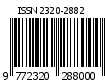
ISSN: 2320-2882 Impact Factor: 7.97 and ISSN APPROVED Journal Starting Year (ESTD) : 2013


ISSN and 7.97 Impact Factor Details
ISSN: 2320-2882 Impact Factor: 7.97 and ISSN APPROVED Journal Starting Year (ESTD) : 2013
DOI Details
CONFERENCE
CONFERENCE MANAGMENT & PUBLICATION CONFERENCE PROPOSAL
RECENT CONFERENCE

CONFERENCE PROPOSAL CONFERENCE PROCEEDINGS
CONFERENCE PROPOSAL CONFERENCE PROCEEDINGS
For Reviewer /Referral (RMS) Earn 500 per paper
Important Links
NEWS & Conference
Digital Library
IJCRT RMS | Earn 500 Per Paper.

Open Access


LICENSE
Indexing Partner
Scholarly open access journals, Peer-reviewed, and Refereed Journals, Impact factor 7.97 (Calculate by google scholar and Semantic Scholar | AI-Powered Research Tool) , Multidisciplinary, Monthly, Indexing in all major database & Metadata, Citation Generator, Digital Object Identifier(DOI)