Important Details
IJCRT - International Peer Reviewed, Open Access Journal, Multidisciplinary, Monthly, Nominal(Low) Fees for Professional Research Services International Journal of Creative Research Thoughts - IJCRT Peer Review Journal, Refereed Journal, Peer Reviewed Journal , Referred Journal and Indexed Journal, Open access, Online and Print Journal,international Journal Open Access, Accepted by Indian and foreign university ,IJCRT Followed Norms, guidelines, requirement, listing criteria and methodology of score/point also applied from: Scopus , Web of Science , UGC Approved , UGC CARE, UGC-CARE .
UGC Approved Journal No: 49023 (18)
UGC approval Link
https://ijcrt.org/ugc%20approval.jpg
All Policy and Approval
Please Like Our Facebook Page | CrossRef DOI and Hard copy of Certificate Provide if required. | www.IJCRT.org | editor@IJCRT.org | IJCRT WhatsApp +91 94294 58311
Publication Details:
- Paper Submission : 31-Oct-2026. Call For Paper (Volume 14 | Issue 9 | Month- September 2026)
- Acceptance/Rejection Notification: Within 02-04 Days.
- Paper Publish: Within 02-04 Days after submitting all documents.
-
Submit Your Paper Any time There No deadline.
-
Publication fees : 1570 INR for Indian author & 59$ for foreign International author.
Please Like Our Facebook Page | CrossRef DOI and Hard copy of Certificate Provide if required.
Licence and Indexing
Indexing In Google Scholar, SSRN, ResearcherID-Publons, Semantic Scholar | AI-Powered Research Tool, Microsoft Academic, Academia.edu, arXiv.org, Research Gate, CiteSeerX, ResearcherID Thomson Reuters, Mendeley : reference manager, DocStoc, ISSUU, Scribd, and many more | High Impact Factor: 7.97 | Digital object identifier (DOI) and Hard Copy of certificate Provided.




























Licence
DOI
ISSN Approved impact factor: 7.97 
Creative Common 
Valid as per new UGC Gazette regulations 

INTERNATIONAL JOURNAL OF CREATIVE RESEARCH THOUGHTS - IJCRT (IJCRT.ORG)
International Peer Reviewed & Refereed Journals, Open Access Journal
IJCRT Peer-Reviewed (Refereed) Journal as Per New UGC Rules.
ISSN Approved Journal No: 2320-2882 | Impact factor: 7.97 | ESTD Year: 2013
Call For Paper - Volume 14 | Issue 9 | Month- September 2026
Scholarly open access journals, Peer-reviewed, and Refereed Journals, Impact factor 7.97 (Calculate by google scholar and Semantic Scholar | AI-Powered Research Tool) , Multidisciplinary, Monthly, Indexing in all major database & Metadata, Citation Generator, Digital Object Identifier(CrossRef DOI)
IJCRT WhatsApp Contact
IJCRT Search Xplore - Search all paper by Paper Name , Author Name, and Title
Volume 14 | Issue 4 |
Volume 14 | Issue 4 | Month
Downlaod After Publication 1) Table of content index in PDF
2) Table of content index in HTML 2)Table of content index in HTML
3) Front Page 3) Front Page
4) Back Page 4) Back Page
5) Editor Board Member 5)Editor Board Member
6) OLD Style Issue 6)OLD Style Issue
 |
 |
|---|---|
| IJCRT Journal front page | IJCRT Journal Back Page |
Paper Title: Advanced Traffic Management System and AI-Powered Traffic Signal Monitoring
Author Name(s): VELISHETTY GANESH, RASOOL DUDEKULA, VASANTHAM POORNA CHANDRA, G PRIYANKA
Published Paper ID: - IJCRT2604698
Register Paper ID - 305749
Publisher Journal Name: IJPUBLICATION, IJCRT
DOI Member ID: 10.6084/m9.doi.one.IJCRT2604698 and DOI :
Author Country : Indian Author, India, 520003 , vijayawada, 520003 , | Research Area: Science and Technology Published Paper URL: http://ijcrt.org/viewfull.php?&p_id=IJCRT2604698 Published Paper PDF: download.php?file=IJCRT2604698 Published Paper PDF: http://www.ijcrt.org/papers/IJCRT2604698.pdf
Your Paper Publication Details:
Title: ADVANCED TRAFFIC MANAGEMENT SYSTEM AND AI-POWERED TRAFFIC SIGNAL MONITORING
DOI (Digital Object Identifier) :
Pubished in Volume: 14 | Issue: 4 | Year: April 2026
Publisher Name : IJCRT | www.ijcrt.org | ISSN : 2320-2882
Subject Area: Science and Technology
Author type: Indian Author
Pubished in Volume: 14
Issue: 4
Pages: f979-f981
Year: April 2026
Downloads: 134
E-ISSN Number: 2320-2882
Abstract
Traffic congestion is a growing concern in rapidly urbanizing cities worldwide. Traditional fixed-time traffic control systems are insufficient to handle dynamic and unpredictable traffic patterns, leading to inefficiencies, fuel wastage, and increased emissions. This paper presents an AI-powered Advanced Traffic Management System (ATMS) that integrates computer vision, deep learning, and intelligent decision-making to improve real-time traffic flow. Using YOLOv8, an advanced object detection framework, the system identifies and counts vehicles in real-time through live CCTV feeds, dynamically adjusting signal timing based on vehicle density. The implementation demonstrates a significant improvement in intersection throughput and a reduction in waiting time compared to conventional systems. Furthermore, emergency vehicle detection and incident alerts enhance safety and mobility, supporting smart city objectives.
Licence: creative commons attribution 4.0
License
Creative Commons Attribution 4.0 and The Open Definition

Keywords
Traffic Management, YOLOv8, Artificial Intelligence, Smart City, Deep Learning, Adaptive Signal Control.
License
Creative Commons Attribution 4.0 and The Open Definition
Paper Title: "A Variable-Order Fractional Constitutive Model for Non-Newtonian Fluids: Mathematical Formulation, Analysis, and Exact Solutions"
Author Name(s): Nikesh L. Timma, Amit P. Kohapare
Published Paper ID: - IJCRT2604697
Register Paper ID - 305736
Publisher Journal Name: IJPUBLICATION, IJCRT
DOI Member ID: 10.6084/m9.doi.one.IJCRT2604697 and DOI :
Author Country : Indian Author, India, 442605 , Gadchiroli , 442605 , | Research Area: Mathematics All Published Paper URL: http://ijcrt.org/viewfull.php?&p_id=IJCRT2604697 Published Paper PDF: download.php?file=IJCRT2604697 Published Paper PDF: http://www.ijcrt.org/papers/IJCRT2604697.pdf
Your Paper Publication Details:
Title: "A VARIABLE-ORDER FRACTIONAL CONSTITUTIVE MODEL FOR NON-NEWTONIAN FLUIDS: MATHEMATICAL FORMULATION, ANALYSIS, AND EXACT SOLUTIONS"
DOI (Digital Object Identifier) :
Pubished in Volume: 14 | Issue: 4 | Year: April 2026
Publisher Name : IJCRT | www.ijcrt.org | ISSN : 2320-2882
Subject Area: Mathematics All
Author type: Indian Author
Pubished in Volume: 14
Issue: 4
Pages: f973-f978
Year: April 2026
Downloads: 95
E-ISSN Number: 2320-2882
Abstract
This paper introduces a variable-order fractional constitutive model for non-Newtonian fluids in which the order of the fractional derivative is allowed to vary spatially and temporally. The proposed formulation generalizes classical fractional rheological models by incorporating heterogeneous memory effects, transition phenomena between Newtonian and non-Newtonian regimes, and multi-scale flow behavior. The model is shown to capture spatially and temporally varying memory effects, enabling the description of complex fluids such as blood, polymer solutions, and drilling muds. A complete mathematical formulation is presented, including constitutive equations, governing equations, and simplifications for canonical flows. Existence and uniqueness results are discussed using energy methods, and exact analytical solutions for steady planar flow and unsteady Couette flow are derived. Parametric analysis demonstrates how variable fractional order unifies shear-thinning, shear- thickening, viscoelastic, and Newtonian behaviors.
Licence: creative commons attribution 4.0
License
Creative Commons Attribution 4.0 and The Open Definition
Keywords
Variable-order fractional calculus; Non-Newtonian fluid; Constitutive modelling; Analytical solution; Fractional Navier-Stokes; Shear-thinning; Shear-thickening; Rheology; Memory effects.
License
Creative Commons Attribution 4.0 and The Open Definition
Paper Title: A SECURE BLOCKCHAIN-BASED SMART VOTING SYSTEM WITH DUAL BIOMETRIC AUTHENTICATION USING FACIAL RECOGNITION AND FINGERPRINT SIMILARITY VERIFICATION
Author Name(s): Mrs.M.Kalaimani, M.Nisma, H.Hasbiya, T.Harinisri
Published Paper ID: - IJCRT2604696
Register Paper ID - 305371
Publisher Journal Name: IJPUBLICATION, IJCRT
DOI Member ID: 10.6084/m9.doi.one.IJCRT2604696 and DOI :
Author Country : Indian Author, India, - , -, - , | Research Area: Science and Technology Published Paper URL: http://ijcrt.org/viewfull.php?&p_id=IJCRT2604696 Published Paper PDF: download.php?file=IJCRT2604696 Published Paper PDF: http://www.ijcrt.org/papers/IJCRT2604696.pdf
Your Paper Publication Details:
Title: A SECURE BLOCKCHAIN-BASED SMART VOTING SYSTEM WITH DUAL BIOMETRIC AUTHENTICATION USING FACIAL RECOGNITION AND FINGERPRINT SIMILARITY VERIFICATION
DOI (Digital Object Identifier) :
Pubished in Volume: 14 | Issue: 4 | Year: April 2026
Publisher Name : IJCRT | www.ijcrt.org | ISSN : 2320-2882
Subject Area: Science and Technology
Author type: Indian Author
Pubished in Volume: 14
Issue: 4
Pages: f966-f972
Year: April 2026
Downloads: 86
E-ISSN Number: 2320-2882
Abstract
The need for safe, transparent, and trustworthy election procedures has grown due to the quick expansion of digital voting systems. In order to guarantee voter legitimacy, this proposed system integrates real-time facial verification using the Grassmann algorithm and fingerprint image authentication with a blockchain-based electronic voting framework. Votes are stored as immutable transactions using blockchain technology, where each vote that is successfully cast is mined and added as a new block using cryptographic hashing methods like SHA-256. Through a secure image upload process, voters must register their fingerprint samples and facial images, which are encrypted and connected to their individual blockchain voter identification number. In order to precisely match the live captured face with the registered data, real-time facial recognition is carried out during the voting process using the Grassmann manifold-based similarity measurement. Fingerprint verification concurrently uses a structured similarity check flow that includes pattern matching against stored biometric templates, image preprocessing, ridge enhancement, and minutiae feature extraction. In order to assess authentication validity and guarantee accurate identity confirmation, the similarity score is calculated. In addition to preventing unauthorized access, impersonation, and duplicate voting attempts, the combined biometric similarity check mechanism greatly increases accuracy. Through dual biometric validation and unique voter ID mapping, the one-person, one-vote principle is rigorously upheld. The blockchain can dynamically adapt to the voting workload while preserving data integrity and consensus thanks to the block sealing concept. The blockchain network safely gathers and maintains all voting records, guaranteeing transparency, auditability, and resistance to manipulation. By combining cutting-edge biometric authentication with decentralized ledger technology, the suggested framework greatly increases election security, reduces electoral fraud, and boosts public confidence in electronic voting systems.
Licence: creative commons attribution 4.0
License
Creative Commons Attribution 4.0 and The Open Definition
Keywords
permissioned Proof of Authority (PoA) blockchain, smart contracts, SHA-256 hashing, blockchain voting, dual biometric authentication, Grassmann manifold, facial recognition, fingerprint minutiae matching, minutiae feature extraction, offline polling, booth-level security, cryptographic device_pairing.
License
Creative Commons Attribution 4.0 and The Open Definition
Paper Title: WORKING CONDITIONS WAGES AND LIVING STANDARDS OF WOMEN WORKERS IN THE RURAL UNORGANISED SECTOR: EVIDENCE FROM GUNTUR DISTRICT ANDHRA PRADESH
Author Name(s): Dr. Panditi Samson
Published Paper ID: - IJCRT2604695
Register Paper ID - 305543
Publisher Journal Name: IJPUBLICATION, IJCRT
DOI Member ID: 10.6084/m9.doi.one.IJCRT2604695 and DOI :
Author Country : Indian Author, India, 522510 , Guntur, 522510 , | Research Area: Social Science All Published Paper URL: http://ijcrt.org/viewfull.php?&p_id=IJCRT2604695 Published Paper PDF: download.php?file=IJCRT2604695 Published Paper PDF: http://www.ijcrt.org/papers/IJCRT2604695.pdf
Your Paper Publication Details:
Title: WORKING CONDITIONS WAGES AND LIVING STANDARDS OF WOMEN WORKERS IN THE RURAL UNORGANISED SECTOR: EVIDENCE FROM GUNTUR DISTRICT ANDHRA PRADESH
DOI (Digital Object Identifier) :
Pubished in Volume: 14 | Issue: 4 | Year: April 2026
Publisher Name : IJCRT | www.ijcrt.org | ISSN : 2320-2882
Subject Area: Social Science All
Author type: Indian Author
Pubished in Volume: 14
Issue: 4
Pages: f957-f965
Year: April 2026
Downloads: 111
E-ISSN Number: 2320-2882
Abstract
The present study describes the work pattern, earning and standard of living of women workers of rural unorganised sector in the background of Guntur district of Andhra Pradesh. Using a primary survey of 264 respondents belonging to five occupational groups (agricultural labourers, artisans, home-based workers, construction labourers and vendors), the paper offers an in depth understanding of the socio-economic vulnerabilities of women workers. The analysis is supported by secondary data from official sources. Descriptive statistics, chi-square tests and ordinary least squares (OLS) are adopted to the daily wage determinants as well as to the wage differentials among occupations. Results show that a large number of working women are earning low daily wages: nearly two thirds are paid less than INR300 per day and they are underemployed for a long period in their lives, working only few days in a year. Even access to basic civic amenities such as safe drinking water and sanitation is out of reach for a substantial proportion of the sample, causing poor health outcomes. The estimated results suggest that years of education, skill level, occupation and a higher number of workdays are positively and significantly associated with wage levels and caste-based wage disparities still persist once these factors are controlled for. Occupational segregation is important: construction and vending pay relatively more than agricultural and home-based work. The paper finds that women labourers in the rural unorganised sector were generally subjected to systemic discrimination vis-a-vis low wages, unemployment and substandard everyday existence. It calls for policy action on wage regulation, skill development, access to civic amenities and affirmative support to the most marginalized groups to improve livelihoods and reduce inequality.
Licence: creative commons attribution 4.0
License
Creative Commons Attribution 4.0 and The Open Definition
Keywords
Working Conditions, Wage Discrimination, Daily Wage, Rural Women Labour, Civic Amenities, Residential Conditions, Health Problems, Unorganised Sector, Guntur District, Gender Inequality
License
Creative Commons Attribution 4.0 and The Open Definition
Paper Title: Traditional Marriage System of the Ao-Nagas
Author Name(s): Tiamenla Imsong
Published Paper ID: - IJCRT2604694
Register Paper ID - 305767
Publisher Journal Name: IJPUBLICATION, IJCRT
DOI Member ID: 10.6084/m9.doi.one.IJCRT2604694 and DOI :
Author Country : Indian Author, India, 797004 , Kohima, 797004 , | Research Area: Social Science All Published Paper URL: http://ijcrt.org/viewfull.php?&p_id=IJCRT2604694 Published Paper PDF: download.php?file=IJCRT2604694 Published Paper PDF: http://www.ijcrt.org/papers/IJCRT2604694.pdf
Your Paper Publication Details:
Title: TRADITIONAL MARRIAGE SYSTEM OF THE AO-NAGAS
DOI (Digital Object Identifier) :
Pubished in Volume: 14 | Issue: 4 | Year: April 2026
Publisher Name : IJCRT | www.ijcrt.org | ISSN : 2320-2882
Subject Area: Social Science All
Author type: Indian Author
Pubished in Volume: 14
Issue: 4
Pages: f947-f956
Year: April 2026
Downloads: 234
E-ISSN Number: 2320-2882
Abstract
ABSTRACT Traditional Marriage System of the Ao Nagas The Naga have written records and that is why the Naga history is so much depended on oral traditions of its customs and habits that were passed down by word of mouth through generations the American Missionaries who were archaeologist, ethnographersand sociologist left an excellent tribal monographs from which we could get important information and study them along with other works done by Naga scholars and bring about an assessment of the traditional ancient marriage system of the Ao Nagas. Nagaland is a land inhabitat by different tribes. This different tribes have their own culture and traditions. Of the different tribes, the Ao Nagas are a major Naga ethnic group native of Mokokchung district inhabiting the North Eastern part of North East India. The Ao Nagas endowed with rich variety of cultural and traditional practices. The Aos belief in recounting their history through oral tradition. It is generally accepted that Chungliyimti is the birth place of the Ao Nagas. It is contended that the Ao Naga custom, norms, system of administration, marriage rules, the ArijuandTsuki (male and female dormitory) system were formulated at Chungliyimti. By way of language, the Ao Nagas are generally divided into the Chungliand Mongsen group. Further, there are variations in the functioning and nomenclature of the administrative system, traditional attire, tattooing and other practices from village to village. Yet, the basic principles underlying the social practices and norms of the Ao Nagas remain the same. It consists of the values, practices and norms that found in the Ao Naga society and are unwritten. It is through the art of remembering and continuous uses that the Ao Naga customary practices and norms find its value in the society. This includes the practice of exogamy (marriage outside the clan), observance of taboo and genna (known as anempong). All customs were of equal importance as the Ao Nagas considered that if one custom is broken, all other customs will also be destroyed. Therefore, much of the customs and usage of the Ao Nagas are retained and practiced even today. This paper is an attempt to understand better about the traditional marriage system of the Ao Nagas and the formation of a family which is regarded as the most important social institution of the Ao Nagas. It is a universally accepted truth that family is the first social unit in any culture and the sustenance and progress of a society depends upon the nature of functioning of its various institutions like family, kinship, institution of marriage and matrimonial laws and customs. For the Ao Nagas, the family (kibong) is the most important social institution. The norms regarding the family are, therefore, the basis on which Ao Naga society is founded. Many scholars have mentioned about the traditional social customs of the Ao Nagas but a detailed primary information has not been gathered regarding the traditional norms of the marriage system of the Ao Nagas. There are certain customary matrimonial processors, customary laws, rites and rituals, taboo and gennas to be performed and fulfilled in various stages pertaining to marriage that is to be recorded systematically and in detail. This paper emphasizes on the working system of the traditional social institution that molds up a person into a responsible citizen in the Ao Naga society during ancient times. There has been continuity and changes on the traditional marriage practices of the Ao Nagas over time. As Christianity had tremendously influence the life of the Ao Nagas, certain rituals and customs are now discarded. Key words:- Naga, Tattoo, Kidong, Ariju, Tsuki, Morung, Marriage, Tradition, rites, rituals,genna, kibong, TIAMENLA IMSONG Assistant Professor Kohima College Kohima, Nagaland tiamenims@gmail.com Contact No. -7005952016 8259823542
Licence: creative commons attribution 4.0
License
Creative Commons Attribution 4.0 and The Open Definition
Keywords
Naga, Tattoo, Kidong, Ariju, Tsuki, Morung, Marriage, Tradition, rites, rituals,genna, kibong
License
Creative Commons Attribution 4.0 and The Open Definition
Paper Title: AI POWERED VIRTUAL JOB INTERVIEW SIMULATOR
Author Name(s): Mrs.A. GOMATHI, S.KAYALVIZHI, M.MANISHA, S.NISHA, A.ISHWARYA
Published Paper ID: - IJCRT2604693
Register Paper ID - 305647
Publisher Journal Name: IJPUBLICATION, IJCRT
DOI Member ID: 10.6084/m9.doi.one.IJCRT2604693 and DOI :
Author Country : Indian Author, India, 620006 , Select City, 620006 , | Research Area: Science and Technology Published Paper URL: http://ijcrt.org/viewfull.php?&p_id=IJCRT2604693 Published Paper PDF: download.php?file=IJCRT2604693 Published Paper PDF: http://www.ijcrt.org/papers/IJCRT2604693.pdf
Your Paper Publication Details:
Title: AI POWERED VIRTUAL JOB INTERVIEW SIMULATOR
DOI (Digital Object Identifier) :
Pubished in Volume: 14 | Issue: 4 | Year: April 2026
Publisher Name : IJCRT | www.ijcrt.org | ISSN : 2320-2882
Subject Area: Science and Technology
Author type: Indian Author
Pubished in Volume: 14
Issue: 4
Pages: f938-f946
Year: April 2026
Downloads: 103
E-ISSN Number: 2320-2882
Abstract
This paper introduces an innovative AI-powered platform designed to optimize and secure the candidate evaluation process in recruitment, education, and certification. The platform utilizes GPT-4's advanced natural language processing capabilities to analyze uploaded PDF resumes, generating personalized, concise questions that are specifically tailored to each candidate's qualifications, skills, and experiences. This approach ensures a more targeted and efficient evaluation, allowing recruiters and educators to focus on the most relevant aspects of the candidate's profile. In addition to automated resume parsing, the platform integrates real-time facial recognition technology for identity verification, preventing impersonation and ensuring the integrity of the process. In the event of any anomalies or suspicious behavior, the system sends instant alerts to recruiters, further enhancing security. The platform's dynamic questioning capability adapts to candidates' responses, offering instant feedback and refining subsequent questions based on previous answers. This creates an interactive and engaging assessment process that not only evaluates candidates more comprehensively but also improves their experience by providing personalized feedback. By combining these advanced features--automated resume parsing, dynamic questioning, and biometric security--the platform provides an efficient, secure, and user-friendly solution that enhances the accuracy and trustworthiness of candidate evaluations. This AI-powered system is highly suitable for applications in recruitment, education, and certification, offering a transformative approach to candidate assessment that benefits both candidates and recruiters alike
Licence: creative commons attribution 4.0
License
Creative Commons Attribution 4.0 and The Open Definition
Keywords
This paper introduces an innovative AI-powered platform designed to optimize and secure the candidate evaluation process in recruitment, education, and certification. The platform utilizes GPT-4's advanced natural language processing capabilities to analyze uploaded PDF resumes, generating personalized, concise questions that are specifically tailored to each candidate's qualifications, skills, and experiences. This approach ensures a more targeted and efficient evaluation, a
License
Creative Commons Attribution 4.0 and The Open Definition
Paper Title: NetGuard: A Scalable Framework for Detecting DDoS Attacks Using Cloud Data Analysis
Author Name(s): Dr.K.Aruna, S. Vishwa, G. Alfred Edison, M. Harin, A. Mohamed Ashar
Published Paper ID: - IJCRT2604692
Register Paper ID - 305386
Publisher Journal Name: IJPUBLICATION, IJCRT
DOI Member ID: 10.6084/m9.doi.one.IJCRT2604692 and DOI :
Author Country : Indian Author, India, - , -, - , | Research Area: Science and Technology Published Paper URL: http://ijcrt.org/viewfull.php?&p_id=IJCRT2604692 Published Paper PDF: download.php?file=IJCRT2604692 Published Paper PDF: http://www.ijcrt.org/papers/IJCRT2604692.pdf
Your Paper Publication Details:
Title: NETGUARD: A SCALABLE FRAMEWORK FOR DETECTING DDOS ATTACKS USING CLOUD DATA ANALYSIS
DOI (Digital Object Identifier) :
Pubished in Volume: 14 | Issue: 4 | Year: April 2026
Publisher Name : IJCRT | www.ijcrt.org | ISSN : 2320-2882
Subject Area: Science and Technology
Author type: Indian Author
Pubished in Volume: 14
Issue: 4
Pages: f930-f937
Year: April 2026
Downloads: 104
E-ISSN Number: 2320-2882
Abstract
Cloud computing environments face an escalating threat from Distributed Denial-of-Service (DDoS) attacks that exhaust computational resources, degrade service availability, and compromise sensitive data stored in shared infrastructure. Traditional centralized security architectures consolidate traffic analysis at a single point, creating single points of failure, scalability bottlenecks, and heightened privacy risks. This paper presents NetGuard, a scalable cloud-security framework that addresses these challenges without relying on artificial intelligence or machine-learning components. NetGuard combines three principal mechanisms: (i) a distributed, threshold-based DDoS detection engine that monitors per-node traffic metrics across multiple cloud nodes; (ii) a cryptographic key-based authentication system using Fernet symmetric encryption (AES-128-CBC with HMAC-SHA256) to enforce fine-grained file-access control; and (iii) an automated real-time alert and response subsystem that logs suspicious events, notifies data owners via e-mail, and triggers countermeasures such as IP-level access restriction. The framework is built on Python and Flask, uses MySQL for persistent storage, and integrates seamlessly with standard cloud-object-storage backends. Experimental evaluation on a multi-node testbed demonstrates that NetGuard achieves attack-detection latency below 3.2 seconds, sustains throughput above 1,500 legitimate requests per second under volumetric flooding, and reduces false-positive rates to 1.8% compared with 6.4% for signature only baselines. The modular design allows horizontal scaling across heterogeneous cloud environments, making NetGuard suitable for enterprise, academic, and government deployments that require robust, yet operationally transparent, cloud-file security.
Licence: creative commons attribution 4.0
License
Creative Commons Attribution 4.0 and The Open Definition
Keywords
Cloud Security, DDoS Detection, Key-Based Authentication, Fernet Encryption, Threshold-Based Anomaly Detection, Secure File Access, Automated Alert System, Flask, Distributed Architecture
License
Creative Commons Attribution 4.0 and The Open Definition
Paper Title: Blockchain Based Voting System
Author Name(s): Junaid Ismail Boat, Shahid Jabbar Patel, Aymaan Ali Siddiquee, Mustkhim Rauf Shaikh, Prof. Nargis Shaikh
Published Paper ID: - IJCRT2604691
Register Paper ID - 306043
Publisher Journal Name: IJPUBLICATION, IJCRT
DOI Member ID: 10.6084/m9.doi.one.IJCRT2604691 and DOI :
Author Country : Indian Author, India, 400050 , Mumbai, 400050 , | Research Area: Science and Technology Published Paper URL: http://ijcrt.org/viewfull.php?&p_id=IJCRT2604691 Published Paper PDF: download.php?file=IJCRT2604691 Published Paper PDF: http://www.ijcrt.org/papers/IJCRT2604691.pdf
Your Paper Publication Details:
Title: BLOCKCHAIN BASED VOTING SYSTEM
DOI (Digital Object Identifier) :
Pubished in Volume: 14 | Issue: 4 | Year: April 2026
Publisher Name : IJCRT | www.ijcrt.org | ISSN : 2320-2882
Subject Area: Science and Technology
Author type: Indian Author
Pubished in Volume: 14
Issue: 4
Pages: f921-f929
Year: April 2026
Downloads: 123
E-ISSN Number: 2320-2882
Abstract
This paper presents the design and implementation of a secure, transparent, and decentralized voting system based on blockchain technology. Traditional voting systems suffer from issues such as lack of transparency, vote tampering, and delays in result processing. The proposed system utilizes blockchain to store votes as immutable transactions, ensuring data integrity and security. Smart contracts are used to automate voter authentication, vote validation, and result computation, eliminating the need for centralized control. Additionally, cryptographic techniques ensure voter anonymity and prevent duplicate voting. The system enhances transparency by allowing verification of transactions while maintaining confidentiality. Experimental results demonstrate improved reliability and efficiency compared to traditional methods. Overall, the proposed system provides a secure and scalable solution for modern digital voting applications.
Licence: creative commons attribution 4.0
License
Creative Commons Attribution 4.0 and The Open Definition
Keywords
Blockchain, Voting System, Smart Contracts, Ethereum, Security, Transparency, Cryptography
License
Creative Commons Attribution 4.0 and The Open Definition
Paper Title: Consumer Behavior Analysis And Prediction In E-commerce Using Machine Learning
Author Name(s): Patel Jiya Alpeshkumar
Published Paper ID: - IJCRT2604690
Register Paper ID - 299315
Publisher Journal Name: IJPUBLICATION, IJCRT
DOI Member ID: 10.6084/m9.doi.one.IJCRT2604690 and DOI :
Author Country : Indian Author, India, 384002 , Mehsana , 384002 , | Research Area: Science and Technology Published Paper URL: http://ijcrt.org/viewfull.php?&p_id=IJCRT2604690 Published Paper PDF: download.php?file=IJCRT2604690 Published Paper PDF: http://www.ijcrt.org/papers/IJCRT2604690.pdf
Your Paper Publication Details:
Title: CONSUMER BEHAVIOR ANALYSIS AND PREDICTION IN E-COMMERCE USING MACHINE LEARNING
DOI (Digital Object Identifier) :
Pubished in Volume: 14 | Issue: 4 | Year: April 2026
Publisher Name : IJCRT | www.ijcrt.org | ISSN : 2320-2882
Subject Area: Science and Technology
Author type: Indian Author
Pubished in Volume: 14
Issue: 4
Pages: f917-f920
Year: April 2026
Downloads: 165
E-ISSN Number: 2320-2882
Abstract
The rapid growth of e-commerce platforms has generated massive volumes of consumer interaction data, including clickstreams, browsing histories, transaction logs, and online reviews. Accurately analyzing this data to understand consumer behaviour and predict purchase intention is crucial for improving recommendation systems, customer retention, and revenue optimization. Traditional statistical approaches struggle to model the non-linear, high-dimensional, and temporal nature of consumer behaviour data. Machine learning (ML) and deep learning (DL) techniques--such as Random Forest, Gradient Boosting, LightGBM, neural networks, transformers, and graph neural networks--have emerged as powerful data-driven solutions [2]. This review systematically surveys recent research (2020-2025) on ML-based consumer behaviour analysis and purchase intention prediction in e-commerce. We examine datasets, modeling techniques, performance metrics, and key findings across representative studies. The review highlights that advanced models frequently achieve high predictive performance (often exceeding 90% accuracy or AUC) [4]. However, challenges related to generalization, scalability, real-time deployment, and interpretability remain. This paper identifies critical research gaps and outlines future research directions toward robust, scalable, and explainable e-commerce intelligence systems.
Licence: creative commons attribution 4.0
License
Creative Commons Attribution 4.0 and The Open Definition
Keywords
Consumer Behaviour Analysis, Purchase Intention Prediction, E-commerce Analytics, Machine Learning, Deep Learning, Clickstream Data, Recommendation Systems, Graph Neural Networks, Transformer Models, Explainable AI.
License
Creative Commons Attribution 4.0 and The Open Definition
Paper Title: Formulation and evaluation of Herbal Face Scrub From Oryza Sativa.
Author Name(s): Nilesh Kamble, Vishwjeet Karkhele, Aniket Kawarkhe, Vaishnavi Kendre, Divya Khandagale
Published Paper ID: - IJCRT2604688
Register Paper ID - 305700
Publisher Journal Name: IJPUBLICATION, IJCRT
DOI Member ID: 10.6084/m9.doi.one.IJCRT2604688 and DOI :
Author Country : Indian Author, India, - , -, - , | Research Area: Health Science All Published Paper URL: http://ijcrt.org/viewfull.php?&p_id=IJCRT2604688 Published Paper PDF: download.php?file=IJCRT2604688 Published Paper PDF: http://www.ijcrt.org/papers/IJCRT2604688.pdf
Your Paper Publication Details:
Title: FORMULATION AND EVALUATION OF HERBAL FACE SCRUB FROM ORYZA SATIVA.
DOI (Digital Object Identifier) :
Pubished in Volume: 14 | Issue: 4 | Year: April 2026
Publisher Name : IJCRT | www.ijcrt.org | ISSN : 2320-2882
Subject Area: Health Science All
Author type: Indian Author
Pubished in Volume: 14
Issue: 4
Pages: f882-f909
Year: April 2026
Downloads: 109
E-ISSN Number: 2320-2882
Abstract
The present study focus on the formulation and evaluation of a herbal face scrub prepared from Oryza sativa (rice). Oryza sativa is rich in bioactive compounds such as vitamins, minerals, and antioxidants that help nourish the skin, remove dead cells, and promote a natural glow. The rice powder acts as a gentle exfoliating agent, effectively cleansing the skin without causing irritation. To enhance the scrub's efficacy, natural ingredients like honey, aloe vera gel, and turmeric may be incorporated for their moisturizing, healing, and antimicrobial properties. The herbal formulation is safe, eco-friendly, and free from synthetic chemicals, making it suitable for all skin types. The study aims to develop a cost-effective and natural alternative to synthetic exfoliants, providing a smooth, radiant, and healthy skin appearance.
Licence: creative commons attribution 4.0
License
Creative Commons Attribution 4.0 and The Open Definition
Keywords
Oryza sativa, herbal face scrub, rice powder, natural exfoliant, antioxidant, skin nourishment, turmeric, honey, aloe vera, eco-friendly formulation, chemical-free, skincare, cost- effective.
License
Creative Commons Attribution 4.0 and The Open Definition
Call For Paper September 2026
Call For Papers
September 2026
Volume 14 | Issue 9
Last Date :
31-Oct-2026
Submit Manuscript Online Impact Factor: 7.97 Review Results : Within 02-03 Days Paper Publication : Within 02-03 Days
September 2026
Volume 14 | Issue 9
Last Date :
31-Oct-2026
Submit Manuscript Online Impact Factor: 7.97 Review Results : Within 02-03 Days Paper Publication : Within 02-03 Days
Published Issue Details
For Authors
Forms / Downloads
Other IMP Links
Indexing Partner
Research Area
LICENSE





ISSN and 7.97 Impact Factor Details
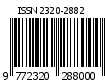
ISSN: 2320-2882 Impact Factor: 7.97 and ISSN APPROVED Journal Starting Year (ESTD) : 2013


ISSN and 7.97 Impact Factor Details
ISSN: 2320-2882 Impact Factor: 7.97 and ISSN APPROVED Journal Starting Year (ESTD) : 2013
DOI Details
CONFERENCE
CONFERENCE MANAGMENT & PUBLICATION CONFERENCE PROPOSAL
RECENT CONFERENCE

CONFERENCE PROPOSAL CONFERENCE PROCEEDINGS
CONFERENCE PROPOSAL CONFERENCE PROCEEDINGS
For Reviewer /Referral (RMS) Earn 500 per paper
Important Links
NEWS & Conference
Digital Library
IJCRT RMS | Earn 500 Per Paper.

Open Access


LICENSE
Indexing Partner
Scholarly open access journals, Peer-reviewed, and Refereed Journals, Impact factor 7.97 (Calculate by google scholar and Semantic Scholar | AI-Powered Research Tool) , Multidisciplinary, Monthly, Indexing in all major database & Metadata, Citation Generator, Digital Object Identifier(DOI)