Important Details
IJCRT - International Peer Reviewed, Open Access Journal, Multidisciplinary, Monthly, Nominal(Low) Fees for Professional Research Services International Journal of Creative Research Thoughts - IJCRT Peer Review Journal, Refereed Journal, Peer Reviewed Journal , Referred Journal and Indexed Journal, Open access, Online and Print Journal,international Journal Open Access, Accepted by Indian and foreign university ,IJCRT Followed Norms, guidelines, requirement, listing criteria and methodology of score/point also applied from: Scopus , Web of Science , UGC Approved , UGC CARE, UGC-CARE .
UGC Approved Journal No: 49023 (18)
UGC approval Link
https://ijcrt.org/ugc%20approval.jpg
All Policy and Approval
Please Like Our Facebook Page | CrossRef DOI and Hard copy of Certificate Provide if required. | www.IJCRT.org | editor@IJCRT.org | IJCRT WhatsApp +91 94294 58311
Publication Details:
- Paper Submission : 31-Oct-2026. Call For Paper (Volume 14 | Issue 9 | Month- September 2026)
- Acceptance/Rejection Notification: Within 02-04 Days.
- Paper Publish: Within 02-04 Days after submitting all documents.
-
Submit Your Paper Any time There No deadline.
-
Publication fees : 1570 INR for Indian author & 59$ for foreign International author.
Please Like Our Facebook Page | CrossRef DOI and Hard copy of Certificate Provide if required.
Licence and Indexing
Indexing In Google Scholar, SSRN, ResearcherID-Publons, Semantic Scholar | AI-Powered Research Tool, Microsoft Academic, Academia.edu, arXiv.org, Research Gate, CiteSeerX, ResearcherID Thomson Reuters, Mendeley : reference manager, DocStoc, ISSUU, Scribd, and many more | High Impact Factor: 7.97 | Digital object identifier (DOI) and Hard Copy of certificate Provided.




























Licence
DOI
ISSN Approved impact factor: 7.97 
Creative Common 
Valid as per new UGC Gazette regulations 

INTERNATIONAL JOURNAL OF CREATIVE RESEARCH THOUGHTS - IJCRT (IJCRT.ORG)
International Peer Reviewed & Refereed Journals, Open Access Journal
IJCRT Peer-Reviewed (Refereed) Journal as Per New UGC Rules.
ISSN Approved Journal No: 2320-2882 | Impact factor: 7.97 | ESTD Year: 2013
Call For Paper - Volume 14 | Issue 9 | Month- September 2026
Scholarly open access journals, Peer-reviewed, and Refereed Journals, Impact factor 7.97 (Calculate by google scholar and Semantic Scholar | AI-Powered Research Tool) , Multidisciplinary, Monthly, Indexing in all major database & Metadata, Citation Generator, Digital Object Identifier(CrossRef DOI)
IJCRT WhatsApp Contact
IJCRT Search Xplore - Search all paper by Paper Name , Author Name, and Title
Volume 12 | Issue 5 |
Volume 12 | Issue 5 | Month
Downlaod After Publication 1) Table of content index in PDF
2) Table of content index in HTML 2)Table of content index in HTML
3) Front Page 3) Front Page
4) Back Page 4) Back Page
5) Editor Board Member 5)Editor Board Member
6) OLD Style Issue 6)OLD Style Issue
 |
 |
|---|---|
| IJCRT Journal front page | IJCRT Journal Back Page |
Paper Title: insolvency and bankruptcy code- CIRP
Author Name(s): CHITRANSHI GUPTA
Published Paper ID: - IJCRT2405357
Register Paper ID - 259439
Publisher Journal Name: IJPUBLICATION, IJCRT
DOI Member ID: 10.6084/m9.doi.one.IJCRT2405357 and DOI :
Author Country : Indian Author, India, 110092 , delhi, 110092 , | Research Area: Others area Published Paper URL: http://ijcrt.org/viewfull.php?&p_id=IJCRT2405357 Published Paper PDF: download.php?file=IJCRT2405357 Published Paper PDF: http://www.ijcrt.org/papers/IJCRT2405357.pdf
Your Paper Publication Details:
Title: INSOLVENCY AND BANKRUPTCY CODE- CIRP
DOI (Digital Object Identifier) :
Pubished in Volume: 12 | Issue: 5 | Year: May 2024
Publisher Name : IJCRT | www.ijcrt.org | ISSN : 2320-2882
Subject Area: Others area
Author type: Indian Author
Pubished in Volume: 12
Issue: 5
Pages: d328-d350
Year: May 2024
Downloads: 354
E-ISSN Number: 2320-2882
Abstract
The Insolvency and Bankruptcy Code (IBC) has emerged as a transformative legislation in India, aiming to address the complex issues surrounding insolvency and bankruptcy proceedings. This paper provides a comprehensive analysis of the IBC, examining its implications, challenges, and potential solutions. The study begins by contextualizing the need for a robust insolvency framework, highlighting the shortcomings of the previous legal regime and the economic ramifications of ineffective insolvency resolution mechanisms. It then delves into the key provisions of the IBC, including its objectives, procedural framework, and institutional mechanisms. Drawing on empirical data and case studies, the paper evaluates the impact of the IBC on various stakeholders, including creditors, debtors, insolvency professionals, and the economy. It assesses the effectiveness of the IBC in expediting the resolution process, enhancing creditor recovery rates, and promoting a culture of financial discipline. Furthermore, the study identifies the challenges and bottlenecks encountered in the implementation of the IBC, such as delays in resolution, capacity constraints, and legal complexities. It explores potential strategies and policy interventions to address these challenges, including streamlining the resolution process, strengthening institutional capacity, and promoting alternative dispute resolution mechanisms. Finally, the paper concludes with recommendations for policymakers, practitioners, and stakeholders to further strengthen the insolvency framework in India and maximize its effectiveness in promoting economic growth, financial stability, and investor confidence
Licence: creative commons attribution 4.0
License
Creative Commons Attribution 4.0 and The Open Definition

Paper Title: FORMULATION AND EVALUATION OF TRANSDERMAL PATCH FOR PAIN MANEGEMENT
Author Name(s): Thakur Pallav, Kumar Nishant, Ranjan Himanshu, Mamgain Shilpa
Published Paper ID: - IJCRT2405356
Register Paper ID - 259755
Publisher Journal Name: IJPUBLICATION, IJCRT
DOI Member ID: 10.6084/m9.doi.one.IJCRT2405356 and DOI :
Author Country : Indian Author, India, - , -, - , | Research Area: Science and Technology Published Paper URL: http://ijcrt.org/viewfull.php?&p_id=IJCRT2405356 Published Paper PDF: download.php?file=IJCRT2405356 Published Paper PDF: http://www.ijcrt.org/papers/IJCRT2405356.pdf
Your Paper Publication Details:
Title: FORMULATION AND EVALUATION OF TRANSDERMAL PATCH FOR PAIN MANEGEMENT
DOI (Digital Object Identifier) :
Pubished in Volume: 12 | Issue: 5 | Year: May 2024
Publisher Name : IJCRT | www.ijcrt.org | ISSN : 2320-2882
Subject Area: Science and Technology
Author type: Indian Author
Pubished in Volume: 12
Issue: 5
Pages: d319-d327
Year: May 2024
Downloads: 360
E-ISSN Number: 2320-2882
Abstract
Pharmacotherapy is a major component of the multimodal comprehensive treatment of pain. The degree and kind of the patient's pain, together with their age and any other medical conditions, all influence how well an analgesic works, including how much is prescribed and how it is administered. This study aims to provide doctors, nurses, pharmacists, and other healthcare professionals who work with patients who are in pain with the most recent information on analgesics applied topically and transdermally. Analgesics applied topically or transdermally function via many pathways. Transdermal opioid administration causes the absorption of opioids into subcutaneous tissue vessels, which then transport the opioids on receptors (opioids) throughout the peripheral and central nervous systems via the blood. When administered topically, non-steroid anti-inflammation medications produce analgesic effect primarily by supplying local anti-inflammatory effects and high concentration in joints assembly. Drugs applied topically, such as creams containing antidepressants (doxepin, amitriptyline), capsaicin in cream, EMLA cream, lidocaine and capsaicin in patches, and capsaicin in cream, primarily operate nearby in tissue over receptors , ions channel. There are certain benefits to applying topical and transdermal analgesics as opposed to systemic medication. Since topical analgesics alleviate local pain with little to no systemic side effects, they have a far better adverse effect profile. In addition to the benefits listed above, the transdermal method offers a prolonged analgesic period and may be more suitable, epecially beneficial for patients who cannot ingest medications by oral route. Topical or transdermal opioids carry a lower risk of addiction compared to those administered orally or intravenously.
Licence: creative commons attribution 4.0
License
Creative Commons Attribution 4.0 and The Open Definition
Keywords
pharmacotherapy, multimodal comprehensive treatment, pain management, analgesics, topical application, transdermal administration, opioid absorption, subcutaneous tissue vessels, opioid receptors, central nervous system, peripheral nervous system, non-steroidal anti-inflammatory drugs (NSAIDs), local anti-inflammatory effects, joint structures, antidepressants, capsaicin, EMLA cream, lidocaine, ion channels, systemic side effects.
License
Creative Commons Attribution 4.0 and The Open Definition
Paper Title: ANTI SMUGGLING AND EARLY FIRE WARNING SYSTEM FOR FOREST TREES
Author Name(s): VANKADARU SAI GAYATHRI, BHARATHGOWDA A S, NIZAMUDDIN VS, MANJUNATHA SIDDAPPA
Published Paper ID: - IJCRT2405355
Register Paper ID - 259598
Publisher Journal Name: IJPUBLICATION, IJCRT
DOI Member ID: 10.6084/m9.doi.one.IJCRT2405355 and DOI :
Author Country : Indian Author, India, 562101 , chikballapur, 562101 , | Research Area: Science and Technology Published Paper URL: http://ijcrt.org/viewfull.php?&p_id=IJCRT2405355 Published Paper PDF: download.php?file=IJCRT2405355 Published Paper PDF: http://www.ijcrt.org/papers/IJCRT2405355.pdf
Your Paper Publication Details:
Title: ANTI SMUGGLING AND EARLY FIRE WARNING SYSTEM FOR FOREST TREES
DOI (Digital Object Identifier) :
Pubished in Volume: 12 | Issue: 5 | Year: May 2024
Publisher Name : IJCRT | www.ijcrt.org | ISSN : 2320-2882
Subject Area: Science and Technology
Author type: Indian Author
Pubished in Volume: 12
Issue: 5
Pages: d314-d318
Year: May 2024
Downloads: 339
E-ISSN Number: 2320-2882
Abstract
The proposed system is all about smuggling of trees like sandal, red sandal, "sag wan" essential medicinal. These trees are very costly as well as less available in the world.
Licence: creative commons attribution 4.0
License
Creative Commons Attribution 4.0 and The Open Definition
Keywords
Smart forestry systems,early fire detection, illegal logging prevention, anti smuggling measures, environmental monitoring, forest protection.
License
Creative Commons Attribution 4.0 and The Open Definition
Paper Title: CRITICAL ANALYSIS OF ARTICLE 21 OF THE INDIAN CONSTITUTION (RIGHT TO LIFE AND PERSONAL LIBERTY)
Author Name(s): KANIKA
Published Paper ID: - IJCRT2405354
Register Paper ID - 259805
Publisher Journal Name: IJPUBLICATION, IJCRT
DOI Member ID: 10.6084/m9.doi.one.IJCRT2405354 and DOI :
Author Country : Indian Author, India, 247667 , Roorkee, 247667 , | Research Area: Others area Published Paper URL: http://ijcrt.org/viewfull.php?&p_id=IJCRT2405354 Published Paper PDF: download.php?file=IJCRT2405354 Published Paper PDF: http://www.ijcrt.org/papers/IJCRT2405354.pdf
Your Paper Publication Details:
Title: CRITICAL ANALYSIS OF ARTICLE 21 OF THE INDIAN CONSTITUTION (RIGHT TO LIFE AND PERSONAL LIBERTY)
DOI (Digital Object Identifier) :
Pubished in Volume: 12 | Issue: 5 | Year: May 2024
Publisher Name : IJCRT | www.ijcrt.org | ISSN : 2320-2882
Subject Area: Others area
Author type: Indian Author
Pubished in Volume: 12
Issue: 5
Pages: d295-d313
Year: May 2024
Downloads: 429
E-ISSN Number: 2320-2882
Abstract
In every organized society, the rights as guaranteed by the established law to be measured as an individual is not guaranteed by meeting the needs of the animal alone. It is protected only if it is ensured and recognised by all the institutions to develop and does not have any barriers to its growth. All human rights ,which is earlier natural right, are meant to achieve the certain ends and for this purpose is essential to ensure certain elementary rights such as food, water, clean environment, education, health care ought to be reflects as the guaranteed provision by the established provisions of the constitutions of any civilised societies. This, infact, appears to requisite element for any human life to live such a dignified life. The term 'life' as employed by Article 21 does not merely replace the concept of physical existence with all the good values of life, including the right to earn a living and the right to live. This right can be a fundamental right bound to all people living in India, citizens and non-citizens alike. The right to life including the right to live and work as guaranteed by Article 21 is not reduced to a paper plate but is maintained, strong and vibrant so that the country can successfully adhere to the set policy of public debate as proposed by the founding fathers during the making of the Indian Constitution and its introduction. 'Protection of life and personal liberty' under Article 21 is also not limitless. Hence this research paper intends to analyse constitutional perspective towards the right to life and personal liberty and judicial approach there of.
Licence: creative commons attribution 4.0
License
Creative Commons Attribution 4.0 and The Open Definition
Keywords
Article 21, Personal, Life, Liberty, Constitution.
License
Creative Commons Attribution 4.0 and The Open Definition
Paper Title: Exploring the Impact of Socioeconomic Factors on Cybercrime Rate Prediction
Author Name(s): Deepak Yadav, Dr. Nitesh Kaushik, Nishant Soni, Ankit Saini, Sachin Mahawar
Published Paper ID: - IJCRT2405353
Register Paper ID - 259620
Publisher Journal Name: IJPUBLICATION, IJCRT
DOI Member ID: 10.6084/m9.doi.one.IJCRT2405353 and DOI :
Author Country : Indian Author, India, 302017 , Jagatpura, Jaipur, 302017 , | Research Area: Science and Technology Published Paper URL: http://ijcrt.org/viewfull.php?&p_id=IJCRT2405353 Published Paper PDF: download.php?file=IJCRT2405353 Published Paper PDF: http://www.ijcrt.org/papers/IJCRT2405353.pdf
Your Paper Publication Details:
Title: EXPLORING THE IMPACT OF SOCIOECONOMIC FACTORS ON CYBERCRIME RATE PREDICTION
DOI (Digital Object Identifier) :
Pubished in Volume: 12 | Issue: 5 | Year: May 2024
Publisher Name : IJCRT | www.ijcrt.org | ISSN : 2320-2882
Subject Area: Science and Technology
Author type: Indian Author
Pubished in Volume: 12
Issue: 5
Pages: d288-d294
Year: May 2024
Downloads: 261
E-ISSN Number: 2320-2882
Abstract
The continuous provision of services in organizations through the IoT (Internet of Things) has made it a new gateway for cyber-attacks. The risks of software piracy and malware attacks are high, which can lead to economic and reputational damages due to the theft of important information. Cybercrime is a growing concern in the cyber age, and classification methods like support vector machine (SVM) and K-nearest neighbour (KNN) are used to classify cybercrime data. Unsupervised classification methods include K-means clustering, Gaussian mixture model, and cluster quasi-random via fuzzy C-means and fuzzy clustering. Neural networks are used to determine synthetic identity theft. Cybercrime detection uses datasets from CBS open data StatLine, with personal characteristics of crime victims. Different training and testing data are analysed for performance. The best technique is used to identify criminals, and the Gaussian mixture model in the unsupervised method shows enhanced performance. The accuracy of the detection method is 76.56%, while the SVM classifier achieves 89% accuracy. Performance metrics include true positive, false positive, false negative, false alarm rate, detection rate, accuracy, recall, precision, specificity, sensitivity, and Fowlkes-Mallows scores. The expectation-maximization (EM) algorithm is used to assess the performance of the Gaussian mixture model. In this paper, we present a distributed framework based on deep learning that can detect and classify malicious traffic to ensure the security of IoT systems. We evaluate two different DL models, feed forward neural network and long short-term memory, using two different datasets (NSL-KDD and BoT-IoT) in terms of performance and identification of different kinds of attacks.
Licence: creative commons attribution 4.0
License
Creative Commons Attribution 4.0 and The Open Definition
Keywords
Internet of Things, data mining, cyber security, software piracy, malware detection, Attack detection, Cyber-security, Deep learning, Distributed framework, Feed forward neural network, Long short-term memory, K-nearest neighbour, Cybercrime data, K-means clustering, Cyber age, CBS.
License
Creative Commons Attribution 4.0 and The Open Definition
Paper Title: User-Centric Online Library System Using PHP
Author Name(s): Ishaana Karmakar, Nidhi Kulkarni, Shrinivas Hunnur, Charudatta Bonde, Swati Rane
Published Paper ID: - IJCRT2405352
Register Paper ID - 259583
Publisher Journal Name: IJPUBLICATION, IJCRT
DOI Member ID: 10.6084/m9.doi.one.IJCRT2405352 and DOI :
Author Country : Indian Author, India, 400706 , Navi Mumbai, 400706 , | Research Area: Science All Published Paper URL: http://ijcrt.org/viewfull.php?&p_id=IJCRT2405352 Published Paper PDF: download.php?file=IJCRT2405352 Published Paper PDF: http://www.ijcrt.org/papers/IJCRT2405352.pdf
Your Paper Publication Details:
Title: USER-CENTRIC ONLINE LIBRARY SYSTEM USING PHP
DOI (Digital Object Identifier) :
Pubished in Volume: 12 | Issue: 5 | Year: May 2024
Publisher Name : IJCRT | www.ijcrt.org | ISSN : 2320-2882
Subject Area: Science All
Author type: Indian Author
Pubished in Volume: 12
Issue: 5
Pages: d277-d287
Year: May 2024
Downloads: 280
E-ISSN Number: 2320-2882
Abstract
The increasing dependence on technology in the field of education is reshaping traditional learning paradigms at an unprecedented rate. With the proliferation of digital tools and platforms, educational institutions are embracing technology to enhance teaching methodologies, facilitate personalized learning experiences, and bridge accessibility gaps. Furthermore, the integration of educational apps, online resources, and collaborative platforms is fostering a more dynamic and engaging learning environment, catering to diverse learning styles and preferences. Libraries are invaluable resources for students, offering a diverse array of books, journals, and digital materials essential for research and academic growth and the integration of technology in education cannot be considered complete without it also influencing how the libraries are used. This project aims to collect a huge amount of data on the books in the library and bring it together on a platform that would enable the smooth and efficient management of the library.
Licence: creative commons attribution 4.0
License
Creative Commons Attribution 4.0 and The Open Definition
Keywords
Integrated Library Systems, Database Management, Online Public Access Catalogs.
License
Creative Commons Attribution 4.0 and The Open Definition
Paper Title: Deep Learning Object Detection Algorithm for Brain Tumor Identification and Categorization
Author Name(s): Nitin Prajapati, Raj Gupta, Shivam Singh, Dr. Bhawesh K. Thakur
Published Paper ID: - IJCRT2405351
Register Paper ID - 259599
Publisher Journal Name: IJPUBLICATION, IJCRT
DOI Member ID: 10.6084/m9.doi.one.IJCRT2405351 and DOI :
Author Country : Indian Author, India, 226028 , Lucknow, 226028 , | Research Area: Science and Technology Published Paper URL: http://ijcrt.org/viewfull.php?&p_id=IJCRT2405351 Published Paper PDF: download.php?file=IJCRT2405351 Published Paper PDF: http://www.ijcrt.org/papers/IJCRT2405351.pdf
Your Paper Publication Details:
Title: DEEP LEARNING OBJECT DETECTION ALGORITHM FOR BRAIN TUMOR IDENTIFICATION AND CATEGORIZATION
DOI (Digital Object Identifier) :
Pubished in Volume: 12 | Issue: 5 | Year: May 2024
Publisher Name : IJCRT | www.ijcrt.org | ISSN : 2320-2882
Subject Area: Science and Technology
Author type: Indian Author
Pubished in Volume: 12
Issue: 5
Pages: d265-d276
Year: May 2024
Downloads: 286
E-ISSN Number: 2320-2882
Abstract
Brain tumors represent a significant global health challenge, affecting approximately one million individuals worldwide in 2023. This study evaluates the efficacy of the object detection algorithm for the detection and categorization of brain tumors using MRI images. The evaluation utilized a dataset of MRI images from different patients, covering three primary brain tumor types: Pituitary, Meningioma, and Glioma. The model demonstrated robust performance, with general high precision, recall, and mAP values on the validation dataset. Notably, the model effectively differentiated between the various brain tumor types and background, as evidenced by the normalized confusion matrix. Practical testing on brain MRI images confirmed the model's ability to accurately identify different tumor regions. In conclusion, the object detection algorithm presents a promising automated method for identifying brain tumors and classification in MRI images, potentially aiding clinicians in precise diagnosis and treatment planning. Further research using larger datasets is recommended to enhance the model's clinical applicability and reliability.
Licence: creative commons attribution 4.0
License
Creative Commons Attribution 4.0 and The Open Definition
Keywords
brain tumor, object detection, MRI
License
Creative Commons Attribution 4.0 and The Open Definition
Paper Title: Princely State
Author Name(s): Vivek Rajput
Published Paper ID: - IJCRT2405350
Register Paper ID - 259822
Publisher Journal Name: IJPUBLICATION, IJCRT
DOI Member ID: 10.6084/m9.doi.one.IJCRT2405350 and DOI :
Author Country : Indian Author, India, 110053 , Delhi , 110053 , | Research Area: Arts All Published Paper URL: http://ijcrt.org/viewfull.php?&p_id=IJCRT2405350 Published Paper PDF: download.php?file=IJCRT2405350 Published Paper PDF: http://www.ijcrt.org/papers/IJCRT2405350.pdf
Your Paper Publication Details:
Title: PRINCELY STATE
DOI (Digital Object Identifier) :
Pubished in Volume: 12 | Issue: 5 | Year: May 2024
Publisher Name : IJCRT | www.ijcrt.org | ISSN : 2320-2882
Subject Area: Arts All
Author type: Indian Author
Pubished in Volume: 12
Issue: 5
Pages: d258-d264
Year: May 2024
Downloads: 364
E-ISSN Number: 2320-2882
Abstract
Principles shaped a unique and diverse political landscape in pre-independence India, characterized by a mosaic of territories ruled by hereditary rulers known as maharajas, nawabs, rajas or sultans. These states retained varying degrees of autonomy and sovereignty under the supremacy of the British crown during colonial rule. The administrative structure of principalities varied considerably and included monarchical systems, councils of state, and decentralized administrative structures. Tax administration, legal systems and local administration were central features of princely state administration. The princely states played a crucial role in shaping the socio-political landscape of India and contributed to the rich tapestry of Indian history and culture. The integration of the princely states into independent India after partition in 1947 marked an important chapter in the nation-building process of the country, reflecting the complexity of the transition from princely to democratic rule. The study of princely states offers valuable insights into the dynamics of power, identity and governance in pre-colonial and colonial India.
Licence: creative commons attribution 4.0
License
Creative Commons Attribution 4.0 and The Open Definition
Keywords
Aristocracy, Colonisation, Integration, Secessionism, Enclave, Accession, Principalities, Truce, Extravagance.
License
Creative Commons Attribution 4.0 and The Open Definition
Paper Title: SMART ENVIRONMENT DATA MONITORING
Author Name(s): Mahalakshmi S, Priyanka R, Manusheya A, Mrs. Ramya G
Published Paper ID: - IJCRT2405349
Register Paper ID - 259803
Publisher Journal Name: IJPUBLICATION, IJCRT
DOI Member ID: 10.6084/m9.doi.one.IJCRT2405349 and DOI :
Author Country : Indian Author, India, 637018 , Namakkal, 637018 , | Research Area: Science and Technology Published Paper URL: http://ijcrt.org/viewfull.php?&p_id=IJCRT2405349 Published Paper PDF: download.php?file=IJCRT2405349 Published Paper PDF: http://www.ijcrt.org/papers/IJCRT2405349.pdf
Your Paper Publication Details:
Title: SMART ENVIRONMENT DATA MONITORING
DOI (Digital Object Identifier) :
Pubished in Volume: 12 | Issue: 5 | Year: May 2024
Publisher Name : IJCRT | www.ijcrt.org | ISSN : 2320-2882
Subject Area: Science and Technology
Author type: Indian Author
Pubished in Volume: 12
Issue: 5
Pages: d249-d257
Year: May 2024
Downloads: 287
E-ISSN Number: 2320-2882
Abstract
The Integrated Environmental Monitoring System (IEMS) stands as a robust and multifaceted solution, meticulously designed to facilitate real-time data collection and analysis in the environmental domain. It integrates a diverse array of sensors including those for temperature, humidity, light (LDR), and pollution, all seamlessly interfaced with the Arduino Uno microcontroller, renowned for its reliability and versatility in embedded systems. This amalgamation of cutting-edge technology empowers the IEMS to provide a comprehensive and nuanced understanding of environmental conditions at any given moment. A pivotal aspect of the IEMS is its dual capability for data visualization. Locally, an LCD display serves as an intuitive interface, offering immediate access to real-time data for users on-site. Simultaneously, the system leverages an IoT module to transmit this wealth of information remotely, enabling stakeholders to monitor environmental parameters from anywhere in the world via a dedicated mobile application. This seamless integration of local and remote monitoring not only enhances accessibility but also promotes proactive decision-making and swift responses to emergent situations. Moreover, the IEMS is distinguished by its adaptability and responsiveness. Customizable alert mechanisms empower users to establish personalized thresholds for environmental parameters, ensuring that deviations from desired conditions prompt timely notifications. This proactive approach to monitoring enables swift intervention and mitigation, thereby mitigating risks and safeguarding against potential environmental hazards
Licence: creative commons attribution 4.0
License
Creative Commons Attribution 4.0 and The Open Definition
Keywords
Integrated Environmental Monitoring System, real-time data collection, sensors, Arduino Uno, IoT module, LCD display, remote access, mobile app, customizable alerts, environmental safety, compliance.
License
Creative Commons Attribution 4.0 and The Open Definition
Paper Title: "A Study on Insurance as an Investment Strategy"
Author Name(s): Brunda M
Published Paper ID: - IJCRT2405348
Register Paper ID - 259782
Publisher Journal Name: IJPUBLICATION, IJCRT
DOI Member ID: 10.6084/m9.doi.one.IJCRT2405348 and DOI :
Author Country : Indian Author, India, 560050 , Bangalore, 560050 , | Research Area: Commerce and Management, MBA All Branch Published Paper URL: http://ijcrt.org/viewfull.php?&p_id=IJCRT2405348 Published Paper PDF: download.php?file=IJCRT2405348 Published Paper PDF: http://www.ijcrt.org/papers/IJCRT2405348.pdf
Your Paper Publication Details:
Title: "A STUDY ON INSURANCE AS AN INVESTMENT STRATEGY"
DOI (Digital Object Identifier) :
Pubished in Volume: 12 | Issue: 5 | Year: May 2024
Publisher Name : IJCRT | www.ijcrt.org | ISSN : 2320-2882
Subject Area: Commerce and Management, MBA All Branch
Author type: Indian Author
Pubished in Volume: 12
Issue: 5
Pages: d222-d248
Year: May 2024
Downloads: 322
E-ISSN Number: 2320-2882
Abstract
Basically Insurance is a legal agreement between two parties which involves the insurer and the insured. It is also known as insurance policy or coverage. Insurance is a kind of risk management plan to use an insurance policy as a hedge against an uncertain loss. Insurance provides protection against unforeseen risks, investments are aimed at growing wealth over time. The benefit of having insurance is that it prevents burning a hole into your pocket in unprecedented times. The goal of investing is to generate respectable profits. The essential elements of an ideal investment include returns, liquidity and a rational cost structure. Insurance, primarily conceived as a protective shield against unforeseen risks, has evolved to offer multifaceted financial risk mitigation. These insurance based investment products promise stability, tax advantages and long term financial planning benefits. The study embarks on a comprehensive examination of "Insurance as an Investment Strategy". In an ever-evolving financial landscape, the pursuit of investment strategies is paramount for individuals and the investors. In the dynamic environment of business and society Insurance not only serve as a cushion for uncertainty but acts as an investment opportunity as well. In the study, primary data was gathered through questionnaire and secondary data through websites, journals, articles and blogs. And the convenience sampling method is used to select the sample. The sample comprises of 30 respondents. For measuring the various phenomena and analyzing the collected data effectively and efficiently and to draw the sound conclusions, Chi-Square test method goodness of fit is used for hypothesis testing.
Licence: creative commons attribution 4.0
License
Creative Commons Attribution 4.0 and The Open Definition
Keywords
Insurance, Investment, Liquidity, Risk Management, Tax Implications
License
Creative Commons Attribution 4.0 and The Open Definition
Call For Paper September 2026
Call For Papers
September 2026
Volume 14 | Issue 9
Last Date :
31-Oct-2026
Submit Manuscript Online Impact Factor: 7.97 Review Results : Within 02-03 Days Paper Publication : Within 02-03 Days
September 2026
Volume 14 | Issue 9
Last Date :
31-Oct-2026
Submit Manuscript Online Impact Factor: 7.97 Review Results : Within 02-03 Days Paper Publication : Within 02-03 Days
Published Issue Details
For Authors
Forms / Downloads
Other IMP Links
Indexing Partner
Research Area
LICENSE





ISSN and 7.97 Impact Factor Details
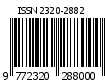
ISSN: 2320-2882 Impact Factor: 7.97 and ISSN APPROVED Journal Starting Year (ESTD) : 2013


ISSN and 7.97 Impact Factor Details
ISSN: 2320-2882 Impact Factor: 7.97 and ISSN APPROVED Journal Starting Year (ESTD) : 2013
DOI Details
CONFERENCE
CONFERENCE MANAGMENT & PUBLICATION CONFERENCE PROPOSAL
RECENT CONFERENCE

CONFERENCE PROPOSAL CONFERENCE PROCEEDINGS
CONFERENCE PROPOSAL CONFERENCE PROCEEDINGS
For Reviewer /Referral (RMS) Earn 500 per paper
Important Links
NEWS & Conference
Digital Library
IJCRT RMS | Earn 500 Per Paper.

Open Access


LICENSE
Indexing Partner
Scholarly open access journals, Peer-reviewed, and Refereed Journals, Impact factor 7.97 (Calculate by google scholar and Semantic Scholar | AI-Powered Research Tool) , Multidisciplinary, Monthly, Indexing in all major database & Metadata, Citation Generator, Digital Object Identifier(DOI)