Important Details
IJCRT - International Peer Reviewed, Open Access Journal, Multidisciplinary, Monthly, Nominal(Low) Fees for Professional Research Services International Journal of Creative Research Thoughts - IJCRT Peer Review Journal, Refereed Journal, Peer Reviewed Journal , Referred Journal and Indexed Journal, Open access, Online and Print Journal,international Journal Open Access, Accepted by Indian and foreign university ,IJCRT Followed Norms, guidelines, requirement, listing criteria and methodology of score/point also applied from: Scopus , Web of Science , UGC Approved , UGC CARE, UGC-CARE .
UGC Approved Journal No: 49023 (18)
UGC approval Link
https://ijcrt.org/ugc%20approval.jpg
All Policy and Approval
Please Like Our Facebook Page | CrossRef DOI and Hard copy of Certificate Provide if required. | www.IJCRT.org | editor@IJCRT.org | IJCRT WhatsApp +91 94294 58311
Publication Details:
- Paper Submission : 31-Oct-2026. Call For Paper (Volume 14 | Issue 9 | Month- September 2026)
- Acceptance/Rejection Notification: Within 02-04 Days.
- Paper Publish: Within 02-04 Days after submitting all documents.
-
Submit Your Paper Any time There No deadline.
-
Publication fees : 1570 INR for Indian author & 59$ for foreign International author.
Please Like Our Facebook Page | CrossRef DOI and Hard copy of Certificate Provide if required.
Licence and Indexing
Indexing In Google Scholar, SSRN, ResearcherID-Publons, Semantic Scholar | AI-Powered Research Tool, Microsoft Academic, Academia.edu, arXiv.org, Research Gate, CiteSeerX, ResearcherID Thomson Reuters, Mendeley : reference manager, DocStoc, ISSUU, Scribd, and many more | High Impact Factor: 7.97 | Digital object identifier (DOI) and Hard Copy of certificate Provided.




























Licence
DOI
ISSN Approved impact factor: 7.97 
Creative Common 
Valid as per new UGC Gazette regulations 

INTERNATIONAL JOURNAL OF CREATIVE RESEARCH THOUGHTS - IJCRT (IJCRT.ORG)
International Peer Reviewed & Refereed Journals, Open Access Journal
IJCRT Peer-Reviewed (Refereed) Journal as Per New UGC Rules.
ISSN Approved Journal No: 2320-2882 | Impact factor: 7.97 | ESTD Year: 2013
Call For Paper - Volume 14 | Issue 9 | Month- September 2026
Scholarly open access journals, Peer-reviewed, and Refereed Journals, Impact factor 7.97 (Calculate by google scholar and Semantic Scholar | AI-Powered Research Tool) , Multidisciplinary, Monthly, Indexing in all major database & Metadata, Citation Generator, Digital Object Identifier(CrossRef DOI)
IJCRT WhatsApp Contact
IJCRT Search Xplore - Search all paper by Paper Name , Author Name, and Title
Volume 12 | Issue 7 |
Volume 12 | Issue 7 | Month
Downlaod After Publication 1) Table of content index in PDF
2) Table of content index in HTML 2)Table of content index in HTML
3) Front Page 3) Front Page
4) Back Page 4) Back Page
5) Editor Board Member 5)Editor Board Member
6) OLD Style Issue 6)OLD Style Issue
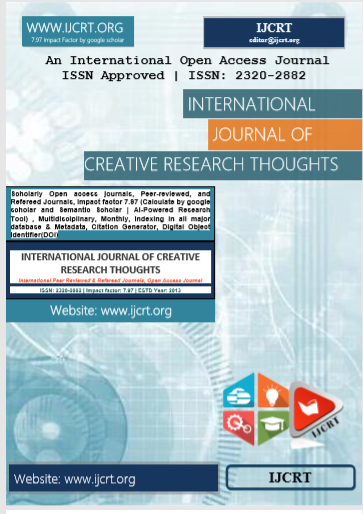 |
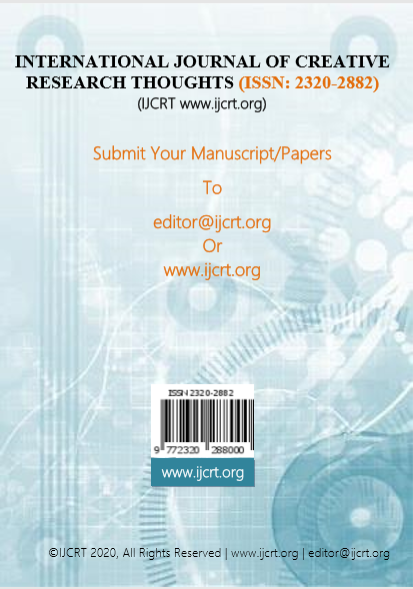 |
|---|---|
| IJCRT Journal front page | IJCRT Journal Back Page |
Paper Title: COMPREHENSIVE REVIEW OF JALAUKA AVCHARAN AND VIDANGADI LEPA IN THE MANAGEMENT OF DADRU (DERMATOPHYTOSIS).
Author Name(s): Dr. Neha Bisht, Dr. MANISH MISHRA, Dr. VIJAY KUMAR RAI
Published Paper ID: - IJCRT2407857
Register Paper ID - 266620
Publisher Journal Name: IJPUBLICATION, IJCRT
DOI Member ID: 10.6084/m9.doi.one.IJCRT2407857 and DOI :
Author Country : Indian Author, India, 221002 , VARANASI, 221002 , | Research Area: Humanities All Published Paper URL: http://ijcrt.org/viewfull.php?&p_id=IJCRT2407857 Published Paper PDF: download.php?file=IJCRT2407857 Published Paper PDF: http://www.ijcrt.org/papers/IJCRT2407857.pdf
Your Paper Publication Details:
Title: COMPREHENSIVE REVIEW OF JALAUKA AVCHARAN AND VIDANGADI LEPA IN THE MANAGEMENT OF DADRU (DERMATOPHYTOSIS).
DOI (Digital Object Identifier) :
Pubished in Volume: 12 | Issue: 7 | Year: July 2024
Publisher Name : IJCRT | www.ijcrt.org | ISSN : 2320-2882
Subject Area: Humanities All
Author type: Indian Author
Pubished in Volume: 12
Issue: 7
Pages: h718-h725
Year: July 2024
Downloads: 276
E-ISSN Number: 2320-2882
Abstract
ABSTRACT Dadru, commonly known as fungal skin infections, presents a significant challenge in dermatological practice due to its recurrent nature and varying response to conventional therapies. This review discusses the holistic perspective of Ayurveda in understanding Dadru, emphasizing the importance of dosha imbalance, immune modulation, and lifestyle modifications in its management and provides an in-depth analysis of two traditional Ayurveda treatment modalities, Raktamokshan and Vidangadi Lepa in the management of Dadru. Vidangadi Lepa, a topical formulation comprising herbs like Vidanga (Embelia ribes) and Haridra (Curcuma longa), has been traditionally employed for its antifungal and antiinflammatory properties. The review examines the pharmacological actions of the individual components and their synergistic effects in combating fungal infections. Additionally, the review delves into the therapeutic approach of Raktamokshana by Jalauka-avcharana, a bloodletting procedure in Ayurveda, for the management of Dadru. Raktamokshana aims to eliminate vitiated blood and toxins from the body, thereby alleviating the underlying imbalance responsible for fungal skin infections. This review aims to fill this gap by providing a thorough description of Raktamokshana and Vidangadi Lepa in the context of Dadru.
Licence: creative commons attribution 4.0
License
Creative Commons Attribution 4.0 and The Open Definition

Keywords
Dadru, Dermatophytosis, Fungal infection.
License
Creative Commons Attribution 4.0 and The Open Definition
Paper Title: Pre and Post Covid-19 Effect on Tourist Arrivals to Dakshina Kannada District
Author Name(s): Chaitra C Bhat, Shripathi. K.P
Published Paper ID: - IJCRT2407856
Register Paper ID - 266672
Publisher Journal Name: IJPUBLICATION, IJCRT
DOI Member ID: 10.6084/m9.doi.one.IJCRT2407856 and DOI :
Author Country : Indian Author, India, 575001 , Mangalore, DAKSHINA KANNADA, 575001 , | Research Area: Social Science All Published Paper URL: http://ijcrt.org/viewfull.php?&p_id=IJCRT2407856 Published Paper PDF: download.php?file=IJCRT2407856 Published Paper PDF: http://www.ijcrt.org/papers/IJCRT2407856.pdf
Your Paper Publication Details:
Title: PRE AND POST COVID-19 EFFECT ON TOURIST ARRIVALS TO DAKSHINA KANNADA DISTRICT
DOI (Digital Object Identifier) :
Pubished in Volume: 12 | Issue: 7 | Year: July 2024
Publisher Name : IJCRT | www.ijcrt.org | ISSN : 2320-2882
Subject Area: Social Science All
Author type: Indian Author
Pubished in Volume: 12
Issue: 7
Pages: h710-h717
Year: July 2024
Downloads: 316
E-ISSN Number: 2320-2882
Abstract
[The COVID-19 pandemic had a profound and lasting impact on the tourism industry worldwide. The restrictions on movement, lockdowns, and border closures severely disrupted travel plans, leading to a significant decline in tourism activities. Travel was halted, borders were closed, planes were cancelled, and tourism was slowed down by COVID-19 restrictions. The impact on countries that depend significantly on tourism showed the interdependence of the world and the vulnerability of sectors that depend on human mobility. The aim of this paper is to understand the effect of Covid-19 on tourism industry of Dakshina Kannada by analysing the difference between tourist visited the district pre- Covid-19 and post- Covid-19. Moreover, the study considers selected tourist attraction places for the year 2018 and 2021. This research utilizes secondary data gathered from 14 well-known religious and natural tourism destinations in Dakshina Kannada district collected from Tourist Office, Department of Tourism, Mangalore, Dakshina Kannada District and Government of Karnataka. As we had to compare two years' data, the analysis employs the Paired T- test to assess the data.And as a result it is known that there is a lot of difference in tourist arrivals after pandemic and it is mainly due to Covid-19. Through this paper, we would like to suggest that Government and local bodies must concentrate more on improving the tourism places in Dakshina Kannada by providing clean and safer environment. This will give assurance for tourists regarding their visit and hence, Dakshina Kannada can attract more visitors].
Licence: creative commons attribution 4.0
License
Creative Commons Attribution 4.0 and The Open Definition
Keywords
Covid-19, Pandemic, Tourism, Dakshina Kannada, T-test.
License
Creative Commons Attribution 4.0 and The Open Definition
Paper Title: Solar Power Generation Prediction Using Machine Learning
Author Name(s): Kandikuppa Nandini, M. Tarani
Published Paper ID: - IJCRT2407855
Register Paper ID - 266650
Publisher Journal Name: IJPUBLICATION, IJCRT
DOI Member ID: 10.6084/m9.doi.one.IJCRT2407855 and DOI :
Author Country : Indian Author, India, 530022 , Viskhapatnam, 530022 , | Research Area: Science and Technology Published Paper URL: http://ijcrt.org/viewfull.php?&p_id=IJCRT2407855 Published Paper PDF: download.php?file=IJCRT2407855 Published Paper PDF: http://www.ijcrt.org/papers/IJCRT2407855.pdf
Your Paper Publication Details:
Title: SOLAR POWER GENERATION PREDICTION USING MACHINE LEARNING
DOI (Digital Object Identifier) :
Pubished in Volume: 12 | Issue: 7 | Year: July 2024
Publisher Name : IJCRT | www.ijcrt.org | ISSN : 2320-2882
Subject Area: Science and Technology
Author type: Indian Author
Pubished in Volume: 12
Issue: 7
Pages: h702-h709
Year: July 2024
Downloads: 303
E-ISSN Number: 2320-2882
Abstract
It presents a machine learning based approach for predicting solar power generation. The approach includes data collection, preprocessing, feature selection, training, selection, evaluation, model and deployment. High-quality data from multiple sources, including weather data, and historical solar power generation data, are collected and pre-processed to remove outliers, handle missing values, and normalize the data. Relevant features such as temperature, humidity, wind speed, and solar irradiance are selected for model training. Additionally, the model may consider time-related features such as time of day, day of the week, and seasonal variations. This project leverages advanced machine learning techniques, specifically Random Forest Regression and Gradient Boosting models, to predict solar power output. These models are chosen for their robustness in handling non-linear relationships and their ability to manage large datasets with numerous features. By integrating weather data, historical solar power generation records, and other relevant environmental parameters, the models aim to provide accurate short-term and long-term forecasts of solar energy production. The methodology involves data preprocessing, feature selection, model training, and validation. The performance of the Random Forest Regression and Gradient Boosting models is evaluated using metrics such as Mean Absolute Error (MAE) and R squared. The results demonstrate that machine learning models can significantly enhance the accuracy of solar power generation forecasts.
Licence: creative commons attribution 4.0
License
Creative Commons Attribution 4.0 and The Open Definition
Keywords
Machine learning, Random Forest Regression, Gradient Boosting model, Mean Absolute Error (MAE), R squared, Voting Regressor approach
License
Creative Commons Attribution 4.0 and The Open Definition
Paper Title: Archaeology of Nabarangpur District, Odisha
Author Name(s): Sri Priyaranjan Sahoo
Published Paper ID: - IJCRT2407854
Register Paper ID - 266652
Publisher Journal Name: IJPUBLICATION, IJCRT
DOI Member ID: 10.6084/m9.doi.one.IJCRT2407854 and DOI :
Author Country : Indian Author, India, 764001 , Jeypore, 764001 , | Research Area: Medical Science All Published Paper URL: http://ijcrt.org/viewfull.php?&p_id=IJCRT2407854 Published Paper PDF: download.php?file=IJCRT2407854 Published Paper PDF: http://www.ijcrt.org/papers/IJCRT2407854.pdf
Your Paper Publication Details:
Title: ARCHAEOLOGY OF NABARANGPUR DISTRICT, ODISHA
DOI (Digital Object Identifier) :
Pubished in Volume: 12 | Issue: 7 | Year: July 2024
Publisher Name : IJCRT | www.ijcrt.org | ISSN : 2320-2882
Subject Area: Medical Science All
Author type: Indian Author
Pubished in Volume: 12
Issue: 7
Pages: h696-h701
Year: July 2024
Downloads: 337
E-ISSN Number: 2320-2882
Abstract
Nabarangpur district (Lat: 190 09" and 200 06" North, Long: 810 51" and 820 52" East) is situated in the south-western part of Odisha. It is surrounded by Bastar district of Chhatisgarh in west, Raipur of Chhatisgarh in north, Kalahandi and Koraput district of Odisha in east and south respectively. The district is divided into 10 administrative blocks. Most of its population is tribal and most of the land is forested. The Indravati river is the most prominent river of the district. It is a tributary of the Godavari and sustains perennial flow. It is originates in the Kalahandi district flows through Nabarangpur and Koraput districts and enters into Bastar district of Chhatisgarh. The Tel and Bhaskel are the others rivers flowing through the district. The climate of the district is typically tropical to subtropical with three seasons i.e. summer, winter and monsoon.
Licence: creative commons attribution 4.0
License
Creative Commons Attribution 4.0 and The Open Definition
Keywords
Nabarangpur, Bhaskel, Indravati, Temple, Bada, Gandi, Mastaka, Nilakanthesvara, Siva.
License
Creative Commons Attribution 4.0 and The Open Definition
Paper Title: Medicine Strip Recognition Using Deep Learning
Author Name(s): DR S P ANANDARAJ, DR S POORNIMA, MOHAMMED SHAHAS V, DASARI CHENNAKESHAVA YADHAV, V MADHAN KUMAR
Published Paper ID: - IJCRT2407853
Register Paper ID - 266572
Publisher Journal Name: IJPUBLICATION, IJCRT
DOI Member ID: 10.6084/m9.doi.one.IJCRT2407853 and DOI :
Author Country : Indian Author, India, 560064 , bangalore, 560064 , | Research Area: Science and Technology Published Paper URL: http://ijcrt.org/viewfull.php?&p_id=IJCRT2407853 Published Paper PDF: download.php?file=IJCRT2407853 Published Paper PDF: http://www.ijcrt.org/papers/IJCRT2407853.pdf
Your Paper Publication Details:
Title: MEDICINE STRIP RECOGNITION USING DEEP LEARNING
DOI (Digital Object Identifier) :
Pubished in Volume: 12 | Issue: 7 | Year: July 2024
Publisher Name : IJCRT | www.ijcrt.org | ISSN : 2320-2882
Subject Area: Science and Technology
Author type: Indian Author
Pubished in Volume: 12
Issue: 7
Pages: h692-h695
Year: July 2024
Downloads: 346
E-ISSN Number: 2320-2882
Abstract
In this research project, we present a new system for recognizing medicine strips using Convolutional Neural Networks (CNNs). Our system uses advanced image processing techniques to extract important information like medicine names, quantities, and prices from various images of medicine strips. This automated process eliminates the errors that can occur with manual data entry and greatly improves the accuracy and efficiency of billing.
Licence: creative commons attribution 4.0
License
Creative Commons Attribution 4.0 and The Open Definition
Keywords
Medicine strip recognition, Convolutional Neural Networks (CNNs), Image processing, Automated data extraction, Medicine identification, Billing accuracy
License
Creative Commons Attribution 4.0 and The Open Definition
Paper Title: Ethics Versus Commerciability: An Analysis of the Impact of Neo-Liberal Philosophy on Ethics of Legal Education
Author Name(s): ADYA PANDEY
Published Paper ID: - IJCRT2407852
Register Paper ID - 266258
Publisher Journal Name: IJPUBLICATION, IJCRT
DOI Member ID: 10.6084/m9.doi.one.IJCRT2407852 and DOI :
Author Country : Indian Author, India, 226022 , Lucknow, 226022 , | Research Area: Others area Published Paper URL: http://ijcrt.org/viewfull.php?&p_id=IJCRT2407852 Published Paper PDF: download.php?file=IJCRT2407852 Published Paper PDF: http://www.ijcrt.org/papers/IJCRT2407852.pdf
Your Paper Publication Details:
Title: ETHICS VERSUS COMMERCIABILITY: AN ANALYSIS OF THE IMPACT OF NEO-LIBERAL PHILOSOPHY ON ETHICS OF LEGAL EDUCATION
DOI (Digital Object Identifier) :
Pubished in Volume: 12 | Issue: 7 | Year: July 2024
Publisher Name : IJCRT | www.ijcrt.org | ISSN : 2320-2882
Subject Area: Others area
Author type: Indian Author
Pubished in Volume: 12
Issue: 7
Pages: h682-h691
Year: July 2024
Downloads: 304
E-ISSN Number: 2320-2882
Abstract
Neoliberalism as a school of thought emphasizes economic liberalization, privatization, and deregulation. The tenets of this theory thus emphasize competition and taking individual responsibility, thereby achieving economic efficiency. Neoliberalism has not left the education system untouched. In the context of education, neoliberal policies favor market-driven values and outcomes, such as employability and economic efficiency. The theory emphasizes competition amongst higher education institutions, consumer choice, and reliance on private funding and partnerships. An evident outcome of the application of neoliberal policy to the legal education system is the sudden emergence of multiple institutes offering legal education. The application of neoliberal thoughts however does not go well to the ethics of teaching and learning. While legal education, no matter liberal to whatever extent, would rely on intellectual exploration, critical thinking, and a deep understanding of principles of legal theory, in contradiction, the neo-liberal theory in disregard to these factors, relies only on market-driven factors such as employability and efficiency. This has resulted in the commodification of the legal education system. Quality of education has taken a back seat while the needs of the market and employers have taken priority. Once a noble profession, the education sector today thrives on exorbitant tuition fees. Critical thinking has been replaced by employability skills alone. The negative effects of neoliberal thoughts on legal education can be seen in the rampant privatization of legal education. Private institutes have mushroomed like never before but are rather infected with the vices of the greed of market consolidation and earning fame, not driven by the spirit of imparting legal understanding and creating good lawyers, judges, or even academicians. There is a casualization of academic labor. Recruitment of faculties is made with disregard to qualifications or experience and are made to work on meagre salaries resulting in a lack of incentive for faculties to enhance their knowledge while also bringing down the graph of intellect. It is argued that a blind inclination to neoliberal principles in legal education is harmful and the negative effects need to be addressed. To maintain the integrity of legal education, it is necessary to actively work on combating the negative effects of neoliberal thoughts on legal education. A balance must be created between the neo-liberal ideas and the ethics of the profession. A potent way of achieving that would be to adopt an interdisciplinary curriculum structure. Enabling a holistic approach to learning for students where they can critically think and ethically reason, thus ensuring that they become socially responsible citizens.The need is to put in place a legal education system that prepares the students for the demands of the legal profession while also equipping them with the knowledge and values necessary to contribute to a democratic society. By working on the tensions between neo-liberal thought and legal ethics, the legal education sector can play a significant role in shaping the future of legal practice and promoting the ideals of justice, fairness, and equality.
Licence: creative commons attribution 4.0
License
Creative Commons Attribution 4.0 and The Open Definition
Keywords
Neoliberalism and its Impact on Society, Neoliberalism and impact on education, pros and cons of neoliberal policy, criticism of neo liberal policy
License
Creative Commons Attribution 4.0 and The Open Definition
Paper Title: A Review on Haircap Precision Monitoring for Scalp and Hair Conditions using AI- Technology
Author Name(s): Bhavya S, Samprithi K, Maithri, Swasthik TS, Swasthik P
Published Paper ID: - IJCRT2407851
Register Paper ID - 266510
Publisher Journal Name: IJPUBLICATION, IJCRT
DOI Member ID: 10.6084/m9.doi.one.IJCRT2407851 and DOI :
Author Country : Indian Author, India, 575005 , Mangalore, 575005 , | Research Area: Science and Technology Published Paper URL: http://ijcrt.org/viewfull.php?&p_id=IJCRT2407851 Published Paper PDF: download.php?file=IJCRT2407851 Published Paper PDF: http://www.ijcrt.org/papers/IJCRT2407851.pdf
Your Paper Publication Details:
Title: A REVIEW ON HAIRCAP PRECISION MONITORING FOR SCALP AND HAIR CONDITIONS USING AI- TECHNOLOGY
DOI (Digital Object Identifier) :
Pubished in Volume: 12 | Issue: 7 | Year: July 2024
Publisher Name : IJCRT | www.ijcrt.org | ISSN : 2320-2882
Subject Area: Science and Technology
Author type: Indian Author
Pubished in Volume: 12
Issue: 7
Pages: h678-h681
Year: July 2024
Downloads: 287
E-ISSN Number: 2320-2882
Abstract
The haircap is equipped with high-resolution imaging to collect comprehensive data on scalp temperature, moisture levels, pH balance, and hair density. AI algorithms, trained on extensive datasets, analyze this data to detect issues such as dandruff, hair thinning, and dermatitis, enabling early detection and personalized care recommendations. The device also tracks the effectiveness of treatments over time, providing users with valuable insights into their scalp and hair health. This technology represents a significant advancement in non-invasive, real- time monitoring solutions, offering a convenient method for users to manage and improve their scalp and hair health. By enhancing the ability to diagnose and treat scalp and hair conditions, the AI-enhanced haircap contributes to better overall dermatological care and research. This abstract explores the design, functionality, and potential applications of this cutting-edge technology.
Licence: creative commons attribution 4.0
License
Creative Commons Attribution 4.0 and The Open Definition
Keywords
AI, haircap technology, Raspberry Pi cameras, scalp monitoring, hair health, real-time analysis.
License
Creative Commons Attribution 4.0 and The Open Definition
Paper Title: METAFRAUD: AN ANALYSIS OF MULTIDIMENSIONAL APPROACH TO FRAUD DETECTION
Author Name(s): Hemashree H, Anushka G, Harshitha H, Bhavana DK, Dr . Suma T
Published Paper ID: - IJCRT2407850
Register Paper ID - 265338
Publisher Journal Name: IJPUBLICATION, IJCRT
DOI Member ID: 10.6084/m9.doi.one.IJCRT2407850 and DOI :
Author Country : Indian Author, India, 560064 , Bangalore , 560064 , | Research Area: Science and Technology Published Paper URL: http://ijcrt.org/viewfull.php?&p_id=IJCRT2407850 Published Paper PDF: download.php?file=IJCRT2407850 Published Paper PDF: http://www.ijcrt.org/papers/IJCRT2407850.pdf
Your Paper Publication Details:
Title: METAFRAUD: AN ANALYSIS OF MULTIDIMENSIONAL APPROACH TO FRAUD DETECTION
DOI (Digital Object Identifier) :
Pubished in Volume: 12 | Issue: 7 | Year: July 2024
Publisher Name : IJCRT | www.ijcrt.org | ISSN : 2320-2882
Subject Area: Science and Technology
Author type: Indian Author
Pubished in Volume: 12
Issue: 7
Pages: h669-h677
Year: July 2024
Downloads: 335
E-ISSN Number: 2320-2882
Abstract
Credit card fraud poses a significant challenge within the financial industry, intensifying with the surge in credit card usage. This predicament not only results in financial losses for individuals and businesses but also erodes trust in the broader financial system. As a countermeasure, an imperative lies in the improvement of a robust fraud detection system. This paper introduces an innovative approach, leveraging algorithms of machine learning to pinpoint fraudulent transactions. By enhancing accuracy and expediting the identification process, our proposed system aims to fortify the resilience against credit card fraud. The escalating threat of the credit card fraud, particularly fuelled by the proliferation of online transactions and vulnerability of sensitive information, necessitates advanced detection methods. Various strategies, including rule-based systems, Algorithms like machine learning and neural networks, have been adopted to combat this menace. In response to this evolving landscape, our paper suggests a hybrid system that amalgamates rule-based and the machine learning approaches. This integration seeks to elevate the precision of fraud detection. Through rigorous evaluation using a comprehensive dataset, our hybrid system demonstrates superior performance note the similarity between existing methodologies.Recognizing the enduring challenges posed by fraudsters and their continual adaptation to circumvent existing systems, our hybrid model is designed to address the dynamic nature of credit card fraud. Incorporating a set of rules to identify common fraud patterns and a algorithms of machine learning to discern intricate anomalies, our system achieves noteworthy results--boasting an accuracy of 99.86%, a precision of 99.68%, and a recall of 81.30%. With a focus on reducing false positive and adeptly detecting both simple and complex fraud patterns, our proposed system stands as a potent defence mechanism. This article not only adds to the ongoing discourse on credit card fraud but also holds implications for the broader financial industry. By mitigating the risks associated with fraud, our approach strives to safeguard the financial interests of individuals and businesses alike. As we delve into the future scope of the research paper, the potential for further advancements in the credit card fraud detection becomes apparent, signalling a pivotal step towards a more secure financial landscape.
Licence: creative commons attribution 4.0
License
Creative Commons Attribution 4.0 and The Open Definition
Keywords
Credit card fraud detection, Hybrid system, Machine learning algorithms Rule-based systems, Fraud detection accuracy, Financial industry, Supervised machine learning, Unsupervised techniques, Anomaly detection, Dataset pre-processing, Algorithms like Random Forest , Decision tree , Evaluation metrics, False-positive rate, Financial losses, Novel fraud patterns, Advanced feature engineering, Real-time fraud detection, Deep learning algorithms, Data sources, IP addresses, Device fingerprints, Data
License
Creative Commons Attribution 4.0 and The Open Definition
Paper Title: Desire and Deception: A Psychoanalytic Reading of O'Neill's Classic
Author Name(s): Dr T Eswar Rao
Published Paper ID: - IJCRT2407849
Register Paper ID - 266613
Publisher Journal Name: IJPUBLICATION, IJCRT
DOI Member ID: 10.6084/m9.doi.one.IJCRT2407849 and DOI :
Author Country : Indian Author, India, 760010 , Berhampur, 760010 , | Research Area: Medical Science All Published Paper URL: http://ijcrt.org/viewfull.php?&p_id=IJCRT2407849 Published Paper PDF: download.php?file=IJCRT2407849 Published Paper PDF: http://www.ijcrt.org/papers/IJCRT2407849.pdf
Your Paper Publication Details:
Title: DESIRE AND DECEPTION: A PSYCHOANALYTIC READING OF O'NEILL'S CLASSIC
DOI (Digital Object Identifier) :
Pubished in Volume: 12 | Issue: 7 | Year: July 2024
Publisher Name : IJCRT | www.ijcrt.org | ISSN : 2320-2882
Subject Area: Medical Science All
Author type: Indian Author
Pubished in Volume: 12
Issue: 7
Pages: h661-h668
Year: July 2024
Downloads: 310
E-ISSN Number: 2320-2882
Abstract
Desire and Deception: A Psychoanalytic Reading of O'Neill's Classic
Licence: creative commons attribution 4.0
License
Creative Commons Attribution 4.0 and The Open Definition
Keywords
Deception, Freudian Psychoanalytic Theory, Inheritance, legacy, Repressed Emotions.
License
Creative Commons Attribution 4.0 and The Open Definition
Paper Title: Training of Program Managers of National AIDS Control Program under GFATM supported Project Sahyog (2021-2024): End line Assessment
Author Name(s): Dr. Rajna Mishra, Dr. Preeti Kumar, Dr. Saurav Base
Published Paper ID: - IJCRT2407848
Register Paper ID - 266499
Publisher Journal Name: IJPUBLICATION, IJCRT
DOI Member ID: 10.6084/m9.doi.one.IJCRT2407848 and DOI :
Author Country : Indian Author, India, 110030 , New Delhi , 110030 , | Research Area: Health Science All Published Paper URL: http://ijcrt.org/viewfull.php?&p_id=IJCRT2407848 Published Paper PDF: download.php?file=IJCRT2407848 Published Paper PDF: http://www.ijcrt.org/papers/IJCRT2407848.pdf
Your Paper Publication Details:
Title: TRAINING OF PROGRAM MANAGERS OF NATIONAL AIDS CONTROL PROGRAM UNDER GFATM SUPPORTED PROJECT SAHYOG (2021-2024): END LINE ASSESSMENT
DOI (Digital Object Identifier) :
Pubished in Volume: 12 | Issue: 7 | Year: July 2024
Publisher Name : IJCRT | www.ijcrt.org | ISSN : 2320-2882
Subject Area: Health Science All
Author type: Indian Author
Pubished in Volume: 12
Issue: 7
Pages: h649-h660
Year: July 2024
Downloads: 413
E-ISSN Number: 2320-2882
Abstract
Background: A three-year training program was undertaken by the National AIDS Control Organization (NACO) with the goal of enhancing the knowledge and the upskilling of the program managers of the National AIDS & STD Control Program. An initial Training Needs Assessment (TNA) was conducted to identify the gaps where training and upskilling were necessary amongst the program officials working in the program at various levels. This was followed by the training program, under the name 'Sahyog Project', starting from April 2021 onwards, for training of program managers under the National AIDS Control Program (NACP), at all programmatic and operational levels across the country. Objectives :The objectives of the study were: (i) to assess the level of participation in the training programs; (ii) to assess improvements in knowledge and awareness amongst the training participants and (iii) to evaluate the feedback from the participants of the training program Methods: Cascade training approach was used since a large number of people within the organization had to be trained within the assigned project period. A pool of Master Trainers at the national level and from each State were trained by instructors from the program at the national level, and they in turn conducted training to the last mile including grassroots level functionaries. The participants of the training sessions were given a 20-question test before and after the trainings to assess the effect of the training on their knowledge levels related to various aspects of the National AIDS Control Program. They were also assigned two open ended questions to provide their feedback on the current program and to obtain suggestions on improving future such programs. Results: The program was conducted through cascade training model; wherein master trainers were selected predominantly from the NACP workforce. Majority of the trainings took place at the State and District levels thus ensuring that capacitated personnel were available at the state and district level who could further train the cadres working at grassroots level. A target of 1538 participants, pan India across 35 states/union territories was set against which a total of 1428 (93%) were trained. End term assessment showed that more than 90% of the participants attended the training sessions in over half the states. Pre and post test scores analyzed using statistical tests confirmed improvements in knowledge. Results from the 't 'test showed that the mean score for the pretest was 71.6 and the variance was 131.6. The mean score for the post test was 79.1 and variance was 41.9. The standard deviation was 12.5. It can be inferred that there was a significant improvement in skills of participants post-test with a p <=0.002 with 95% CI. Conclusions: Based on the findings from the TNA, a comprehensive capacity building program for the NACP workforce covering officials of NACO, State AIDS Control Society (SACS), Technical Support Units (TSU), and District AIDS Prevention and Control Units (DAPCU) was carried out pan India. Most of the trainings took place at the state and district levels, thus ensuring that capacitated personnel were available at the state and district level levels who could further train the cadres working at grassroots level. The high participation rates and the observable improvement in the test scores indicated the effectiveness of the capacity building program in upskilling and reinforcing the knowledge of the participants. The master trainers played a pivotal role as is evident from the feedback from participants appreciating the subject knowledge, helpfulness, knowledge and approachability of the facilitators. It was also evident that there was a need to relook at the duration of the sessions, inclusion of more interactive aspects in the training and logistic arrangements while planning for future trainings.
Licence: creative commons attribution 4.0
License
Creative Commons Attribution 4.0 and The Open Definition
Keywords
National AIDS Control Organization, State AIDS Control Units, Technical Support Units, District AIDS Prevention and Control Units, District Integrated Strategy for HIV and AIDS
License
Creative Commons Attribution 4.0 and The Open Definition
Call For Paper September 2026
Call For Papers
September 2026
Volume 14 | Issue 9
Last Date :
31-Oct-2026
Submit Manuscript Online Impact Factor: 7.97 Review Results : Within 02-03 Days Paper Publication : Within 02-03 Days
September 2026
Volume 14 | Issue 9
Last Date :
31-Oct-2026
Submit Manuscript Online Impact Factor: 7.97 Review Results : Within 02-03 Days Paper Publication : Within 02-03 Days
Published Issue Details
For Authors
Forms / Downloads
Other IMP Links
Indexing Partner
Research Area
LICENSE





ISSN and 7.97 Impact Factor Details
ISSN: 2320-2882 Impact Factor: 7.97 and ISSN APPROVED Journal Starting Year (ESTD) : 2013


ISSN and 7.97 Impact Factor Details
ISSN: 2320-2882 Impact Factor: 7.97 and ISSN APPROVED Journal Starting Year (ESTD) : 2013
DOI Details
CONFERENCE
CONFERENCE MANAGMENT & PUBLICATION CONFERENCE PROPOSAL
RECENT CONFERENCE

CONFERENCE PROPOSAL CONFERENCE PROCEEDINGS
CONFERENCE PROPOSAL CONFERENCE PROCEEDINGS
For Reviewer /Referral (RMS) Earn 500 per paper
Important Links
NEWS & Conference
Digital Library
IJCRT RMS | Earn 500 Per Paper.

Open Access


LICENSE
Indexing Partner
Scholarly open access journals, Peer-reviewed, and Refereed Journals, Impact factor 7.97 (Calculate by google scholar and Semantic Scholar | AI-Powered Research Tool) , Multidisciplinary, Monthly, Indexing in all major database & Metadata, Citation Generator, Digital Object Identifier(DOI)