Important Details
IJCRT - International Peer Reviewed, Open Access Journal, Multidisciplinary, Monthly, Nominal(Low) Fees for Professional Research Services International Journal of Creative Research Thoughts - IJCRT Peer Review Journal, Refereed Journal, Peer Reviewed Journal , Referred Journal and Indexed Journal, Open access, Online and Print Journal,international Journal Open Access, Accepted by Indian and foreign university ,IJCRT Followed Norms, guidelines, requirement, listing criteria and methodology of score/point also applied from: Scopus , Web of Science , UGC Approved , UGC CARE, UGC-CARE .
UGC Approved Journal No: 49023 (18)
UGC approval Link
https://ijcrt.org/ugc%20approval.jpg
All Policy and Approval
Please Like Our Facebook Page | CrossRef DOI and Hard copy of Certificate Provide if required. | www.IJCRT.org | editor@IJCRT.org | IJCRT WhatsApp +91 94294 58311
Publication Details:
- Paper Submission : 31-Oct-2026. Call For Paper (Volume 14 | Issue 9 | Month- September 2026)
- Acceptance/Rejection Notification: Within 02-04 Days.
- Paper Publish: Within 02-04 Days after submitting all documents.
-
Submit Your Paper Any time There No deadline.
-
Publication fees : 1570 INR for Indian author & 59$ for foreign International author.
Please Like Our Facebook Page | CrossRef DOI and Hard copy of Certificate Provide if required.
Licence and Indexing
Indexing In Google Scholar, SSRN, ResearcherID-Publons, Semantic Scholar | AI-Powered Research Tool, Microsoft Academic, Academia.edu, arXiv.org, Research Gate, CiteSeerX, ResearcherID Thomson Reuters, Mendeley : reference manager, DocStoc, ISSUU, Scribd, and many more | High Impact Factor: 7.97 | Digital object identifier (DOI) and Hard Copy of certificate Provided.



























Licence
DOI
ISSN Approved impact factor: 7.97 
Creative Common 
Valid as per new UGC Gazette regulations 

INTERNATIONAL JOURNAL OF CREATIVE RESEARCH THOUGHTS - IJCRT (IJCRT.ORG)
International Peer Reviewed & Refereed Journals, Open Access Journal
IJCRT Peer-Reviewed (Refereed) Journal as Per New UGC Rules.
ISSN Approved Journal No: 2320-2882 | Impact factor: 7.97 | ESTD Year: 2013
Call For Paper - Volume 14 | Issue 9 | Month- September 2026
Scholarly open access journals, Peer-reviewed, and Refereed Journals, Impact factor 7.97 (Calculate by google scholar and Semantic Scholar | AI-Powered Research Tool) , Multidisciplinary, Monthly, Indexing in all major database & Metadata, Citation Generator, Digital Object Identifier(CrossRef DOI)
IJCRT WhatsApp Contact
IJCRT Search Xplore - Search all paper by Paper Name , Author Name, and Title
Volume 13 | Issue 7 |
Volume 13 | Issue 7 | Month
Downlaod After Publication 1) Table of content index in PDF
2) Table of content index in HTML 2)Table of content index in HTML
3) Front Page 3) Front Page
4) Back Page 4) Back Page
5) Editor Board Member 5)Editor Board Member
6) OLD Style Issue 6)OLD Style Issue
 |
 |
|---|---|
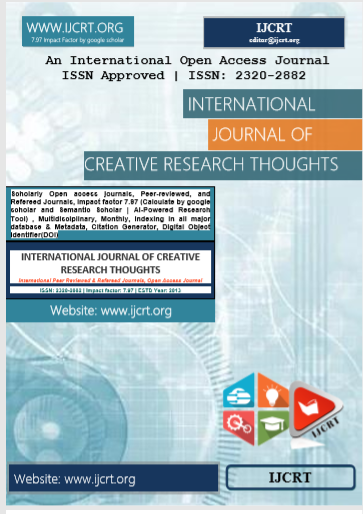
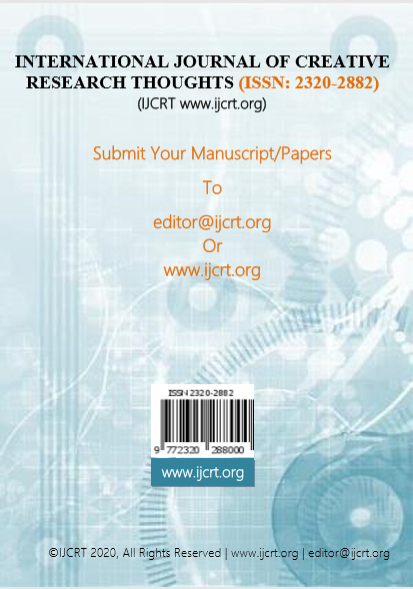
| IJCRT Journal front page | IJCRT Journal Back Page |
Paper Title: Challenges and Future of Quantum Computing in the Banking Sector
Author Name(s): Dr.R.Praveena, Ms.J.Misba Leslin
Published Paper ID: - IJCRT2507603
Register Paper ID - 278909
Publisher Journal Name: IJPUBLICATION, IJCRT
DOI Member ID: 10.6084/m9.doi.one.IJCRT2507603 and DOI :
Author Country : Indian Author, India, - , -, - , | Research Area: Science and Technology Published Paper URL: http://ijcrt.org/viewfull.php?&p_id=IJCRT2507603 Published Paper PDF: download.php?file=IJCRT2507603 Published Paper PDF: http://www.ijcrt.org/papers/IJCRT2507603.pdf
Your Paper Publication Details:
Title: CHALLENGES AND FUTURE OF QUANTUM COMPUTING IN THE BANKING SECTOR
DOI (Digital Object Identifier) :
Pubished in Volume: 13 | Issue: 7 | Year: July 2025
Publisher Name : IJCRT | www.ijcrt.org | ISSN : 2320-2882
Subject Area: Science and Technology
Author type: Indian Author
Pubished in Volume: 13
Issue: 7
Pages: f275-f278
Year: July 2025
Downloads: 295
E-ISSN Number: 2320-2882
Abstract
Quantum computing has the potential to revolutionize industries, and the banking sector is no exception. As financial institutions deal with massive datasets, high-speed transactions, and the need for complex modeling, the advent of quantum computing presents both exciting opportunities and significant challenges. While quantum computers hold immense promise in fields such as cryptography, risk management, fraud detection, and optimization, their integration into the banking sector is not without hurdles. This paper explores the challenges associated with the deployment of quantum computing in banking and envisions the future possibilities of this technology within the financial services industry.
Licence: creative commons attribution 4.0
License
Creative Commons Attribution 4.0 and The Open Definition

Keywords
Challenges and Future of Quantum Computing in the Banking Sector
License
Creative Commons Attribution 4.0 and The Open Definition
Paper Title: The Necessity of Repatriation of Nagas in correspondence of Easterine Kire's novel, Bitter Wormwood.
Author Name(s): Meghana V Goshi, Dr. Viondhini C
Published Paper ID: - IJCRT2507602
Register Paper ID - 290749
Publisher Journal Name: IJPUBLICATION, IJCRT
DOI Member ID: 10.6084/m9.doi.one.IJCRT2507602 and DOI :
Author Country : Indian Author, India, 560098 , Bangalore, 560098 , | Research Area: Languages Published Paper URL: http://ijcrt.org/viewfull.php?&p_id=IJCRT2507602 Published Paper PDF: download.php?file=IJCRT2507602 Published Paper PDF: http://www.ijcrt.org/papers/IJCRT2507602.pdf
Your Paper Publication Details:
Title: THE NECESSITY OF REPATRIATION OF NAGAS IN CORRESPONDENCE OF EASTERINE KIRE'S NOVEL, BITTER WORMWOOD.
DOI (Digital Object Identifier) :
Pubished in Volume: 13 | Issue: 7 | Year: July 2025
Publisher Name : IJCRT | www.ijcrt.org | ISSN : 2320-2882
Subject Area: Languages
Author type: Indian Author
Pubished in Volume: 13
Issue: 7
Pages: f268-f274
Year: July 2025
Downloads: 246
E-ISSN Number: 2320-2882
Abstract
The term 'repatriation' also referred as the 'restitution', and 'return' are generally observed with the retreat of obtained tangible elements by various museums and eventually restored to the true descendants or the custodians of that particular group. In several cases it can also be referred to the restoring of individuals to the homeland in the backdrop of citizenship, nationality, ear prisoners, refugees and so on. The same is the crisis for resources and the control over land and boundaries at national and international level. The present paper posits the necessity of repatriation of Naga society from the traumatic situation of insurgency. This research article aims to highlight root problems of Nagaland, one of the northeastern states of India with the utilisation of the primary text, Bitter Wormwood authored by Easterine Kire, the Indian writer from Nagaland. The central idea of the present research is to stress on the need for peace in the Naga community against the insurgency of factionism and the race politics received. The paper urges to employ Easterine Kire's novel, Bitter Wormwood to underscore the restoring of peace as nothing less than 'repatriation' for the Naga Community.
Licence: creative commons attribution 4.0
License
Creative Commons Attribution 4.0 and The Open Definition
Keywords
Keywords: Easterine Kire, Factionism, Naga society and Repatriation
License
Creative Commons Attribution 4.0 and The Open Definition
Paper Title: "Bridging the Gap: A Behavioral Finance Perspective on Enhancing Financial Literacy and Personal Well-being"
Author Name(s): Mahesh Pol, Dr.Pralhad Joshi
Published Paper ID: - IJCRT2507601
Register Paper ID - 291210
Publisher Journal Name: IJPUBLICATION, IJCRT
DOI Member ID: 10.6084/m9.doi.one.IJCRT2507601 and DOI :
Author Country : Indian Author, India, - , -, - , | Research Area: Science and Technology Published Paper URL: http://ijcrt.org/viewfull.php?&p_id=IJCRT2507601 Published Paper PDF: download.php?file=IJCRT2507601 Published Paper PDF: http://www.ijcrt.org/papers/IJCRT2507601.pdf
Your Paper Publication Details:
Title: "BRIDGING THE GAP: A BEHAVIORAL FINANCE PERSPECTIVE ON ENHANCING FINANCIAL LITERACY AND PERSONAL WELL-BEING"
DOI (Digital Object Identifier) :
Pubished in Volume: 13 | Issue: 7 | Year: July 2025
Publisher Name : IJCRT | www.ijcrt.org | ISSN : 2320-2882
Subject Area: Science and Technology
Author type: Indian Author
Pubished in Volume: 13
Issue: 7
Pages: f259-f267
Year: July 2025
Downloads: 283
E-ISSN Number: 2320-2882
Abstract
This study examines a complex difference between financial literacy, practical prejudice and individual financial well -being. While traditional financial education is widely considered as a measure to make poor financial decisions, increasing insight from behavior finance indicates that knowledge alone to ensure sound financial behavior is insufficient. Individuals are often distracted by taking cognitive prejudices such as over-confidence, mental accounting and loss, as well as emotional and approved decisions such as rational and heroistic-mechanized decisions that distort financial options, such as rational and heroistic-mechanized decisions. Recognizing this disconnect, the study adopts a behavioral finance perspective to analyze how financial literacy programs can be reorganized for psychological and emotional realities of decision making. This emphasizes that financial behavior is not a product of purely information or awareness, but is greatly affected by the trend of internal behavior and external social factors. Even well -informed individuals can struggle to work in their financial best interests if behavioral obstacles are uncontrolled. To bridge this difference, study behavior reviews major literature in economics and financial psychology and proposes an ideological structure. This model keeps financial literacy as a fundamental component, while behavioral prejudices recognize as a variable with arbitrariness that affects results such as savings, budget and debt management. Additionally, socio-genitals such as age, income and education are considered a modeling factor that shapes how individuals interpret and apply financial knowledge. Conclusion outlines the importance of integrating behavior insight into both policy design and educational efforts. Instead of relying only on the spread of knowledge, interventions should be practically informed tools such as cooking, automatic lapse, reminder and simplified decision environment. These mechanisms can help individuals to translate their financial knowledge into action and improve their financial good over time. Ultimately, this study asks for a change in attention - only to educate individuals to enable them to make better financial decisions through a deep understanding of human behavior. Reducing this difference is necessary to increase both individual financial results and comprehensive economic flexibility.
Licence: creative commons attribution 4.0
License
Creative Commons Attribution 4.0 and The Open Definition
Keywords
Behavioral finance, financial literacy, financial well-being, cognitive biases, decision-making, personal finance, financial education
License
Creative Commons Attribution 4.0 and The Open Definition
Paper Title: The Role of Artificial Intelligence Technology in Advancing a Sustainable IT Sector
Author Name(s): Ms. Deepali Mehta, CA Dr. Gajanan Pandit Wader
Published Paper ID: - IJCRT2507600
Register Paper ID - 291194
Publisher Journal Name: IJPUBLICATION, IJCRT
DOI Member ID: 10.6084/m9.doi.one.IJCRT2507600 and DOI :
Author Country : Indian Author, India, 400067 , Mumbai, 400067 , | Research Area: Commerce All Published Paper URL: http://ijcrt.org/viewfull.php?&p_id=IJCRT2507600 Published Paper PDF: download.php?file=IJCRT2507600 Published Paper PDF: http://www.ijcrt.org/papers/IJCRT2507600.pdf
Your Paper Publication Details:
Title: THE ROLE OF ARTIFICIAL INTELLIGENCE TECHNOLOGY IN ADVANCING A SUSTAINABLE IT SECTOR
DOI (Digital Object Identifier) :
Pubished in Volume: 13 | Issue: 7 | Year: July 2025
Publisher Name : IJCRT | www.ijcrt.org | ISSN : 2320-2882
Subject Area: Commerce All
Author type: Indian Author
Pubished in Volume: 13
Issue: 7
Pages: f254-f258
Year: July 2025
Downloads: 249
E-ISSN Number: 2320-2882
Abstract
New and commercial methods have undergone tangible transformations thanks to the introduction of sophisticated machinery, digital platforms, infrastructure, and new and emerging Artificial Intelligence Technology. Artificial Intelligence Technology and machinery not only give the IT sector new opportunities, but they also have a significant impact on value capture and price generation. Research has demonstrated, for instance, how new forms and business strategies are introduced by machinery and Artificial Intelligence Technology, which go beyond sectoral. In a similar vein, the report also detailed the manner in which significant corporations have attempted to rethink and develop their new Artificial Intelligence Technology and machinery strategies and practices. The last ten or so years have seen the introduction of numerous books, formidable machinery, digital infrastructure, and technologies that have drastically changed the IT sector and had a big impact on organizations and policies. Researcher proposes, these digitally created settings can function as a shared conceptual framework that facilitates the integration of ideas from various places and the interconnectedness of problems at multiple levels. In terms of Artificial Intelligence Technology, the following factors are taken into account: product viability, customer support, progress tracking system, transparency, economical, etc. For the IT sector, on the other hand, factors were taken into account based on their yearly turnover.
Licence: creative commons attribution 4.0
License
Creative Commons Attribution 4.0 and The Open Definition
Keywords
Artificial Intelligence Technology, IT sector
License
Creative Commons Attribution 4.0 and The Open Definition
Paper Title: A study of family balance and financial status of scheduled caste working women
Author Name(s): PRASHANT SINGH
Published Paper ID: - IJCRT2507599
Register Paper ID - 291537
Publisher Journal Name: IJPUBLICATION, IJCRT
DOI Member ID: 10.6084/m9.doi.one.IJCRT2507599 and DOI : https://doi.org/10.56975/ijcrt.v13i7.291537
Author Country : Indian Author, India, 814154 , mahagama, 814154 , | Research Area: Social Science All Published Paper URL: http://ijcrt.org/viewfull.php?&p_id=IJCRT2507599 Published Paper PDF: download.php?file=IJCRT2507599 Published Paper PDF: http://www.ijcrt.org/papers/IJCRT2507599.pdf
Your Paper Publication Details:
Title: A STUDY OF FAMILY BALANCE AND FINANCIAL STATUS OF SCHEDULED CASTE WORKING WOMEN
DOI (Digital Object Identifier) : https://doi.org/10.56975/ijcrt.v13i7.291537
Pubished in Volume: 13 | Issue: 7 | Year: July 2025
Publisher Name : IJCRT | www.ijcrt.org | ISSN : 2320-2882
Subject Area: Social Science All
Author type: Indian Author
Pubished in Volume: 13
Issue: 7
Pages: f249-f253
Year: July 2025
Downloads: 238
E-ISSN Number: 2320-2882
Abstract
Abstract:- The problems of working women are continuously increasing day by day. When facts were collected from the Scheduled Caste women of Teachers Colony locality, it was revealed that these women want to work in the private sector but they are not fortunate enough to get the work. There are 100 houses of Scheduled Caste people in Teachers Colony in which 150 women are working. They are somehow managing to live their life. Most of the women here work in other people's houses doing household chores like washing utensils, cooking food, sweeping and cleaning the house due to which they get very little income. As a result , it becomes very difficult to run the house, educate the children and fulfill the needs like treatment in case of illness with that meagre income. These women are surrounded by financial problems and hence it becomes very difficult for them to maintain family balance. Therefore these women suffer physically as well as mentally.They do not even have their own plot of land. They have constructed their temporary houses on government land and are living in the scarcity of water and electricity. Most of them said that due to lack of income, they are not able to fulfill even their basic needs.
Licence: creative commons attribution 4.0
License
Creative Commons Attribution 4.0 and The Open Definition
Keywords
Keywords:- Working women, physical problems, mental problems, land not their own, family disintegration
License
Creative Commons Attribution 4.0 and The Open Definition
Paper Title: Review on Respirable Spray Dried Microparticles
Author Name(s): Abhishek Y. Mate, Dr. Arun Mahale
Published Paper ID: - IJCRT2507598
Register Paper ID - 291408
Publisher Journal Name: IJPUBLICATION, IJCRT
DOI Member ID: 10.6084/m9.doi.one.IJCRT2507598 and DOI :
Author Country : Indian Author, India, 445215 , Pusad , 445215 , | Research Area: Pharmacy All Published Paper URL: http://ijcrt.org/viewfull.php?&p_id=IJCRT2507598 Published Paper PDF: download.php?file=IJCRT2507598 Published Paper PDF: http://www.ijcrt.org/papers/IJCRT2507598.pdf
Your Paper Publication Details:
Title: REVIEW ON RESPIRABLE SPRAY DRIED MICROPARTICLES
DOI (Digital Object Identifier) :
Pubished in Volume: 13 | Issue: 7 | Year: July 2025
Publisher Name : IJCRT | www.ijcrt.org | ISSN : 2320-2882
Subject Area: Pharmacy All
Author type: Indian Author
Pubished in Volume: 13
Issue: 7
Pages: f241-f248
Year: July 2025
Downloads: 239
E-ISSN Number: 2320-2882
Abstract
Microparticles are characteristically free flowing powders consisting of proteins or synthetic polymers having a particle size ranging from 1-1000 ?m. The range of Techniques for the preparation of microspheres offers a Variety of opportunities to control aspects of drug administration and enhance the therapeutic efficacy of a given drug. There are various approaches in delivering a therapeutic substance to the target site in a sustained controlled release fashion. One such approach is using microspheres as carriers for drugs also known as microparticles.
Licence: creative commons attribution 4.0
License
Creative Commons Attribution 4.0 and The Open Definition
Keywords
Spray Dryer, Microparticles, Microspheres, Pulmonary disease
License
Creative Commons Attribution 4.0 and The Open Definition
Paper Title: "Formulation and Evaluation of Moisturizing Gel Containing Essential Oils"
Author Name(s): Pralay A. Barhewar, Ayush N. Thakre, Himanshu Gawad
Published Paper ID: - IJCRT2507597
Register Paper ID - 291540
Publisher Journal Name: IJPUBLICATION, IJCRT
DOI Member ID: 10.6084/m9.doi.one.IJCRT2507597 and DOI :
Author Country : Indian Author, India, - , -, - , | Research Area: Science and Technology Published Paper URL: http://ijcrt.org/viewfull.php?&p_id=IJCRT2507597 Published Paper PDF: download.php?file=IJCRT2507597 Published Paper PDF: http://www.ijcrt.org/papers/IJCRT2507597.pdf
Your Paper Publication Details:
Title: "FORMULATION AND EVALUATION OF MOISTURIZING GEL CONTAINING ESSENTIAL OILS"
DOI (Digital Object Identifier) :
Pubished in Volume: 13 | Issue: 7 | Year: July 2025
Publisher Name : IJCRT | www.ijcrt.org | ISSN : 2320-2882
Subject Area: Science and Technology
Author type: Indian Author
Pubished in Volume: 13
Issue: 7
Pages: f233-f240
Year: July 2025
Downloads: 246
E-ISSN Number: 2320-2882
Abstract
The current research centers on the development and testing of a moisturizing gel containing carefully selected essential oils that are widely recognized for their therapeutic as well as antimicrobial activity. Rose, clove, eucalyptus, camphor, and lemon essential oils were used for their health benefit and inhibitory effects on microbial growth in cosmetic preparations. The gel was developed using Carbopol as the gelling agent and appropriate stabilizers and preservatives. The product was tested for physical attributes such as pH, viscosity, spreadability, washability, and stability under different conditions. The antimicrobial activity of the essential oils was also determined against Escherichia coli and Streptococcus aureus using the agar well diffusion method. The findings proved that the formulated gel contained good antimicrobial activity and acceptable physicochemical properties, which means it can be used as a safe and natural cosmetic product. This work emphasizes the viability of formulating herbal gels with essential oils as natural preservatives in cosmetic preparations.
Licence: creative commons attribution 4.0
License
Creative Commons Attribution 4.0 and The Open Definition
Keywords
Essential oils, moisturizing gel, antimicrobial activity, herbal formulation, cosmetic product, natural preservatives, Escherichia coli, Streptococcus aureus
License
Creative Commons Attribution 4.0 and The Open Definition
Paper Title: A study on "Artificial Intelligence in Education: Enhancing Learning Experiences with reference to Satna City"
Author Name(s): ADITI DUBEY, SAKSHI SAHU
Published Paper ID: - IJCRT2507596
Register Paper ID - 291411
Publisher Journal Name: IJPUBLICATION, IJCRT
DOI Member ID: 10.6084/m9.doi.one.IJCRT2507596 and DOI :
Author Country : Indian Author, India, 485001 , Satna, 485001 , | Research Area: Commerce and Management, MBA All Branch Published Paper URL: http://ijcrt.org/viewfull.php?&p_id=IJCRT2507596 Published Paper PDF: download.php?file=IJCRT2507596 Published Paper PDF: http://www.ijcrt.org/papers/IJCRT2507596.pdf
Your Paper Publication Details:
Title: A STUDY ON "ARTIFICIAL INTELLIGENCE IN EDUCATION: ENHANCING LEARNING EXPERIENCES WITH REFERENCE TO SATNA CITY"
DOI (Digital Object Identifier) :
Pubished in Volume: 13 | Issue: 7 | Year: July 2025
Publisher Name : IJCRT | www.ijcrt.org | ISSN : 2320-2882
Subject Area: Commerce and Management, MBA All Branch
Author type: Indian Author
Pubished in Volume: 13
Issue: 7
Pages: f225-f232
Year: July 2025
Downloads: 240
E-ISSN Number: 2320-2882
Abstract
Abstract: Artificial Intelligence (AI) is remodeling the educational landscape by contributing to innovative and adaptive solutions to amplify the learning experience. Through personalized learning paths, real-time feedback, intelligent tutoring systems, and data-driven decision-making, AI empowers both educators and learners. It supports differentiated instruction, improves student engagement, and facilitates inclusive education for diverse learning needs. This research paper explores the integration of AI in education, its role in improving learning outcomes, the benefits it provides, and the challenges that must be addressed. The study aims to highlight how AI can personalize education, promote active learning, and contribute to the future of intelligent learning environments.
Licence: creative commons attribution 4.0
License
Creative Commons Attribution 4.0 and The Open Definition
Keywords
: Artificial Intelligence (AI), Education Technology, Personalized Learning, Student Engagement, Learning Analytics, Adaptive Learning, EdTech, AI in Education, Learning Experience Enhancement, Virtual Learning, Future of Education.
License
Creative Commons Attribution 4.0 and The Open Definition
Paper Title: DIPLOMATIC RELATIONS OF DEVI AHILYA BAI HOLKAR WITH CONTEMPORARY MARATHA CHIEFS: A CASE STUDY
Author Name(s): Dr. Geeta Choudhary, Kartikeya Bhardwaj
Published Paper ID: - IJCRT2507595
Register Paper ID - 291517
Publisher Journal Name: IJPUBLICATION, IJCRT
DOI Member ID: 10.6084/m9.doi.one.IJCRT2507595 and DOI :
Author Country : Indian Author, India, 452001 , Indore, 452001 , | Research Area: Medical Science All Published Paper URL: http://ijcrt.org/viewfull.php?&p_id=IJCRT2507595 Published Paper PDF: download.php?file=IJCRT2507595 Published Paper PDF: http://www.ijcrt.org/papers/IJCRT2507595.pdf
Your Paper Publication Details:
Title: DIPLOMATIC RELATIONS OF DEVI AHILYA BAI HOLKAR WITH CONTEMPORARY MARATHA CHIEFS: A CASE STUDY
DOI (Digital Object Identifier) :
Pubished in Volume: 13 | Issue: 7 | Year: July 2025
Publisher Name : IJCRT | www.ijcrt.org | ISSN : 2320-2882
Subject Area: Medical Science All
Author type: Indian Author
Pubished in Volume: 13
Issue: 7
Pages: f222-f224
Year: July 2025
Downloads: 330
E-ISSN Number: 2320-2882
Abstract
During the long and eventful reign of Devi Ahilya Bai Holkar, the Maratha Empire transformed into a loosely held confederacy of several Maratha states. The most powerful among these states were the Peshwas of Pune, Bhonsles of Nagpur, Scindhias, Holkars, Puars and Gaekwads. The Peshwa Daftar in Pune was the most powerful and prestigious office in the Maratha Confederacy which acted as a glue for other Maratha states. Devi Ahilyabai maintained cordial relations with other Maratha states in order to preserve Maratha unity. The major events in Maratha politics during her tenure were Maratha resurrection, Assassination of Narayan Rao, Baarabhai Conspiracy, Raghunath Rao's rebellion and First Anglo-Maratha War. Devi Ahilyabai dealt with these political challenges through her policies.
Licence: creative commons attribution 4.0
License
Creative Commons Attribution 4.0 and The Open Definition
Keywords
Baarabhai, Maratha resurrection, Diplomatic relations.
License
Creative Commons Attribution 4.0 and The Open Definition
Paper Title: THE LEGAL HISTORY OF TRIBAL RIGHTS IN INDIA: NEGOTIATING IDENTITY, AUTONOMY, AND JURIDICAL RECOGNITION WITHIN A PLURAL LEGAL ORDER
Author Name(s): Dr. Ravi Prakash, Dr.Monika Rastogi
Published Paper ID: - IJCRT2507594
Register Paper ID - 291539
Publisher Journal Name: IJPUBLICATION, IJCRT
DOI Member ID: 10.6084/m9.doi.one.IJCRT2507594 and DOI : https://doi.org/10.56975/ijcrt.v13i7.291539
Author Country : Indian Author, India, - , -, - , | Research Area: Science and Technology Published Paper URL: http://ijcrt.org/viewfull.php?&p_id=IJCRT2507594 Published Paper PDF: download.php?file=IJCRT2507594 Published Paper PDF: http://www.ijcrt.org/papers/IJCRT2507594.pdf
Your Paper Publication Details:
Title: THE LEGAL HISTORY OF TRIBAL RIGHTS IN INDIA: NEGOTIATING IDENTITY, AUTONOMY, AND JURIDICAL RECOGNITION WITHIN A PLURAL LEGAL ORDER
DOI (Digital Object Identifier) : https://doi.org/10.56975/ijcrt.v13i7.291539
Pubished in Volume: 13 | Issue: 7 | Year: July 2025
Publisher Name : IJCRT | www.ijcrt.org | ISSN : 2320-2882
Subject Area: Science and Technology
Author type: Indian Author
Pubished in Volume: 13
Issue: 7
Pages: f214-f221
Year: July 2025
Downloads: 395
E-ISSN Number: 2320-2882
Abstract
The legal history of tribal rights in India is deeply rooted in a complex landscape of colonial legacies, post-independence constitutional mandates, and contemporary legal pluralism. Unlike mainstream communities governed by codified personal laws or statutory civil frameworks, India's Scheduled Tribes (STs) have historically inhabited socio-legal spaces governed by customary norms, unwritten traditions, and autonomous governance structures. This paper critically examines the evolution of tribal legal identity in India, tracing its trajectory from colonial-era marginalization under the British administration's "exclusion" policy to its partial recognition within the Sixth Schedule and the Fifth Schedule of the Indian Constitution. It explores how the state has negotiated between integrationist impulses and protective autonomy, often resulting in legal ambivalence or administrative neglect. Through a historical and jurisprudential lens, the study interrogates the pluralistic nature of Indian law as it applies to tribal populations, where statutory rights frequently intersect with customary law, environmental governance, and land rights regimes. Key legal milestones such as the Panchayats (Extension to Scheduled Areas) Act, 1996 (PESA), the Forest Rights Act, 2006 (FRA), and various state-level autonomy arrangements are assessed to understand their practical impact on tribal autonomy and legal recognition. The study also engages with landmark judicial decisions that have addressed the conflict between tribal customs and constitutional guarantees, especially around gender rights, displacement, and access to justice. Importantly, the paper foregrounds the tension between juridical recognition and substantive autonomy. While the Indian legal system nominally acknowledges tribal distinctiveness, it often subjects tribal governance to mainstream legal and bureaucratic oversight, thus diluting the autonomy it seeks to protect. The imposition of national development policies--mining, infrastructure, and forest conservation--has repeatedly collided with tribal land and cultural rights, leading to legal contestation and grassroots resistance. By analyzing statutory frameworks, case law, and field-based evidence, this paper argues that a truly plural legal order must reconcile tribal customary systems with constitutional values without eroding the lived experience of autonomy. It concludes by offering recommendations for a reimagined legal pluralism that is inclusive, dialogic, and grounded in tribal epistemologies.
Licence: creative commons attribution 4.0
License
Creative Commons Attribution 4.0 and The Open Definition
Keywords
Tribal Rights, Legal Pluralism, Customary Law, Constitutional Recognition, Autonomy, Forest Rights Act, PESA, Indigenous Governance, Juridical Identity, Land Rights
License
Creative Commons Attribution 4.0 and The Open Definition
Call For Paper September 2026
Call For Papers
September 2026
Volume 14 | Issue 9
Last Date :
31-Oct-2026
Submit Manuscript Online Impact Factor: 7.97 Review Results : Within 02-03 Days Paper Publication : Within 02-03 Days
September 2026
Volume 14 | Issue 9
Last Date :
31-Oct-2026
Submit Manuscript Online Impact Factor: 7.97 Review Results : Within 02-03 Days Paper Publication : Within 02-03 Days
Published Issue Details
For Authors
Forms / Downloads
Other IMP Links
Indexing Partner
Research Area
LICENSE





ISSN and 7.97 Impact Factor Details
ISSN: 2320-2882 Impact Factor: 7.97 and ISSN APPROVED Journal Starting Year (ESTD) : 2013


ISSN and 7.97 Impact Factor Details
ISSN: 2320-2882 Impact Factor: 7.97 and ISSN APPROVED Journal Starting Year (ESTD) : 2013
DOI Details
CONFERENCE
CONFERENCE MANAGMENT & PUBLICATION CONFERENCE PROPOSAL
RECENT CONFERENCE

CONFERENCE PROPOSAL CONFERENCE PROCEEDINGS
CONFERENCE PROPOSAL CONFERENCE PROCEEDINGS
For Reviewer /Referral (RMS) Earn 500 per paper
Important Links
NEWS & Conference
Digital Library
IJCRT RMS | Earn 500 Per Paper.

Open Access


LICENSE
Indexing Partner
Scholarly open access journals, Peer-reviewed, and Refereed Journals, Impact factor 7.97 (Calculate by google scholar and Semantic Scholar | AI-Powered Research Tool) , Multidisciplinary, Monthly, Indexing in all major database & Metadata, Citation Generator, Digital Object Identifier(DOI)